
 русский
 Français
 Español
 عربى
عربى Deutsch
 Português
 italiano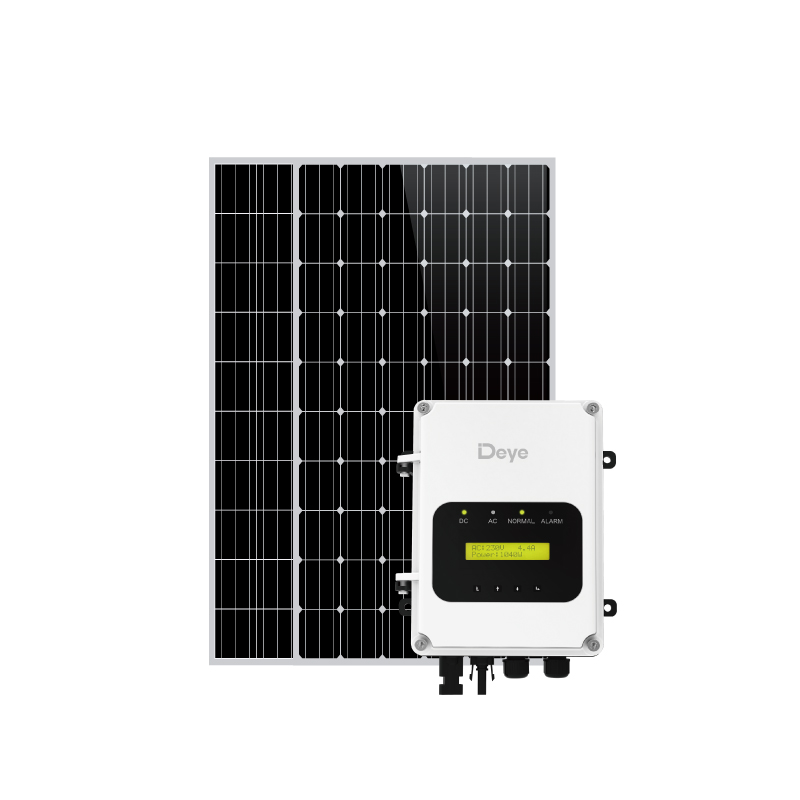
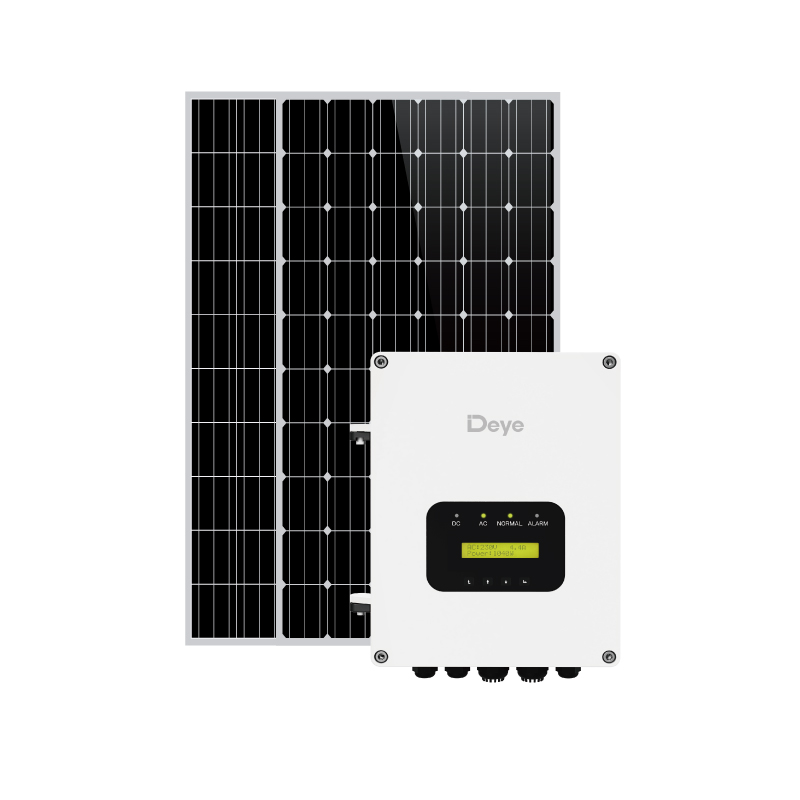
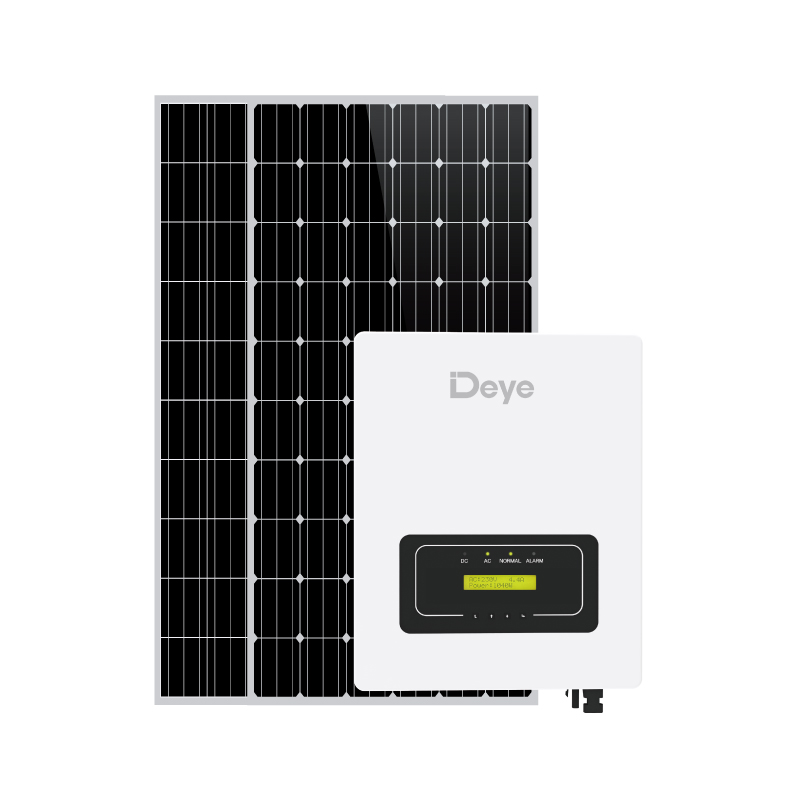
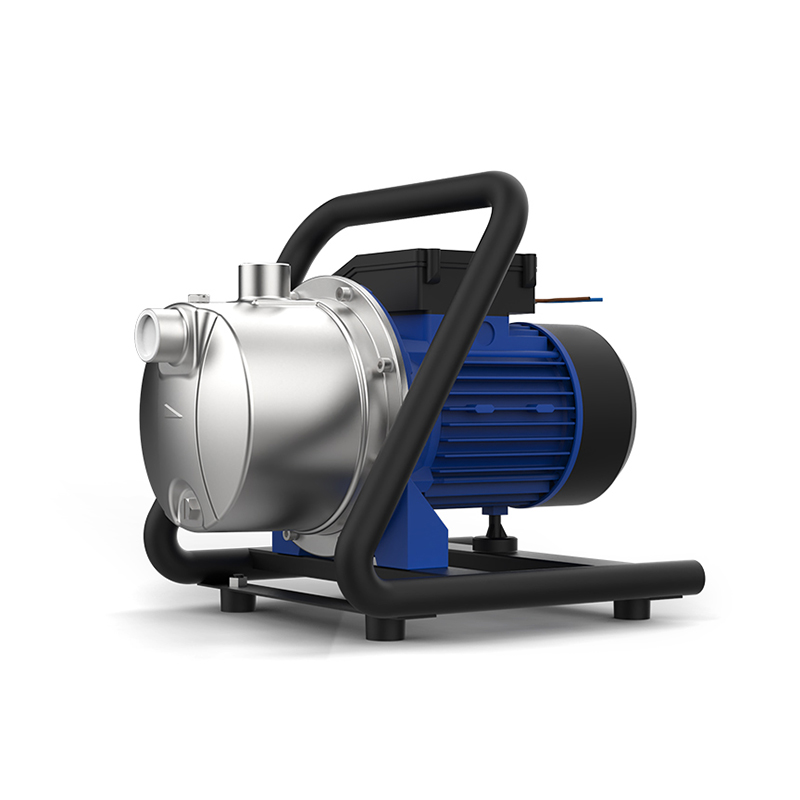
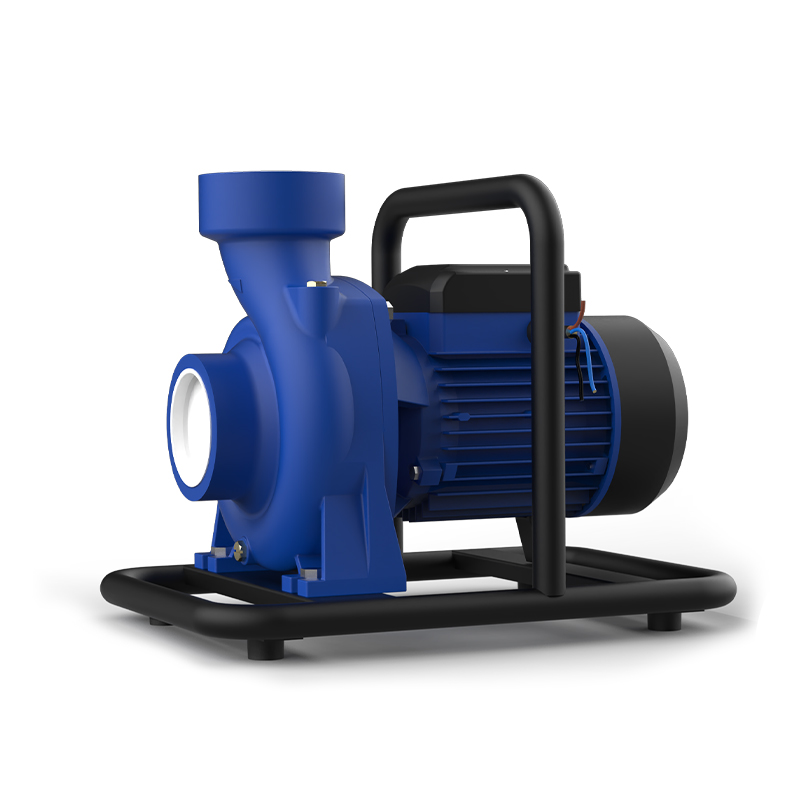
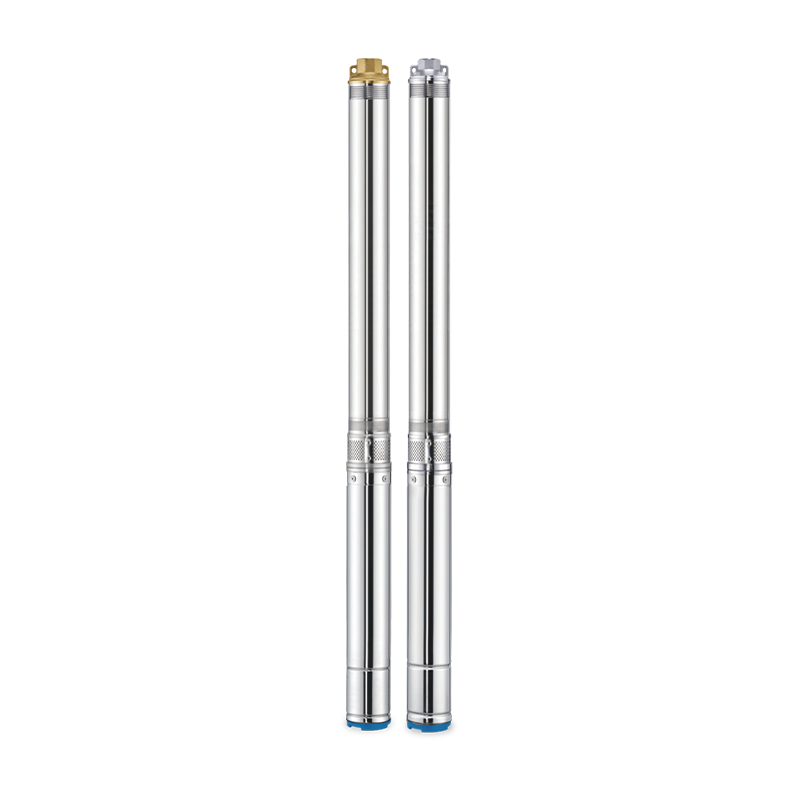
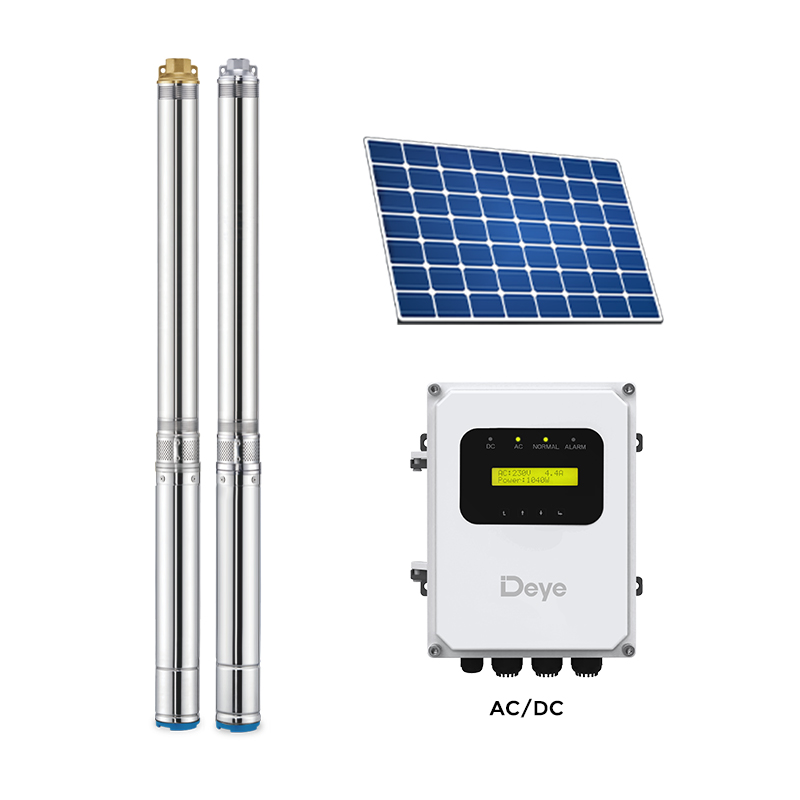
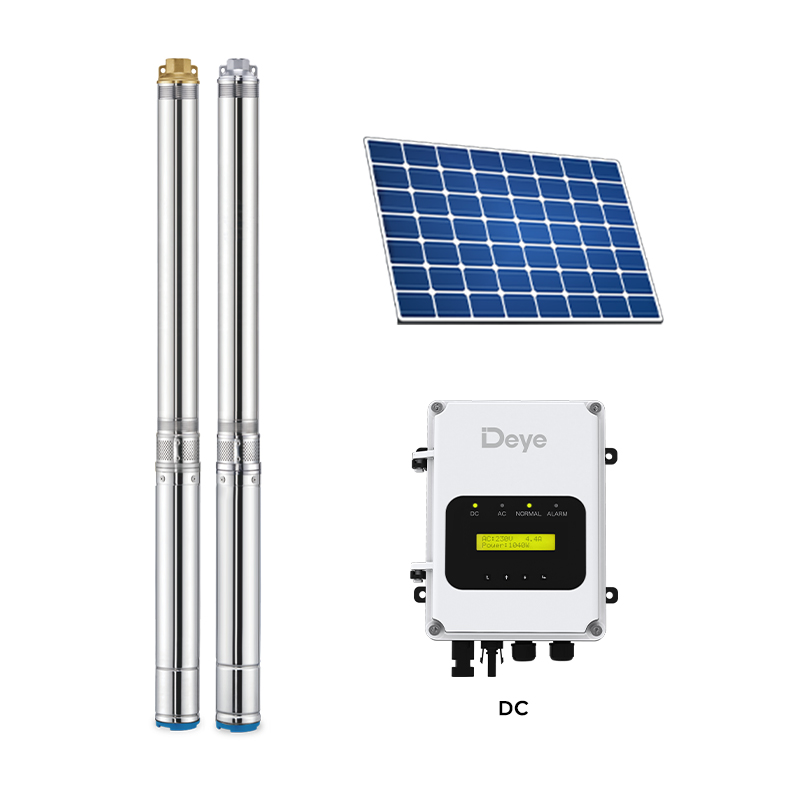
This 4-inch AC/DC solar submersible pump (600-3000W, plastic impeller) works with solar panels and matched controller to build an eco-friendly household water supply system. Powered by solar energy to lift underground water, it effectively eliminates high grid electricity expense. Ideal for rural domestic drinking water, domestic daily water supply, farmland irrigation and livestock feeding, it is the preferred solution for off-grid remote families and villages to secure stable running water.

-
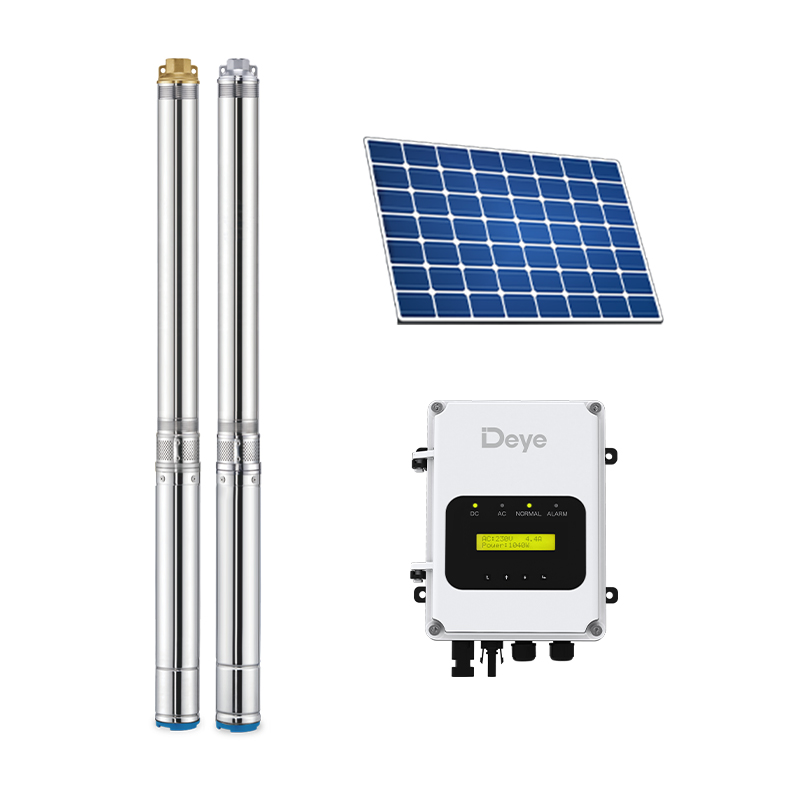
3 Inch Solar AC/DC Pump Controller (400-1500W) Plastic Impeller Submersible Pumps
-
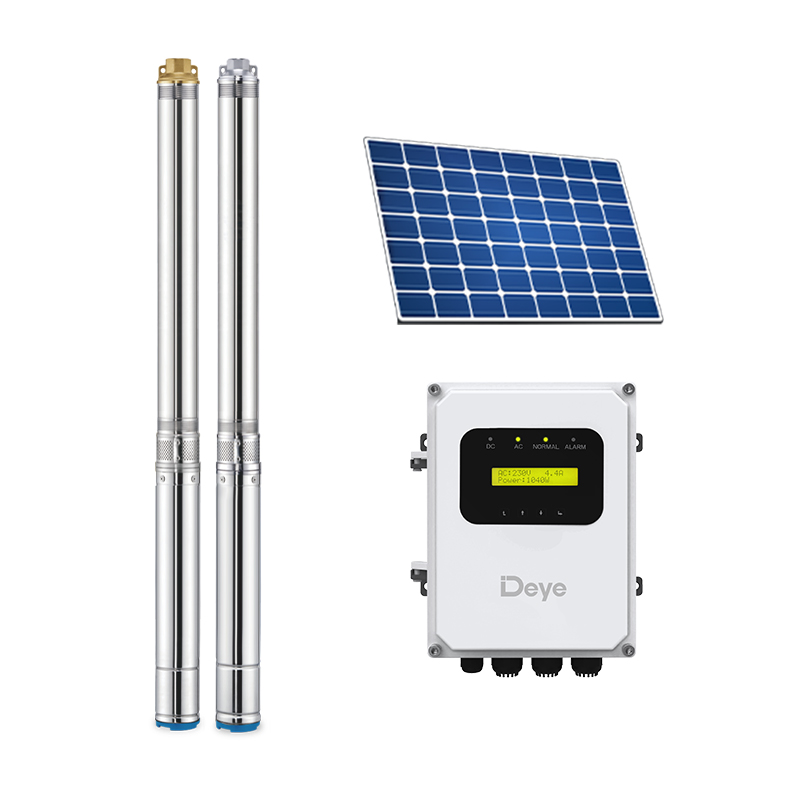
4 Inch Solar AC/DC Pump Controller (600-3000W) Plastic Impeller Submersible Pumps
-
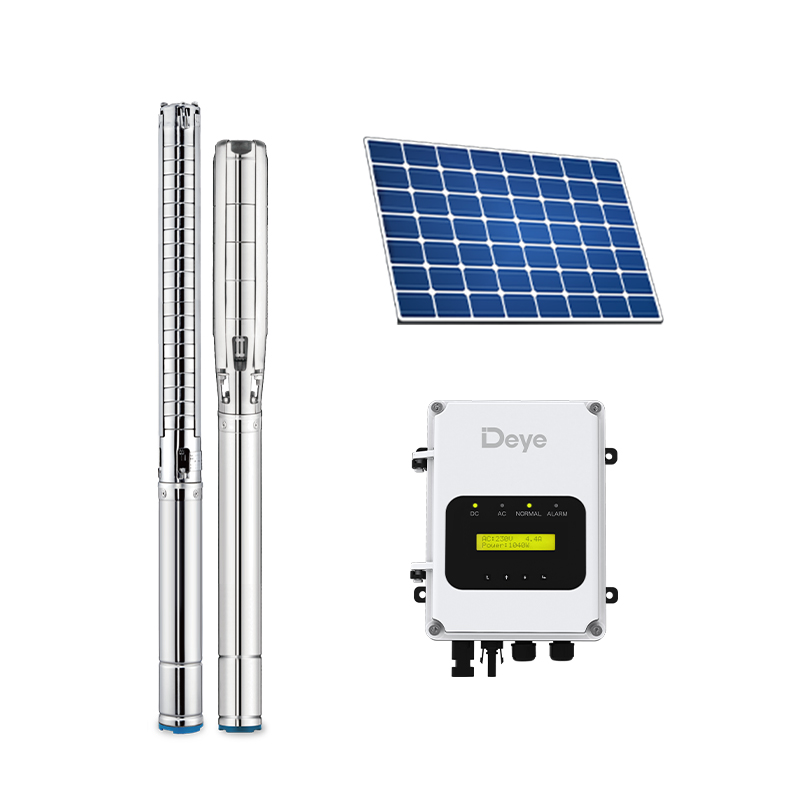
4 Inch Solar AC/DC Pump Controller (800-3000W) Stainless Steel Impeller Submersible Pumps
-
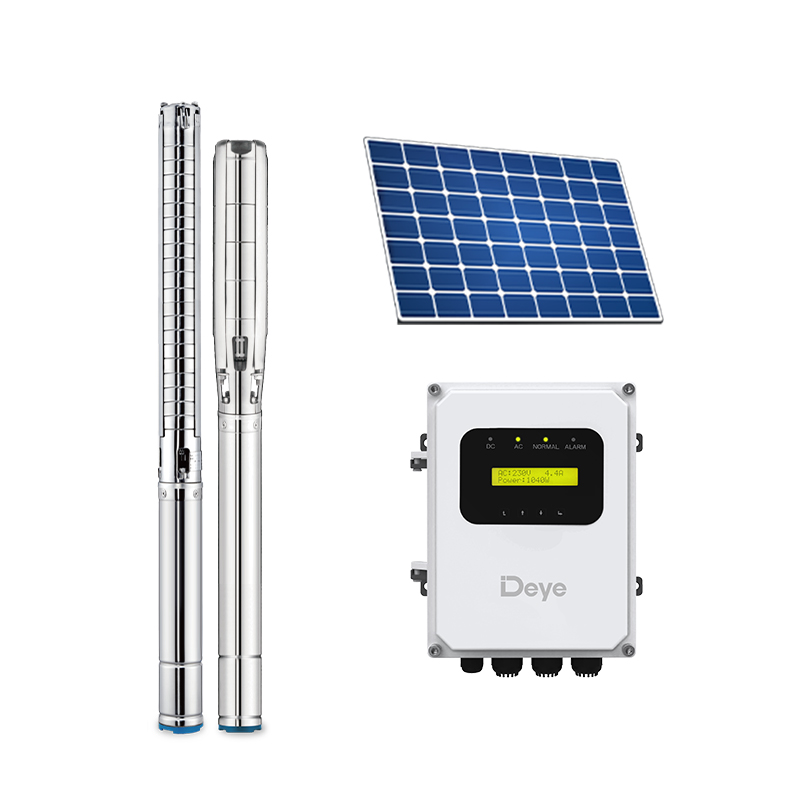
6 Inch Solar AC/DC Pump Controller (800-3000W) Stainless Steel Impeller Submersible Pumps
-
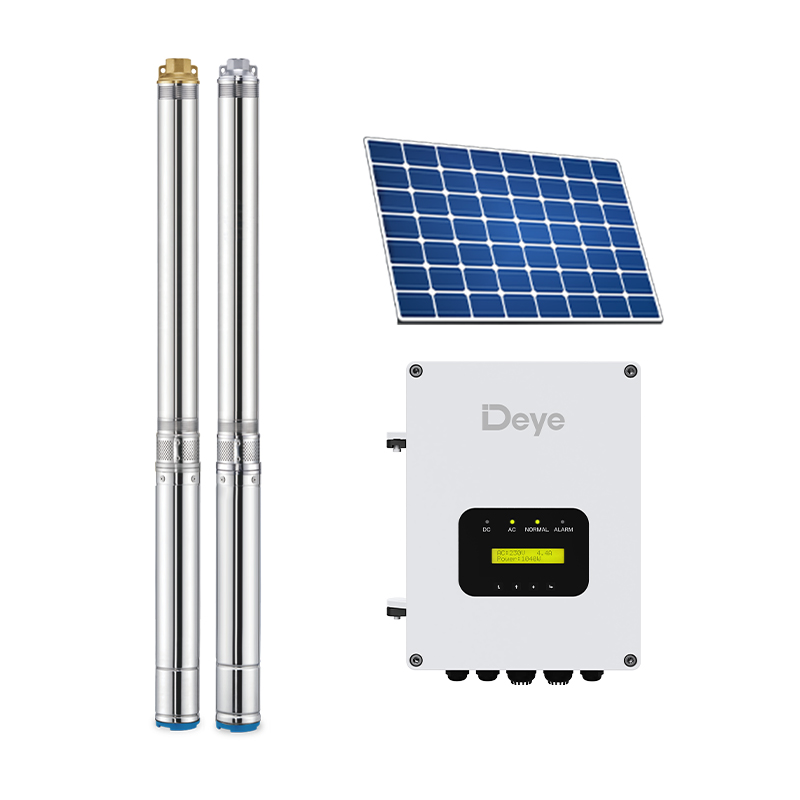
4 Inch High Speed Submersible Solar Pump(5500-13000W)Plastic Impeller Submersible Pumps
4 Inch Solar AC/DC Pump Controller (600-3000W) Plastic Impeller Submersible Pumps
- Product Details
- Drawing
Product Details
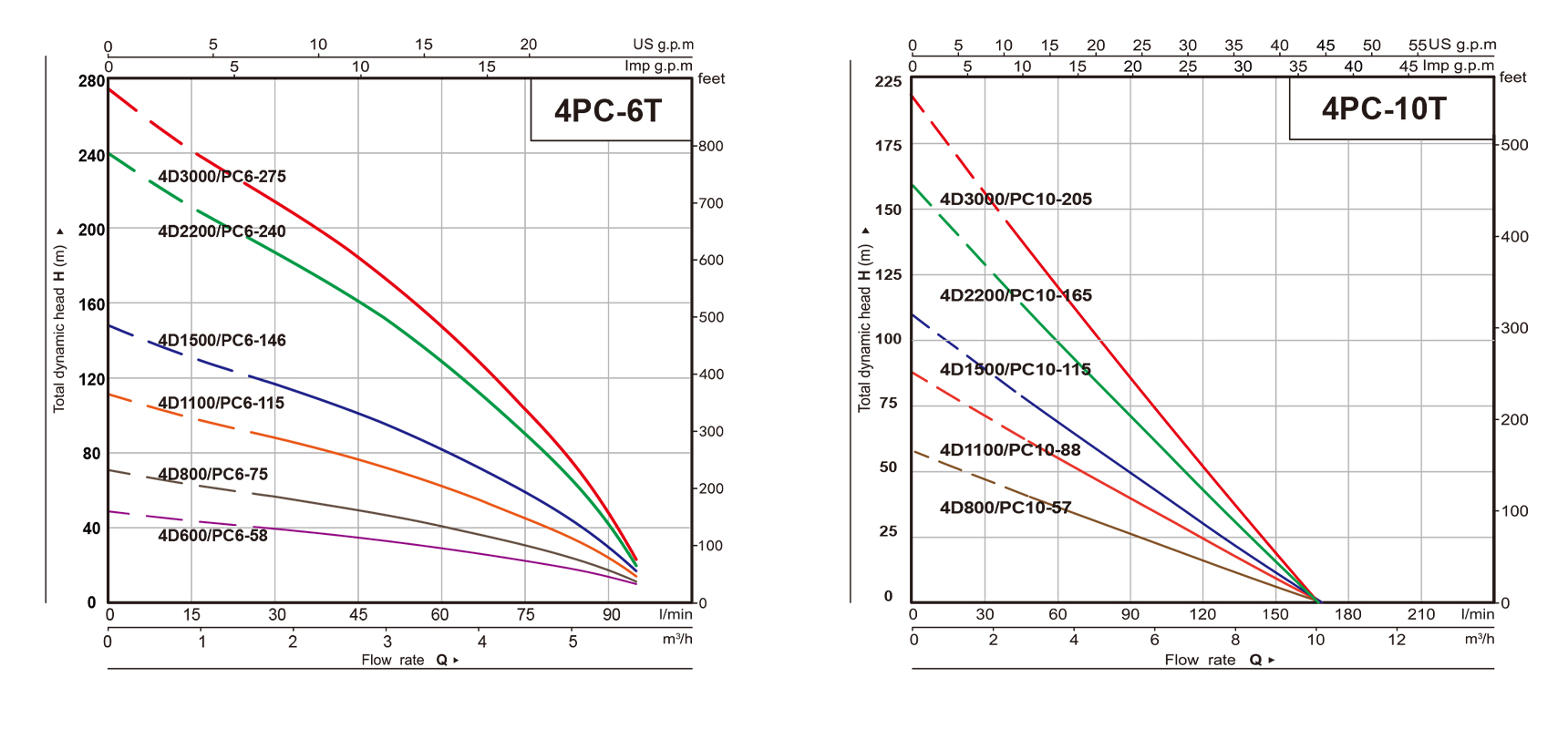
TECHNICAL DATA (4 inch 6m³/h)
| Model | DC Controller |
AC/DC Controller |
Power (W) |
Voltage (V) |
DELIVERY nmax≈4500r/min | ||||||||||
| Q | m³/h | 0 | 0.9 | 1.8 | 2.7 | 3.0 | 3.6 | 4.5 | 5.4 | 5.7 | |||||
| l/min | 0 | 15 | 30 | 45 | 50 | 60 | 75 | 90 | 95 | ||||||
| 4D600/PC6-58 | DY-D900DC | / | 600 | 65~100 | H(m) | 58 | 53 | 48 | 41 | 37 | 31 | 19 | 7 | 5 | |
| 4D800/PC6-75 | DY-D2000DC | DY-D3600AC/DC | 800 | 90~160 | 75 | 68 | 63 | 54 | 51 | 44 | 31 | 15 | 10 | ||
| 4D1100/PC6-115 | DY-D2000DC | DY-D3600AC/DC | 1100 | 130~200 | 115 | 109 | 100 | 83 | 78 | 68 | 48 | 27 | 19 | ||
| 4D1500/PC6-146 | DY-D2000DC | DY-D3600AC/DC | 1500 | 160~240 | 146 | 131 | 119 | 104 | 97 | 87 | 62 | 32 | 24 | ||
| 4D2200/PC6-240 | / | DY-D3600AC/DC | 2200 | 220~400 | 240 | 220 | 195 | 168 | 150 | 132 | 88 | 48 | 38 | ||
| 4D3000/PC6-275 | / | DY-D3600AC/DC | 3000 | 280~400 | 275 | 262 | 232 | 205 | 188 | 171 | 127 | 79 | 62 | ||
TECHNICAL DATA (4 inch 10m³/h)
| Model | DC Controller |
AC/DC Controller |
Power (W) |
Voltage (V) |
DELIVERY nmax≈4500r/min | ||||||||||
| Q | m³/h | 0 | 1.2 | 2.4 | 3.6 | 4.8 | 6.0 | 7.2 | 8.4 | 9.6 | |||||
| l/min | 0 | 20 | 40 | 60 | 80 | 100 | 120 | 140 | 160 | ||||||
| 4D800/PC10-57 | DY-D2000DC | DY-D3600AC/DC | 800 | 90~160 | H(m) | 57 | 54 | 52 | 50 | 43 | 36 | 28 | 20 | 10 | |
| 4D1100/PC10-88 | DY-D2000DC | DY-D3600AC/DC | 1100 | 130~200 | 88 | 80 | 78 | 76 | 63 | 53 | 40 | 25 | 11 | ||
| 4D1500/PC10-115 | DY-D2000DC | DY-D3600AC/DC | 1500 | 160~240 | 115 | 106 | 102 | 99 | 81 | 68 | 48 | 31 | 13 | ||
| 4D2200/PC10-165 | / | DY-D3600AC/DC | 2200 | 220~400 | 165 | 153 | 141 | 138 | 113 | 95 | 70 | 40 | 14 | ||
| 4D3000/PC10-205 | / | DY-D3600AC/DC | 3000 | 280~400 | 205 | 187 | 182 | 169 | 143 | 118 | 90 | 62 | 20 | ||
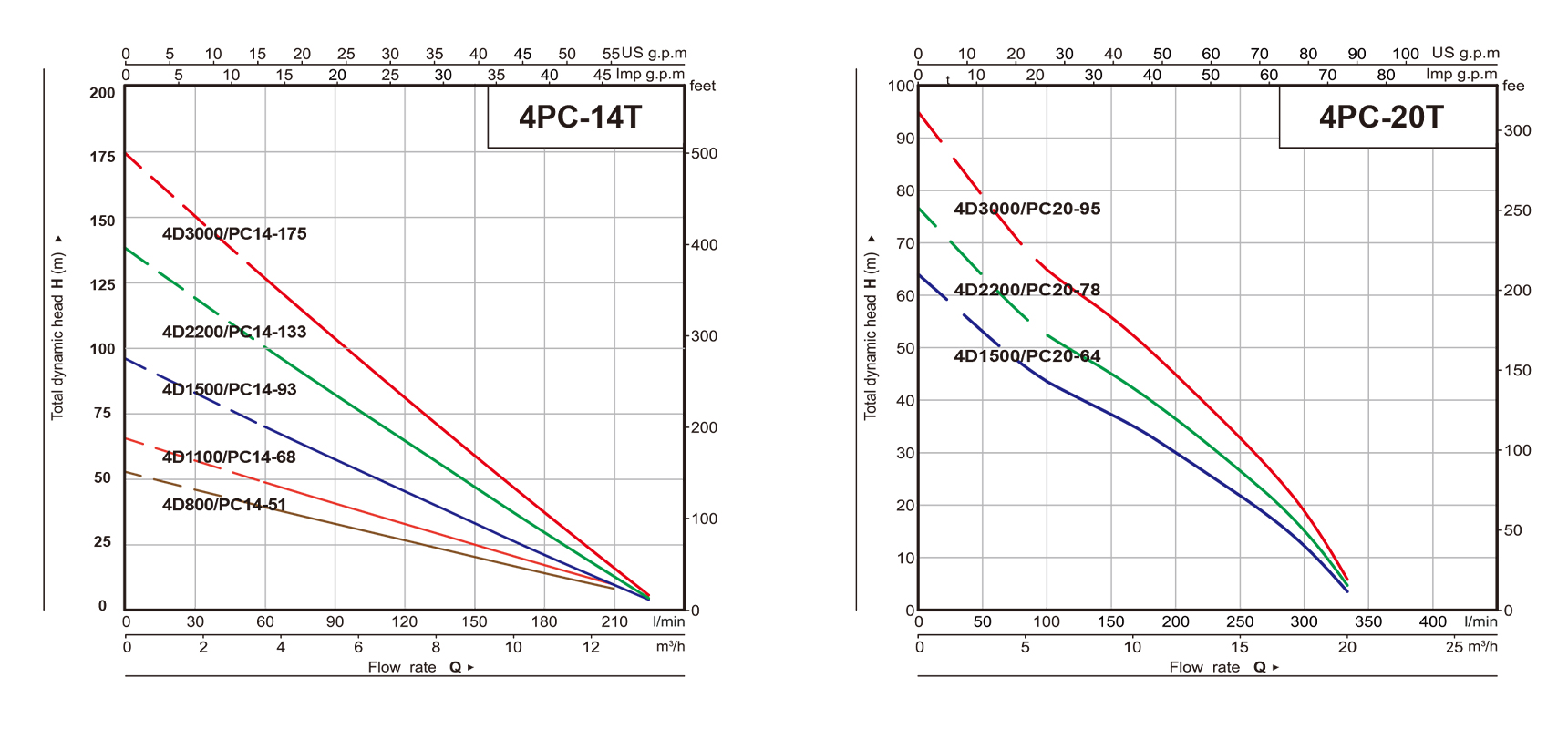
TECHNICAL DATA (3 inch 4.5m³/h)
| Model | DC Controller |
AC/DC Controller |
Power (W) |
Voltage (V) |
DELIVERY nmax≈4500r/min | ||||||||||
| Q | m³/h | 0 | 1.8 | 3.6 | 5.4 | 7.2 | 9.0 | 10.8 | 12.6 | 13.2 | |||||
| l/min | 0 | 30 | 60 | 90 | 120 | 150 | 180 | 210 | 220 | ||||||
| 4D800/PC14-51 | DY-D2000DC | DY-D3600AC/DC | 800 | 90~160 | H(m) | 51 | 43 | 38 | 33 | 26 | 19 | 12 | 5 | 2 | |
| 4D1100/PC14-68 | DY-D2000DC | DY-D3600AC/DC | 1100 | 130~200 | 68 | 61 | 56 | 50 | 41 | 31 | 23 | 11 | 8 | ||
| 4D1500/PC14-93 | DY-D2000DC | DY-D3600AC/DC | 1500 | 160~240 | 93 | 81 | 73 | 65 | 51 | 35 | 26 | 13 | 9 | ||
| 4D2200/PC14-133 | / | DY-D3600AC/DC | 2200 | 220~400 | 133 | 116 | 104 | 92 | 73 | 54 | 36 | 18 | 11 | ||
| 4D3000/PC14-175 | / | DY-D3600AC/DC | 3000 | 280~400 | 175 | 146 | 127 | 123 | 100 | 77 | 57 | 33 | 23 | ||
TECHNICAL DATA (3 inch 4.5m³/h)
| Model | DC Controller |
AC/DC Controller |
Power (W) |
Voltage (V) |
DELIVERY nmax≈4500r/min | ||||||||||
| Q | m³/h | 0 | 2.4 | 4.8 | 7.2 | 9.6 | 12.0 | 14.4 | 16.8 | 19.2 | |||||
| l/min | 0 | 40 | 80 | 120 | 160 | 200 | 240 | 280 | 320 | ||||||
| 4D1500/PC20-64 | DY-D2000DC | DY-D3600AC/DC | 1500 | 160~240 | H(m) | 64 | 58 | 48 | 42 | 36 | 31 | 24 | 16 | 6 | |
| 4D2200/PC20-78 | DY-D2000DC | DY-D3600AC/DC | 2200 | 220~400 | 78 | 77 | 68 | 60 | 52 | 44 | 35 | 25 | 14 | ||
| 4D3000/PC20-95 | / | DY-D3600AC/DC | 3000 | 280~400 | 95 | 91 | 86 | 68 | 60 | 58 | 44 | 32 | 22 | ||
Drawing
Related Products
-
Premium 4-inch stainless steel impeller pump features full anti-rust & anti-silt performance, to...View Product
-
Compact 3-inch plastic impeller solar pump with low power range, engineered for single-family scatte...View Product
-
This 6-inch stainless steel impeller AC/DC solar submersible pump (800~3000W) is developed for large...View Product
-
4 inch High Speed AC/DC Solar Submersible Pump, 5500-13000W with plastic impeller. Optimized for lar...View Product
-
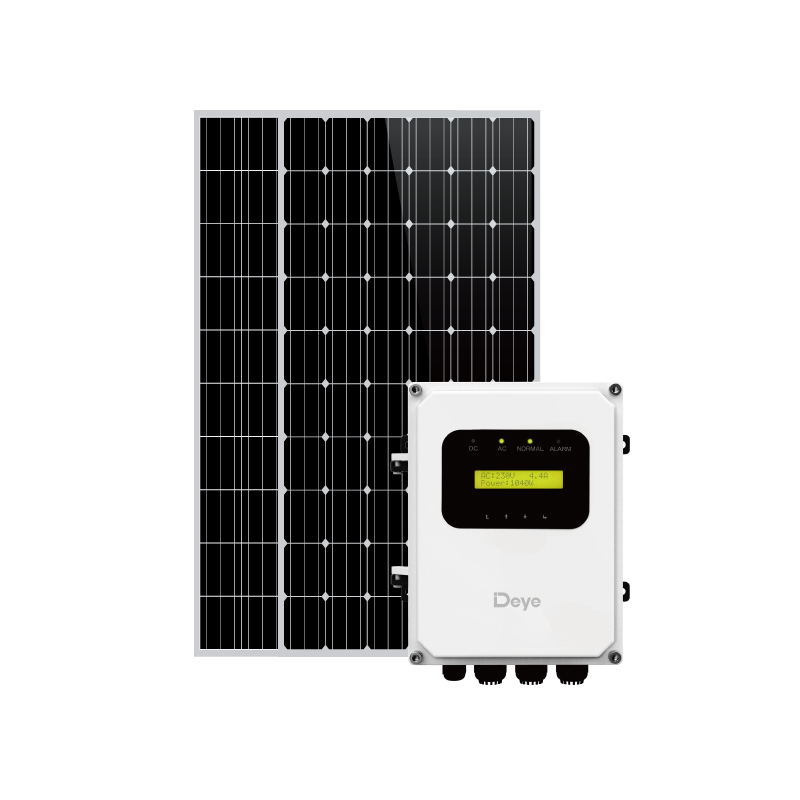 The AC/DC Auto Switch Controller adopts solar-first intelligent switching logic for a 24-hour uninte...View Product
 -
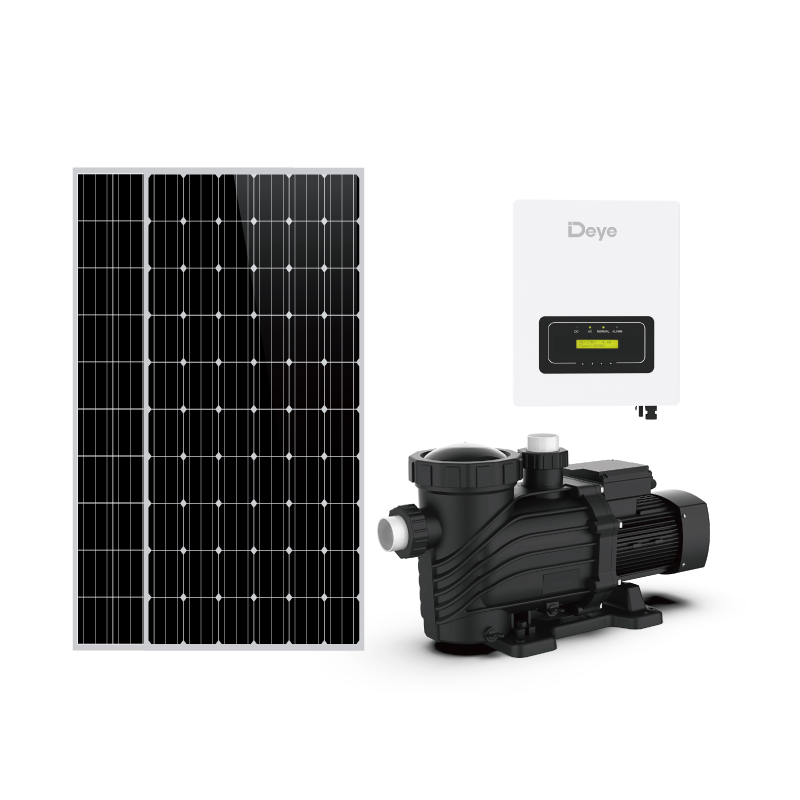 Deye Solar swimming pool pump is a simple, intelligent and worry-free solution that suitable for var...View Product
About Deye
Zhejiang Deye Electrical Appliances Co., Ltd.
Since its establishment in 1990, Deye Group has been dedicated to the research, development, and manufacturing of submersible pumps and pump controllers. We are built on a foundation of precision engineering and a commitment to manufacturing excellence.
At Deye, advanced production technologies and stringent quality control processes are integrated into every stage of manufacturing. This disciplined approach, supported by our team of dedicated engineers, ensures that every submersible pump, pool pump, and controller we deliver meets the highest standards of performance, durability, and reliability.
We go beyond manufacturing pumps; we build trust. Deye Group is a China 4 Inch Solar AC/DC Pump Controller (600-3000W) Plastic Impeller Submersible Pumps Suppliers, committed to providing stable, efficient, and intelligent water system solutions for global users, striving to be your trusted long-term partner.
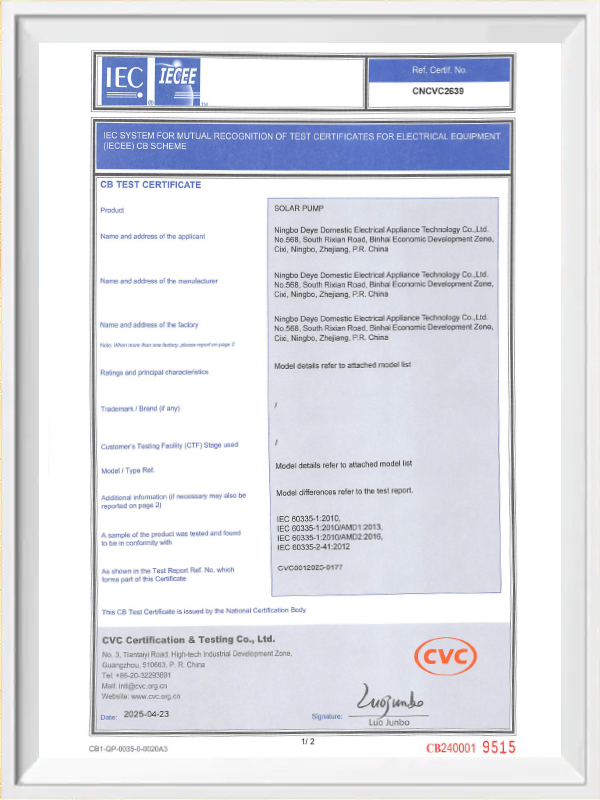
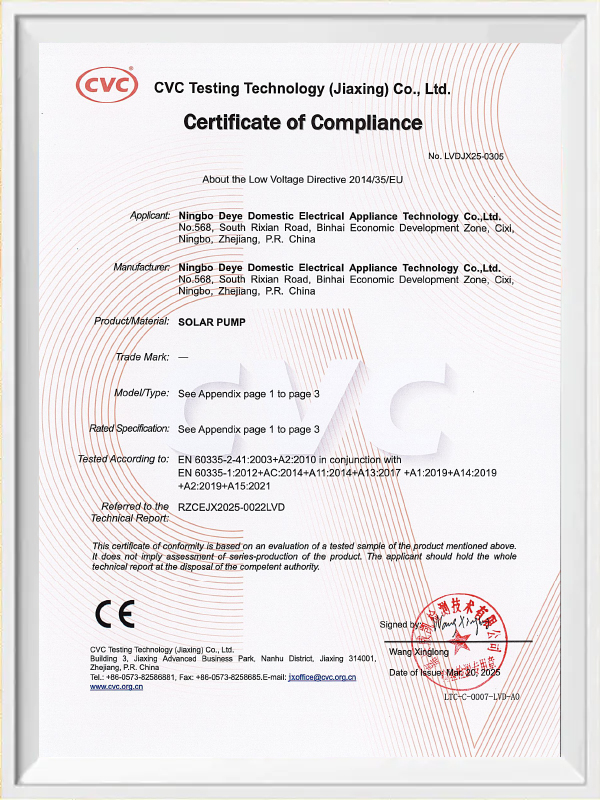
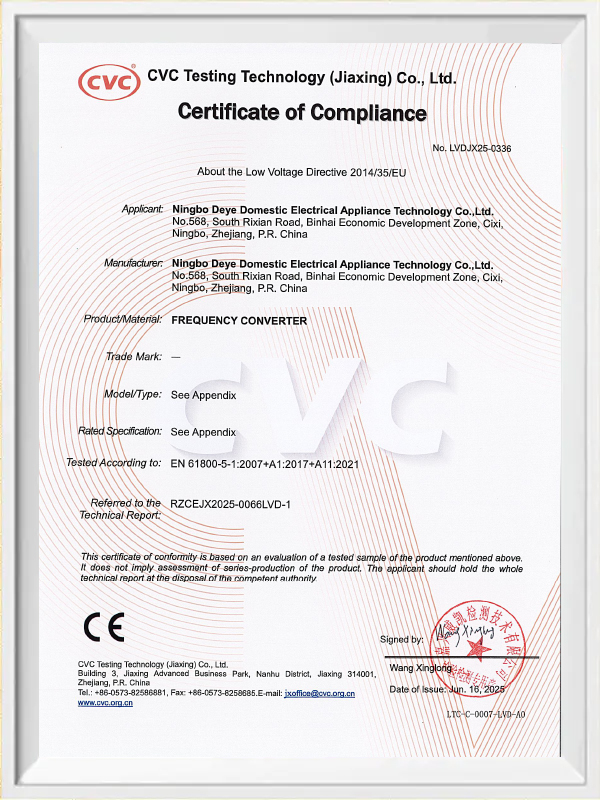
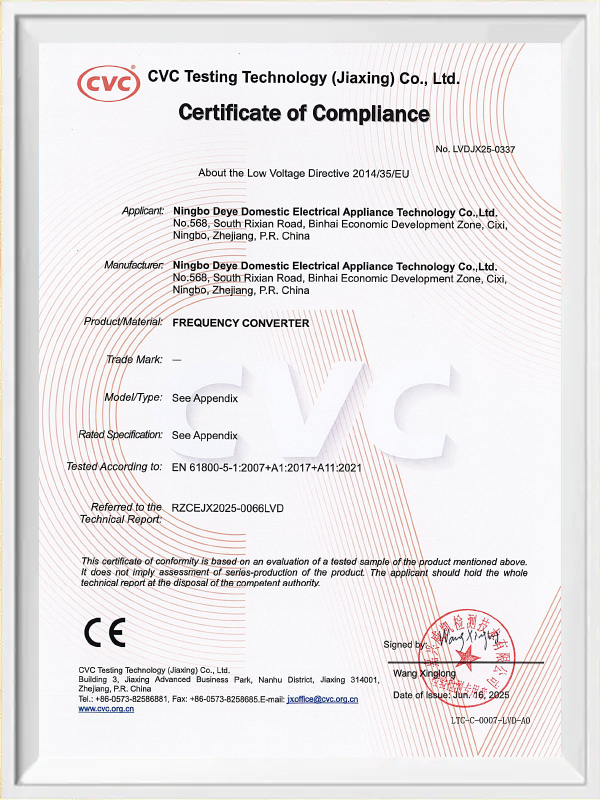
Certificate Of Honor

Recent News
-
Two identical 3-inch submersible pumps, installed a few hundred metres apart on the same kind of borehole, can behave completely differently: one lifts water all afternoon, the o...
Read More -
A pond solar pump is a photovoltaic-powered water pump that moves water from a pond for aeration, circulation, irrigation, or transfer. If your pond has no reliable grid connecti...
Read More -
A solar deep well water pump is a submersible pump powered by photovoltaic panels, designed to lift water from deep boreholes where grid electricity is unreliable or unavailable....
Read More -
If you need to move water for irrigation, livestock, or off-grid living, a large solar water pump is usually defined as a system rated at 4 kW or higher. The right large solar pu...
Read More
Solar Submersible Pump Industry Knowledge
1. Introduction
The 4-inch solar AC/DC pump controller paired with a plastic impeller submersible pump forms an integrated solar water pumping system covering a motor power range of 600 W to 3000 W. This configuration is designed for mid-range groundwater extraction from standard 4-inch (100 mm) boreholes, operated primarily on solar PV power with the capability to supplement or switch to AC grid or generator input when solar irradiance is insufficient.
Deye Group has been engineering submersible pumps and pump controllers since 1990. The 4-inch AC/DC product line reflects accumulated expertise in matching controller electronics with pump hydraulic performance to deliver reliable field operation across diverse geographic and climatic conditions.
2. Understanding the AC/DC Dual-Input Architecture
The defining characteristic of this controller category is its dual-input architecture, which accepts both DC power from PV panels and AC power from a utility grid or diesel generator. This is a critical distinction from single-input solar-only controllers.
| Input Mode | Power Source | Controller Behavior | Typical Scenario |
| Solar Only (DC) | PV array | MPPT active; speed varies with irradiance | Clear-sky daytime operation |
| Grid/Generator Only (AC) | Utility grid or generator | VFD drives motor at rated frequency | Night operation or extended cloud cover |
| Hybrid (DC + AC) | PV primary, AC supplemental | Solar prioritized; AC fills deficit | Partial cloud, morning/evening operation |
This hybrid logic allows the system to maximize solar utilization while guaranteeing continuous pump operation regardless of weather, without requiring battery storage. The transition between input sources is handled automatically by the controller firmware.
3. Plastic Impeller: Material Properties and Suitability
In this product range, the pump's hydraulic stage components — including impellers, diffusers, and bowls — are fabricated from engineering-grade thermoplastics, most commonly Noryl (PPO alloy) or glass-fiber-reinforced polypropylene (GF-PP). These materials are selected for their combination of chemical resistance, dimensional stability, and low manufacturing cost relative to stainless steel.
3.1 Material Properties
- Chemical resistance: Resistant to corrosion from dissolved minerals, mild acids, and common groundwater chemistry. Not suited to strongly acidic (pH below 5) or strongly alkaline (pH above 9) water without specific material verification.
- Abrasion limitation: Plastic impellers exhibit higher wear rates than stainless steel when the pumped water carries sand, grit, or abrasive particles above the rated tolerance (typically 0.1% by mass). Source water quality must be assessed before selection.
- Temperature range: Suitable for groundwater temperatures typically encountered in borehole applications (5 degrees C to 40 degrees C). Noryl-based materials maintain dimensional stability within this range.
- Weight advantage: Lower density than stainless steel reduces overall pump weight, simplifying handling and installation in the field.
3.2 When Plastic Impellers Are Appropriate
Plastic impeller pumps in the 600-3000 W range are appropriate when:
- Source water is clean groundwater from consolidated rock or cased boreholes with low sediment yield.
- The project requires cost-effective system deployment where stainless steel impeller performance is not required by water conditions.
- The installation is in a non-saline, non-brackish water environment where stainless steel's corrosion advantage is not a factor.
4. Hydraulic Performance Range
Within the 600-3000 W power band, the hydraulic output of a 4-inch submersible pump varies significantly by motor rating and the number of impeller stages. The following table illustrates the general performance envelope across this range. Actual values depend on specific model selection.
| Motor Power | Typical Flow Range (m3/h) | Typical Max Head (m) | Common Application Depth |
| 600 W | 1 to 3 | 40 to 80 | Shallow to medium borehole |
| 1100 W | 2 to 5 | 60 to 110 | Medium borehole depth |
| 1500 W | 3 to 7 | 80 to 130 | Medium to deep borehole |
| 2200 W | 4 to 9 | 100 to 160 | Deep borehole |
| 3000 W | 5 to 12 | 120 to 200 | Deep borehole, higher flow demand |
Note: Values above are indicative reference ranges for standard 4-inch multi-stage submersible pump configurations. Consult the relevant product datasheet for certified pump curve data.
5. Controller Key Parameters and Features
- MPPT tracking efficiency: Typically above 99% under stable irradiance conditions, minimizing PV power losses.
- DC input voltage range: Accommodates a range of PV array string configurations; maximum input voltage (Voc) must not be exceeded during cold-temperature conditions when PV open-circuit voltage peaks.
- AC input compatibility: Accepts single-phase or three-phase AC (model-dependent), 50 Hz or 60 Hz, from grid or generator.
- Three-phase AC output: Variable frequency (0 to 50/60 Hz) for smooth motor speed control proportional to available solar power.
- LCD display and keypad: On-unit parameter setting for motor current threshold, restart delay, water level control mode, and input source priority.
- RS485 / Modbus communication: Supports remote monitoring and integration with external control systems or IoT platforms where required.
- Protection suite: Dry-run, over-voltage, under-voltage, over-current, short-circuit, over-temperature, and automatic restart after fault clearance.
6. Installation and Commissioning Checklist
- Verify borehole internal diameter: Confirm that the cased borehole internal diameter provides sufficient clearance for the 4-inch pump body and allows water to pass the motor for cooling.
- Calculate total dynamic head (TDH): Include static water level, expected drawdown, vertical delivery height, and pipe friction losses before selecting motor power and number of stages.
- Size the PV array correctly: Total panel Wp should be 1.2 to 1.5 times the motor rated power in watts; PV open-circuit voltage must not exceed the controller's maximum rated DC input voltage.
- Use rated submersible cable: Cable cross-section must be sized for the rated motor current and the total cable length (pump depth plus surface routing) to limit voltage drop below 3%.
- Install a check valve: Fit a non-return check valve on the discharge pipe to prevent backflow and water hammer when the pump stops.
- Set motor protection parameters: Configure the controller's rated motor current (nameplate value) and dry-run delay time before initial startup.
- Ground the system: Both the controller enclosure and the PV array frame must be connected to a proper earth ground to comply with electrical safety requirements.
7. Frequently Asked Questions
Q1: Can this controller be used with an existing 3-phase AC submersible pump not originally sold with a solar controller?
Yes, provided the pump motor's rated power, voltage, and frequency fall within the controller's output specifications. The controller's rated motor current parameter must be set to match the nameplate value of the existing motor. Compatibility should be verified against both the motor nameplate data and the controller technical datasheet before connection.
Q2: How does the controller handle the transition between solar and AC grid power?
When solar irradiance drops below the minimum threshold required to maintain motor operation, the controller detects the condition through DC bus voltage monitoring and automatically activates the AC input channel. The transition is managed internally without requiring manual intervention. Solar power is restored as the primary source once irradiance recovers above the restart threshold.
Q3: What water quality conditions would require upgrading from plastic to stainless steel impellers?
An upgrade to stainless steel impellers should be considered when the source water contains sand or abrasive particles above 0.1% by mass, when the water pH is outside the range of 5 to 9, or when the water has elevated salinity or aggressive dissolved minerals. For standard clean freshwater boreholes, plastic impellers are a viable and cost-appropriate selection.
Q4: Is it necessary to install a battery with this system?
No battery is required in most configurations. The AC input channel of the hybrid controller fulfills the role that a battery bank would otherwise serve — ensuring operation during periods of low or zero solar generation. Where nighttime pumping is required and no grid or generator is available, a battery-backed system using a separate solar charge controller and inverter would be a different system architecture.
Q5: What is the recommended maintenance interval for this pump system?
As a general reference, the pump should be retrieved and inspected every 2 to 3 years under normal operating conditions, or sooner if performance degradation (reduced flow rate or increased current draw) is observed. Inspection covers impeller wear, shaft seal condition, motor winding insulation resistance, and submersible cable integrity. The controller requires periodic cleaning of ventilation slots and inspection of terminal connections.

- No. 26, Yongjiang South Road, Beilun Dirstrict, Ningbo City, Zhejiang, China.
-
[email protected] ( Daniel )
+86-13923361908 ( WhatsApp )
-
[email protected] ( Chris )
+86-18186995218 ( WhatsApp )
-
+86-15888503217 ( Mark Pan )
[email protected] ( WhatsApp )
QUICK LINK
SUPPORT
Copyright ©Zhejiang Deye Electrical Appliances Co., Ltd. All Rights Reserved. 4 Inch Solar AC/DC Pump Controller (600-3000W) Plastic Impeller Submersible Pumps Suppliers

 Back to Top