1. Introduction
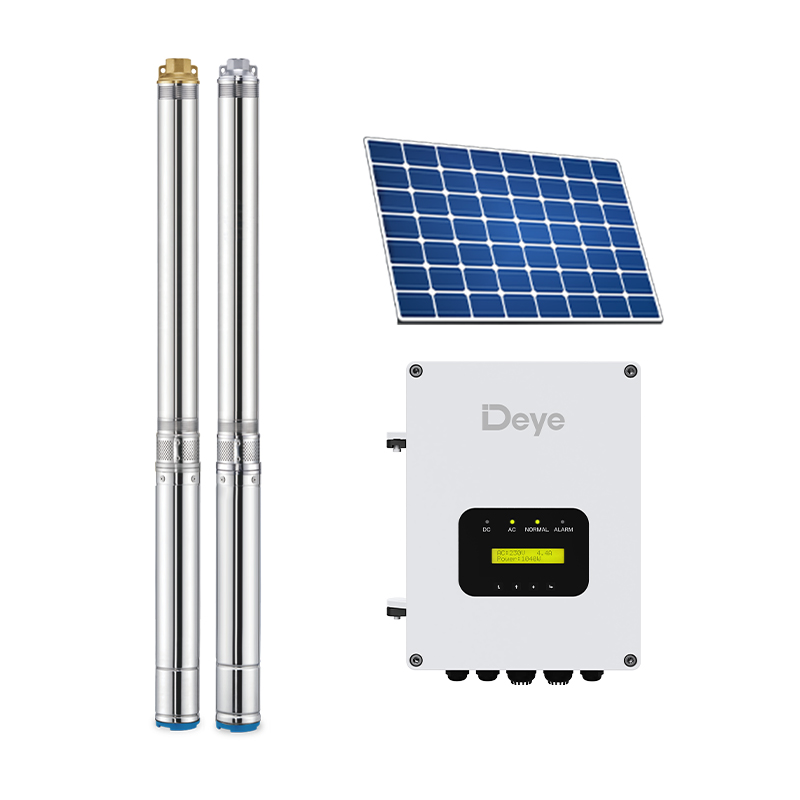
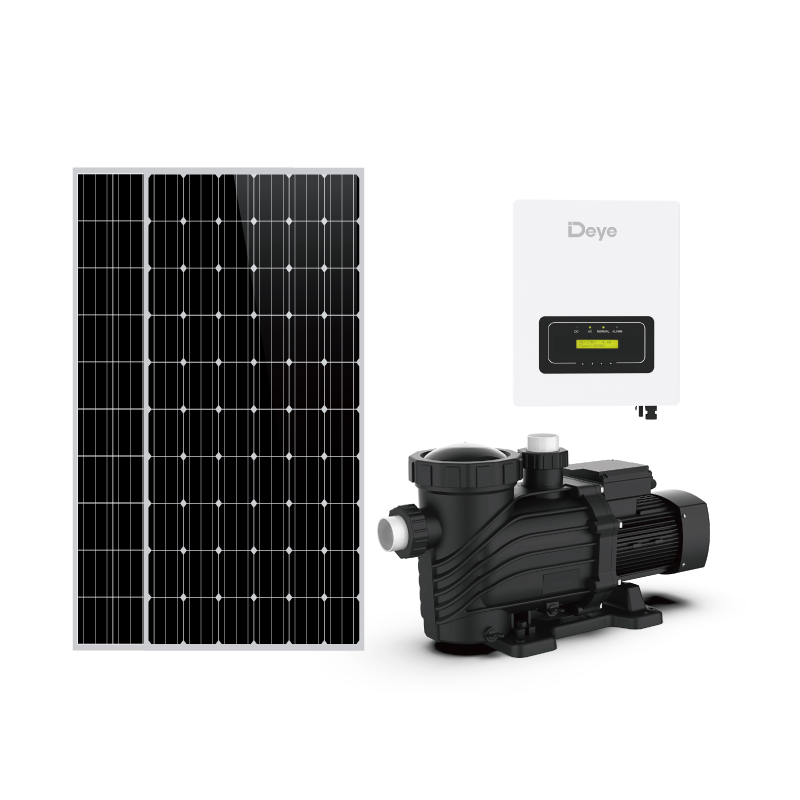
In large-scale agricultural irrigation, municipal water supply, and industrial fluid management, high-power pump controllers operating in the 5500W to 13000W range serve as the operational backbone of complex pumping systems. The Auto-switch AC/DC Pump Controller represents the current mainstream solution for installations requiring uninterrupted pump operation regardless of solar energy availability — automatically transitioning between photovoltaic (PV) DC input and AC grid or generator power without manual intervention.
Deye Group has been engineering submersible pumps and pump controllers since 1990. Across more than three decades of manufacturing practice, Deye has accumulated systematic expertise in high-power pump drive systems, integrating precision electronics design with stringent quality verification at every production stage.
2. Core Concepts and Operating Principles
2.1 What Is an Auto-switch AC/DC Pump Controller
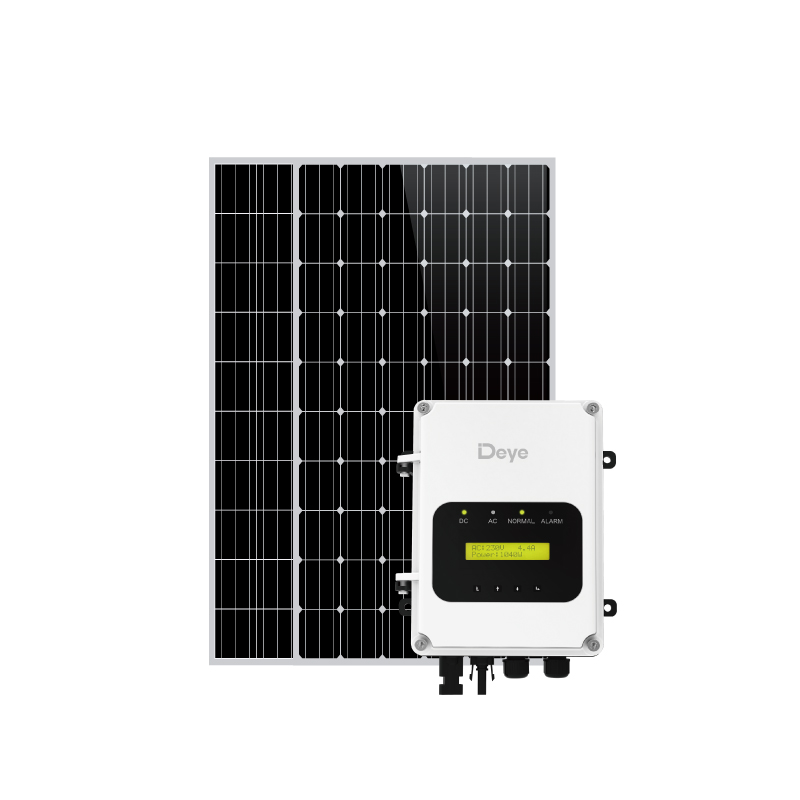
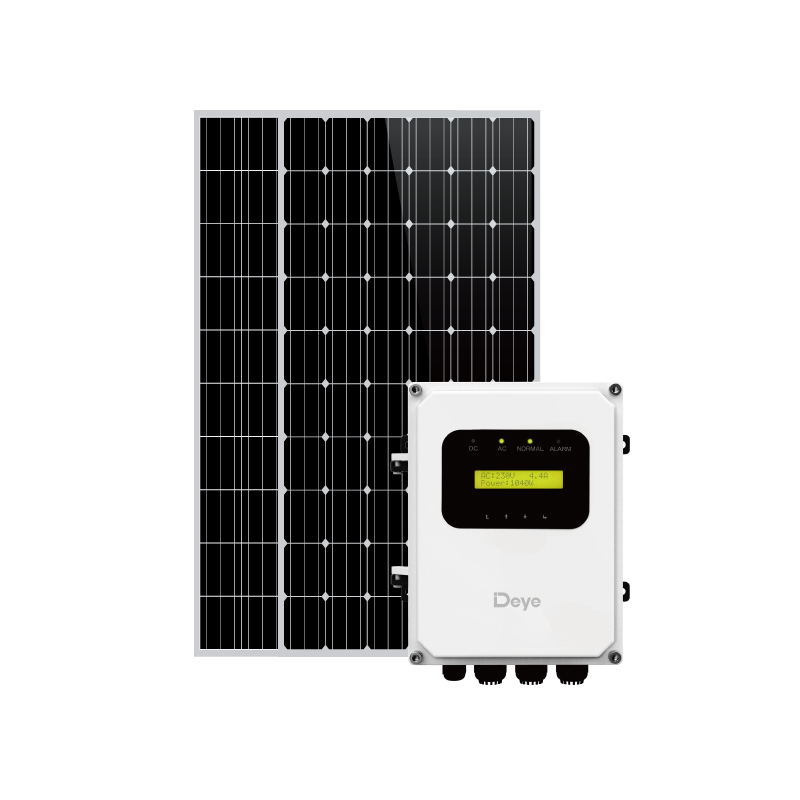
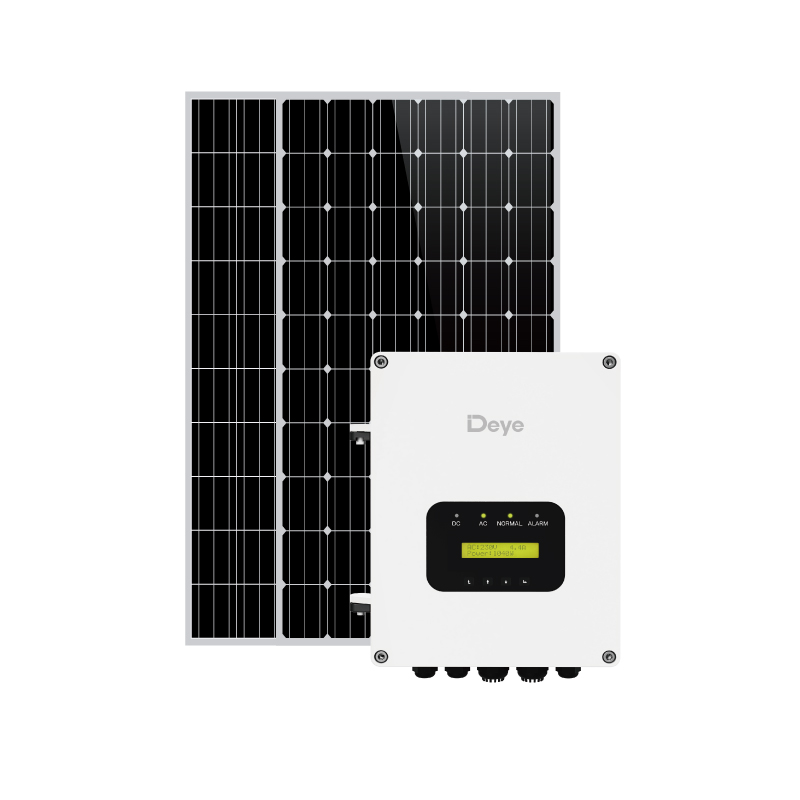
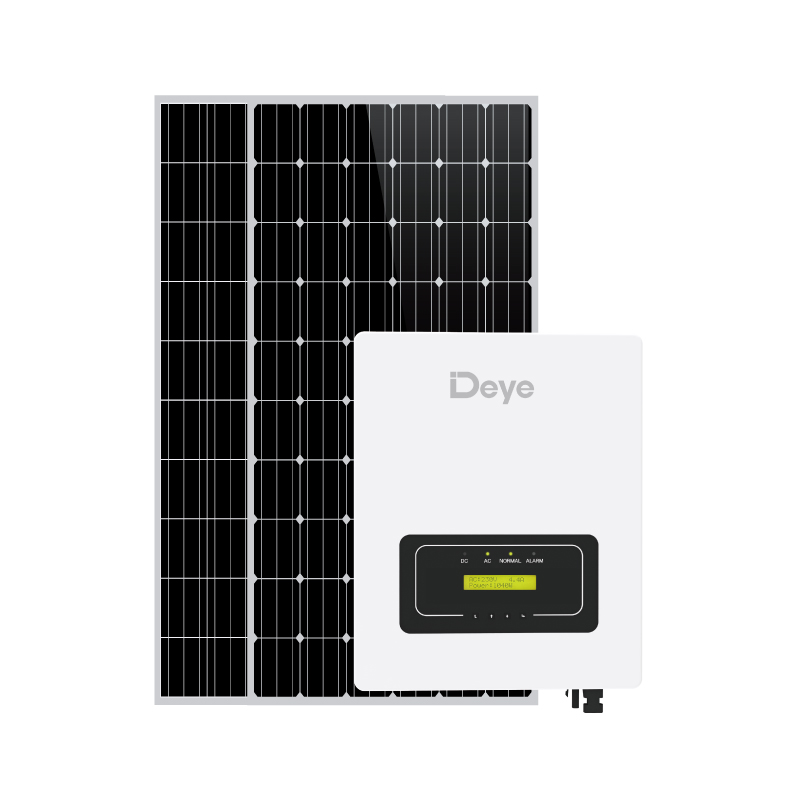
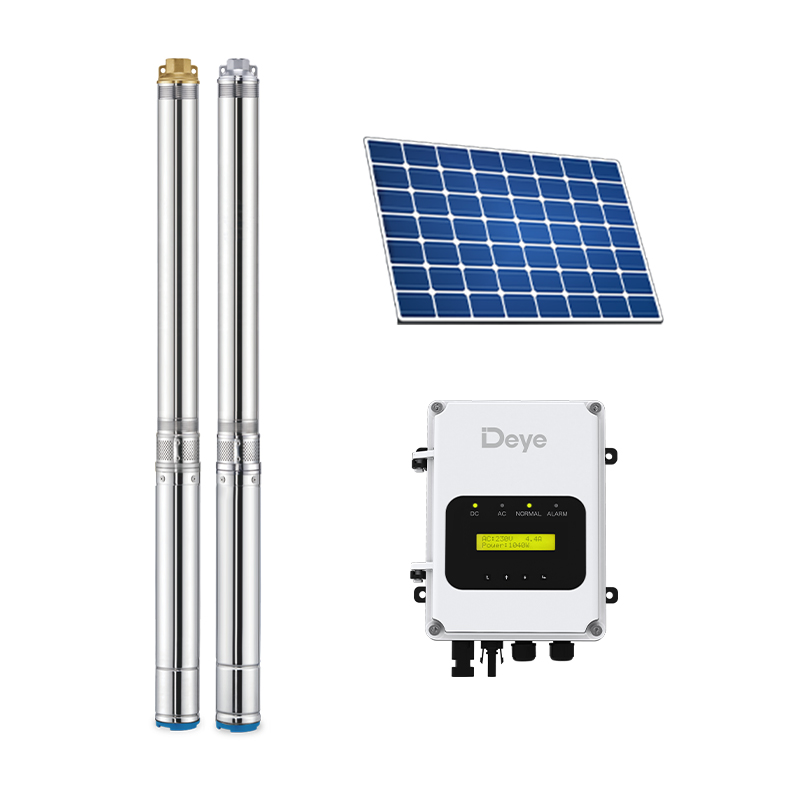
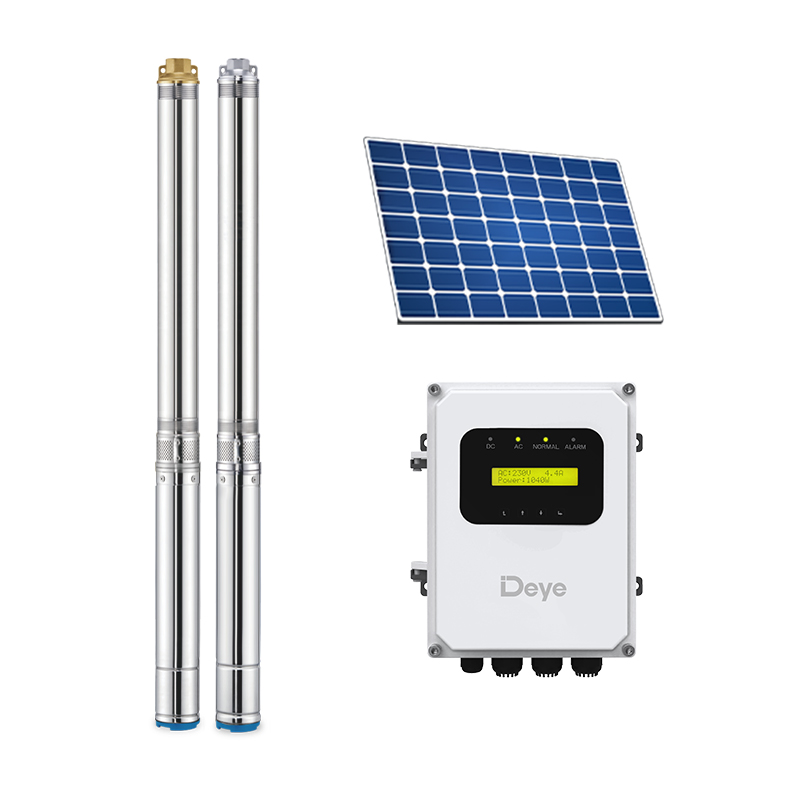
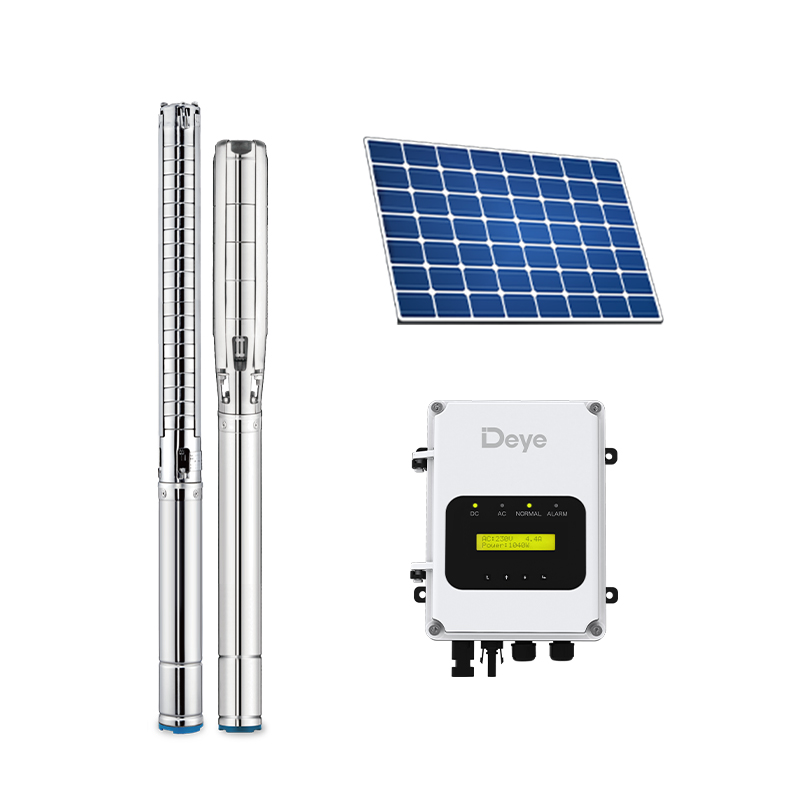
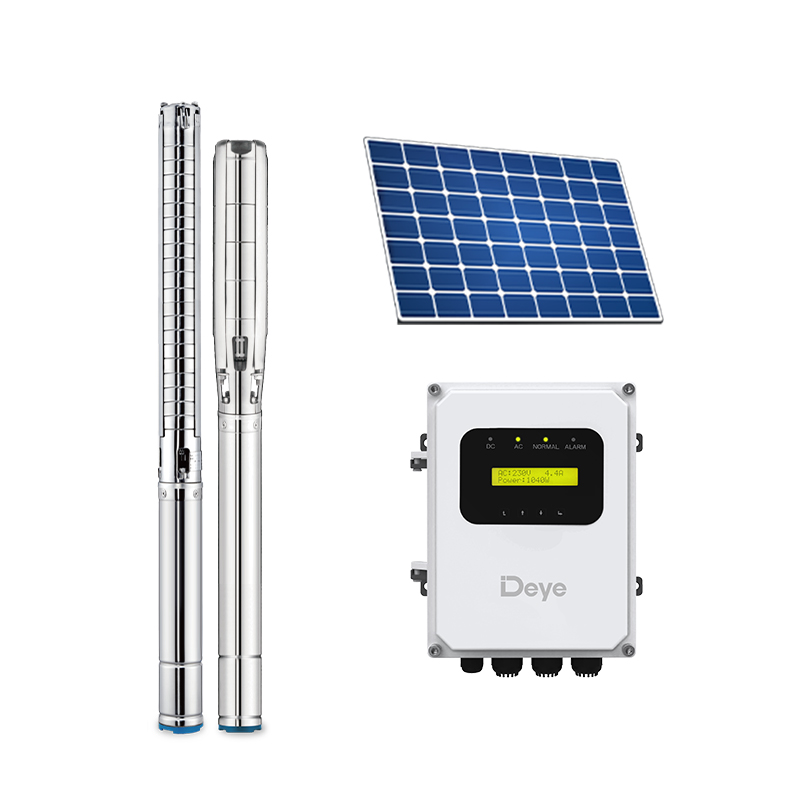
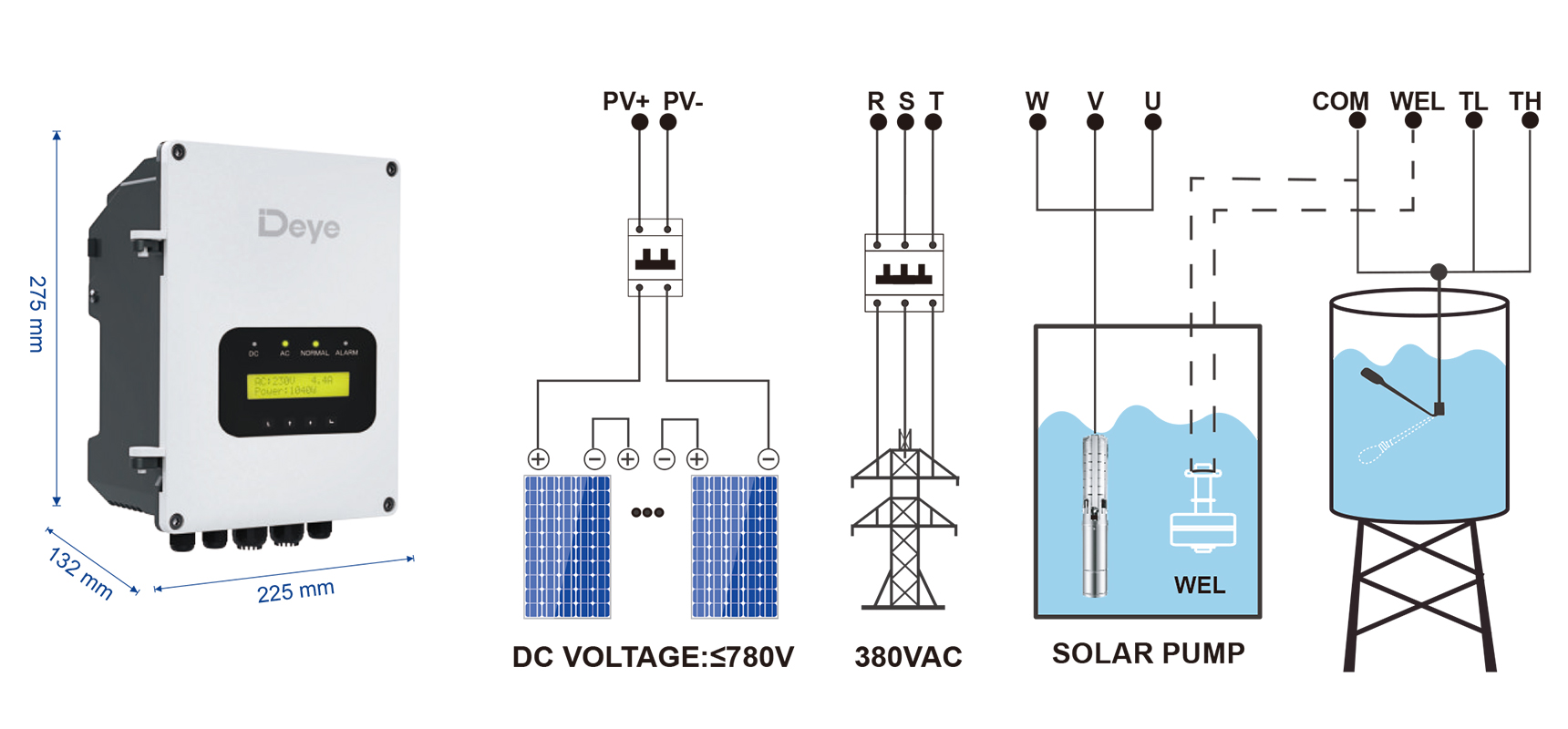
An Auto-switch AC/DC Pump Controller is a power electronics device that accepts both DC input from PV panels and AC input from the utility grid or a diesel generator, then delivers regulated three-phase AC output to drive a submersible or surface pump motor. The defining feature is its automatic source-switching logic: when solar irradiance is sufficient, the controller operates exclusively on PV power; when solar input drops below a configurable threshold, it switches seamlessly to AC power — maintaining continuous pump operation with no manual action required.
At this power class (5500–13000W), the internal architecture integrates several functional modules:
- MPPT (Maximum Power Point Tracking): Continuously adjusts the operating point of the PV array to extract maximum available power under varying irradiance and temperature conditions.
- Variable Frequency Drive (VFD): Regulates output frequency (typically 0–50/60Hz) to control pump motor speed, enabling soft-start and proportional flow control in response to available power.
- Auto-switch Logic Unit: Monitors DC bus voltage and solar input quality in real time, triggering source transfer when predefined thresholds are crossed.
- Protection and Monitoring Circuits: Multi-layer hardware and firmware protection covering motor, power devices, and input sources.
2.2 Auto-switch vs. Manual-switch Operation
Earlier hybrid pump controller designs required an operator to manually toggle between solar and grid modes. The auto-switch architecture eliminates this dependency, which is particularly important in remote agricultural or infrastructure installations where on-site personnel are not present continuously. The switchover event is typically completed within milliseconds to seconds depending on controller design, ensuring minimal interruption to pump output.
3. Typical Technical Specifications
The following table presents representative specifications for controllers in the 5500–13000W range:
| Parameter |
Specification Range |
Notes |
| Rated Output Power |
5500W / 7500W / 9000W / 11000W / 13000W |
Model-dependent |
| DC Input Voltage Range |
200V – 800V DC (typical) |
PV open-circuit voltage dependent |
| AC Input Voltage |
3-phase 380V / 400V / 415V AC |
Grid or generator input |
| Output Voltage |
3-phase 0 – 380V AC (variable) |
VFD output to motor |
| Output Frequency |
0 – 50Hz / 0 – 60Hz |
Adjustable per regional standard |
| MPPT Efficiency |
Greater than 99% |
Industry benchmark |
| Overall Conversion Efficiency |
Up to 97% |
DC-to-AC drive path |
| Applicable Motor Type |
3-phase asynchronous induction motor |
Standard submersible pump motor |
| Protection Rating (Controller) |
IP65 |
Dust-tight, water jet resistant |
| Ambient Operating Temperature |
-10 degrees C to +50 degrees C |
Derated above 40 degrees C in some models |
| Communication Interface |
RS485 / GPRS (optional) |
Remote monitoring capability |
| Display |
LCD with parameter readout |
Voltage, current, frequency, faults |
4. Power Class Comparison
The 5500–13000W range occupies a distinct position within the solar pump controller product spectrum:
| Power Class |
Typical Range |
Primary Use Case |
Motor Phase |
| Low Power |
400W – 2200W |
Domestic supply, small irrigation |
Single-phase |
| Medium Power |
2200W – 5500W |
Medium farms, community water |
Three-phase |
| High Power (this class) |
5500W – 13000W |
Large agriculture, municipal, industrial |
Three-phase |
| Ultra-high Power |
Above 13000W |
Industrial pumping stations |
Three-phase, multi-unit |
5. Application Fields
Controllers in the 5500–13000W class are deployed across high-demand sectors where flow volume, head requirements, and operational continuity are critical:
- Large-scale Agricultural Irrigation: Driving deep-well submersible pumps for irrigation of extensive farmland, particularly in regions with unreliable grid infrastructure.
- Municipal and Rural Water Supply Networks: Supplying water to township-level distribution systems where consistent pressure and flow must be maintained.
- Livestock and Aquaculture Operations: High-volume water delivery for feedlots, fish farms, and poultry facilities requiring continuous supply.
- Irrigation Districts and Canal Lifting Stations: Pumping from open water sources into irrigation canals or distribution reservoirs.
- Construction and Dewatering: Temporary high-power pumping in excavation or mine dewatering applications.
- Industrial Process Water: Cooling water circulation, process fluid transfer, and boiler feedwater in manufacturing environments.
6. Protection and Control Features
| Protection Function |
Description |
| Dry-run Protection |
Detects low or no water condition and shuts down pump to prevent motor damage |
| Over-voltage Protection (DC and AC) |
Shuts down on abnormal input voltage on both DC PV side and AC mains side |
| Under-voltage Protection |
Prevents operation when input voltage is insufficient to sustain rated motor load |
| Over-current and Short-circuit Protection |
Output-side current monitoring with fast fault isolation |
| Over-temperature Protection |
Internal heat sink temperature monitoring; derating or shutdown above threshold |
| Phase-loss Protection |
Detects missing phase in three-phase AC input or output and stops operation |
| Soft-start Function |
Gradual motor speed ramp-up to reduce mechanical shock and inrush current |
| Tank-full Auto Stop |
Accepts float switch or pressure sensor input for automatic stop/restart |
| Lightning and Surge Protection |
SPD (Surge Protective Device) on DC input recommended; some models have built-in TVS |
7. System Design and Sizing Considerations
- PV Array Configuration: The total PV array Voc must remain within the controller DC input voltage range under all temperature conditions. In high-power systems, multiple strings connected in series-parallel arrangements are standard. String combiner boxes with fusing are required.
- Total Dynamic Head (TDH) Calculation: TDH determines the required pump and motor power. For systems in this power range, TDH typically exceeds 50m and can reach several hundred meters in deep borehole applications.
- Daily Water Volume Requirement: Required daily volume divided by available Peak Sun Hours (PSH) at the site determines the minimum flow rate the pump must achieve under solar-only operation.
- AC Source Sizing: The AC grid connection or generator set must be rated for the full controller output power to ensure stable operation during periods of AC-only running.
- Cable Sizing: At 5500–13000W, output current to the motor is substantial (10–25A at 380V three-phase). Cable cross-sections must be calculated for both current-carrying capacity and voltage drop, particularly over long pump cable runs in deep wells.
- Controller Enclosure Placement: Sufficient ventilation clearance, avoidance of direct solar radiation on the enclosure, and proximity to the AC distribution panel are standard installation requirements.
8. Auto-switch Logic: Operating Modes
| Operating Mode |
Trigger Condition |
Power Source Active |
| Solar-only Mode |
PV input above start threshold; AC available or unavailable |
PV (DC) |
| AC Supplement Mode |
PV input present but below minimum operating threshold |
AC grid/generator |
| AC-only Mode |
Night operation or PV array fault |
AC grid/generator |
| Standby / Stop |
Tank-full signal, dry-run condition, or both sources unavailable |
None |
9. Frequently Asked Questions
Q1: Can the controller prioritize solar power and only use AC as a backup?
Yes. The default operating logic of auto-switch controllers in this class is to use PV power whenever solar input is sufficient and switch to AC only when PV input falls below the configured minimum threshold. This priority sequence is fixed in the control firmware and does not require operator input during normal operation.
Q2: What size PV array is required for a 11000W controller?
As a general guideline, the PV array peak power should be sized at approximately 1.2 to 1.5 times the controller rated power to account for real-world derating from temperature, shading, and cable losses. For an 11000W controller, this implies a PV array of approximately 13.2kWp to 16.5kWp. Exact sizing requires site-specific irradiance data and system loss analysis.
Q3: Is the auto-switch function suitable for generator backup?
Yes, provided the generator output voltage and frequency are stable within the controller AC input specification. Diesel or petrol generators with automatic voltage regulation (AVR) are compatible. Generator capacity must equal or exceed the full controller load to avoid overload tripping.
Q4: Can one controller drive multiple pumps simultaneously?
Standard auto-switch controllers in this power range are designed for single motor output. Driving multiple pumps simultaneously requires a multi-pump controller with separate output channels, or individual controllers per pump with a shared PV array and a DC distribution bus. Parallel motor connection to a single VFD output is generally not recommended due to unequal current sharing.
Q5: Does Deye Group provide matched pump-controller system packages in this power range?
Deye Group manufactures both submersible pumps and pump controllers across a wide power range. For high-power applications in the 5500–13000W class, matched pump-controller specifications are available to ensure hydraulic and electrical compatibility, supported by Deye's in-house engineering team.
This article is produced by Deye Group for informational and reference purposes. Specifications referenced are representative of industry-standard products in this category. Individual product parameters should be verified against official product datasheets prior to system design and procurement.


 русский
 Français
 Español
 عربى
عربى Deutsch
 Português
 italiano