

 русский
 Français
 Español
 عربى
عربى Deutsch
 Português
 italiano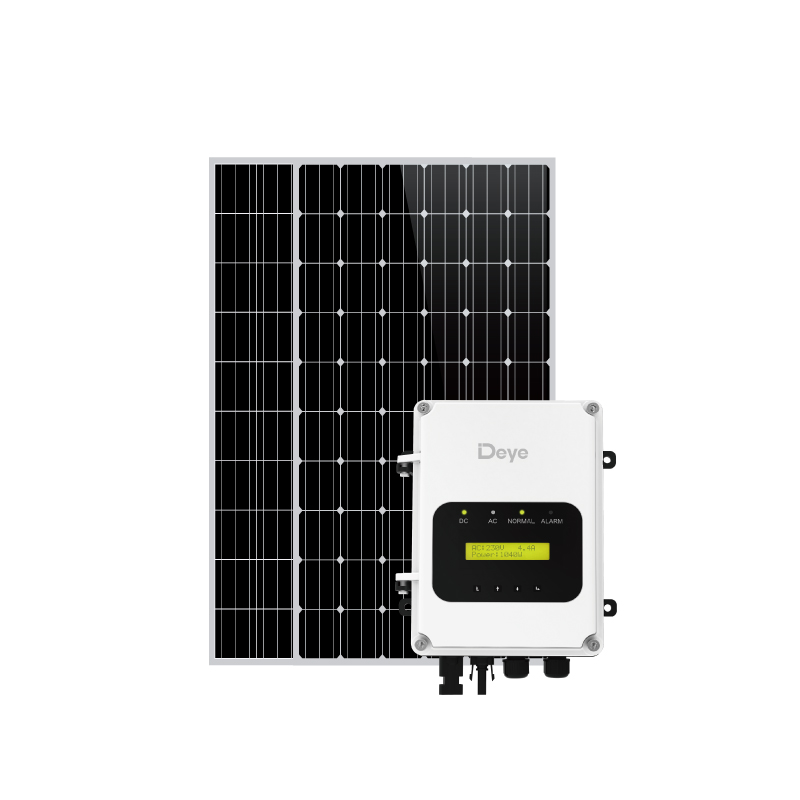
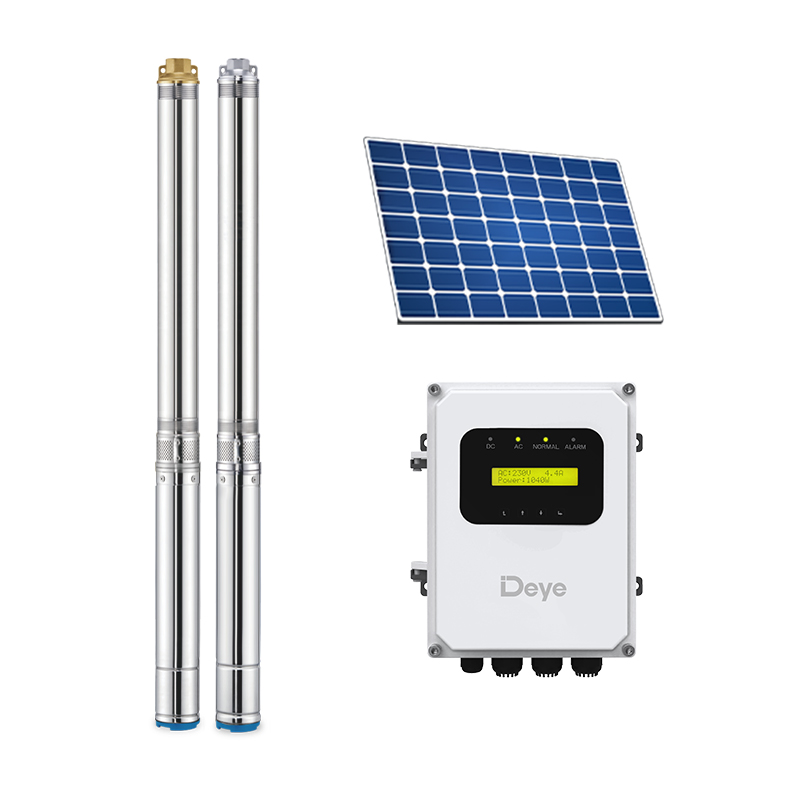
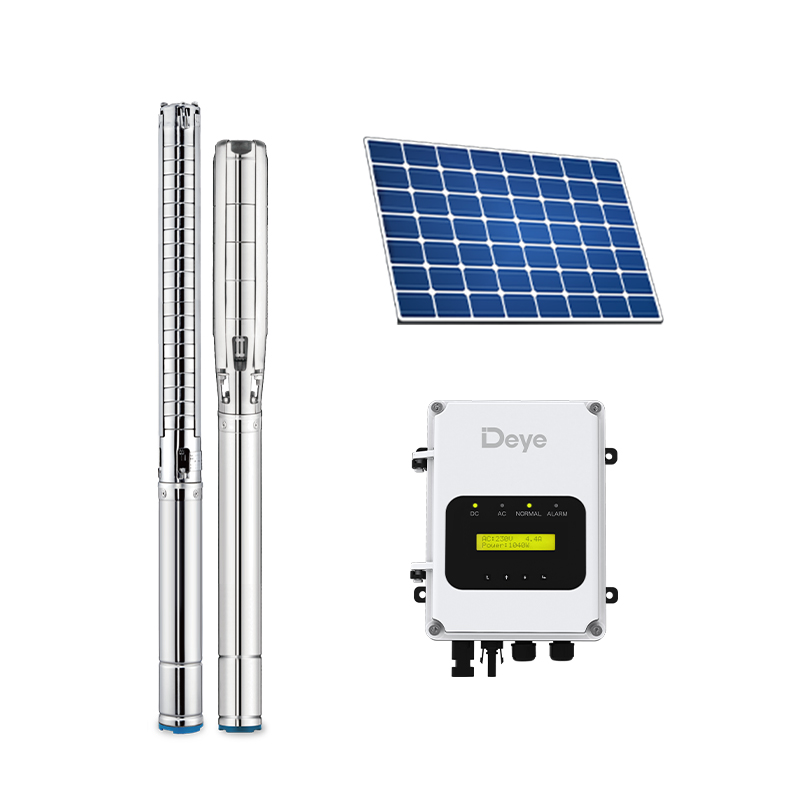
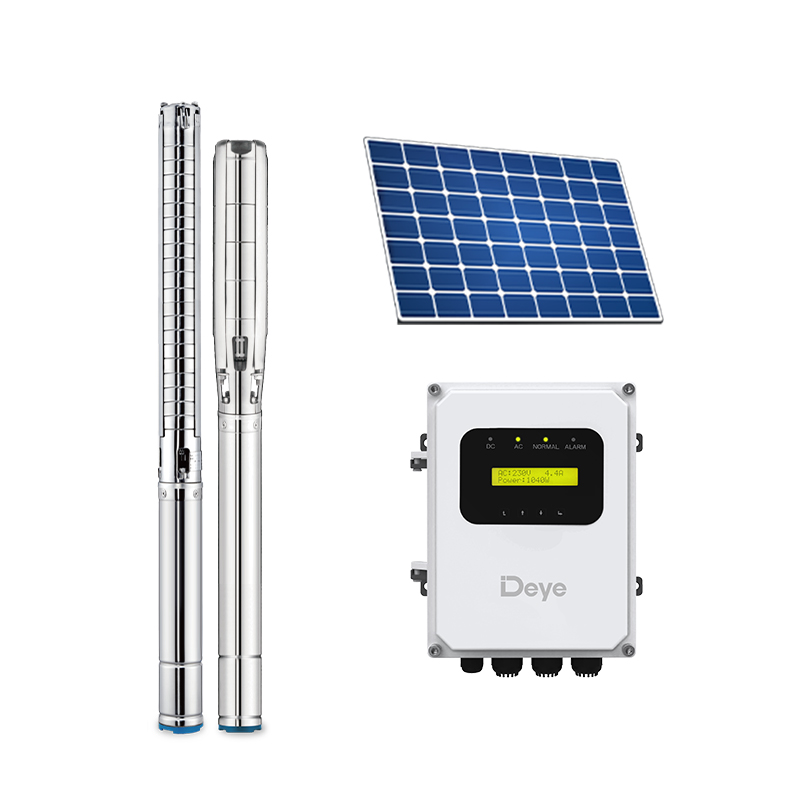
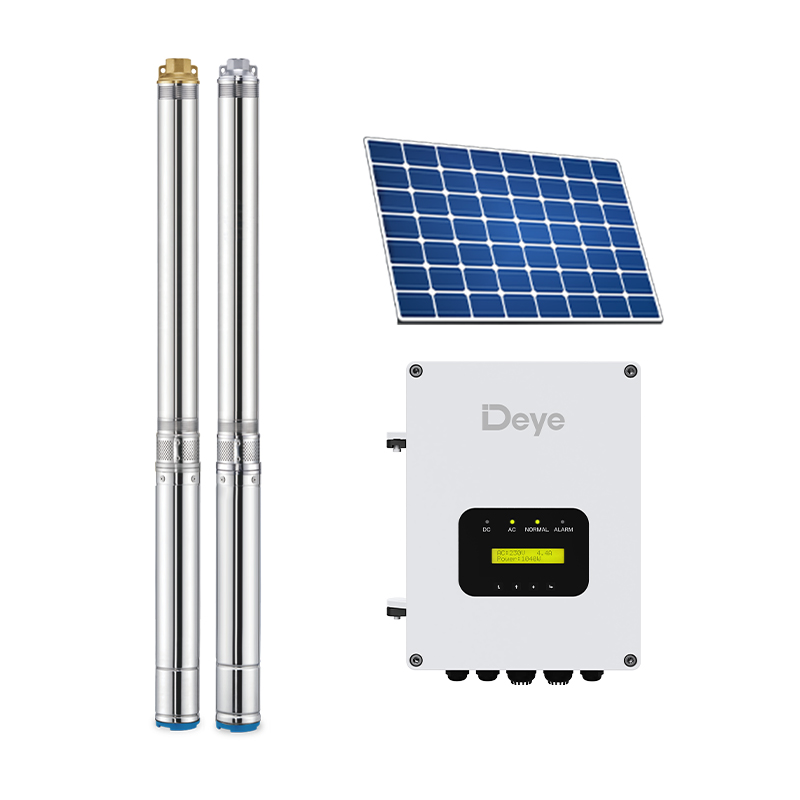
Two identical 3-inch submersible pumps, installed a few hundred metres apart on the same kind of borehole, can behave completely differently: one lifts water all afternoon, the other stalls before noon. The pumps are the same. The off-grid power architecture behind them is not.
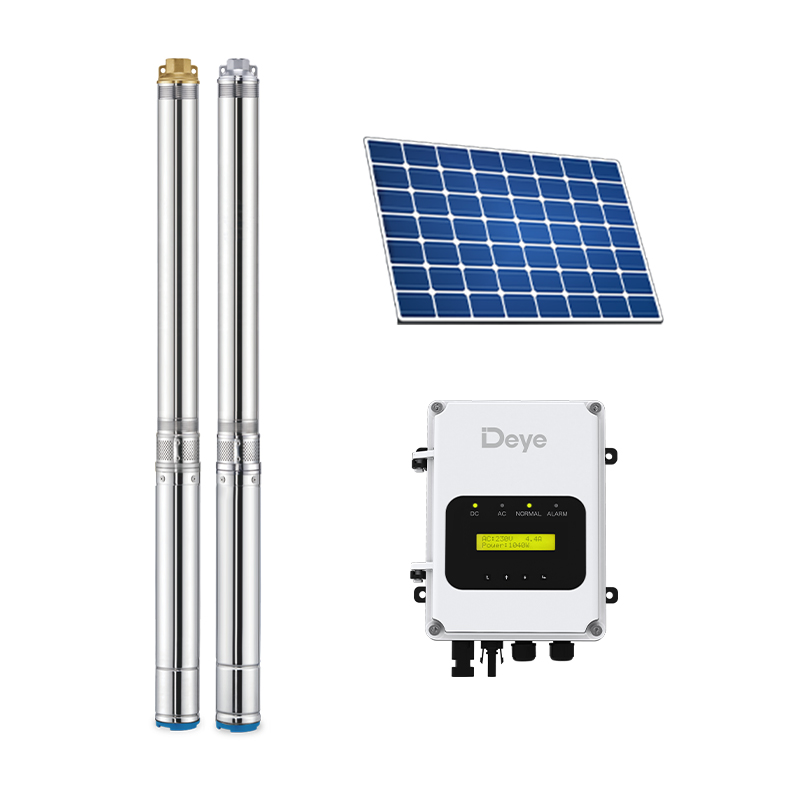
So here is the short answer before the detail. An off-grid pump is not a special kind of pump. It is a standard submersible, surface or pool pump paired with an energy source that has no utility grid behind it - a solar array, a battery bank, a generator, or a combination of these - plus a controller that keeps the motor spinning while the input swings from a cloud-dimmed morning to full midday output. Match head, flow, cable and controller to one duty point and off-grid pumping becomes uneventful. Mismatch them and the failure usually shows up in the controller first and the pump second, which is why buyers who compare only pump prices tend to rebuild the system twice.
content
What Counts as an Off-Grid Pump
An off-grid pump is any pump whose primary energy source is independent of the utility grid, together with the electronics that let it run on that source. That definition quietly moves the centre of gravity away from the pump body and towards the power chain, because the pump only ever sees what the controller and the array deliver to it.
Four architectures cover almost every real installation:
- Direct solar DC. The array feeds a DC motor through a maximum-power-point-tracking controller. No battery, no fuel; water moves while the sun shines.
- Solar plus battery. The array charges a battery bank and the battery runs the pump, so supply continues after dark at the cost of extra hardware and charge losses.
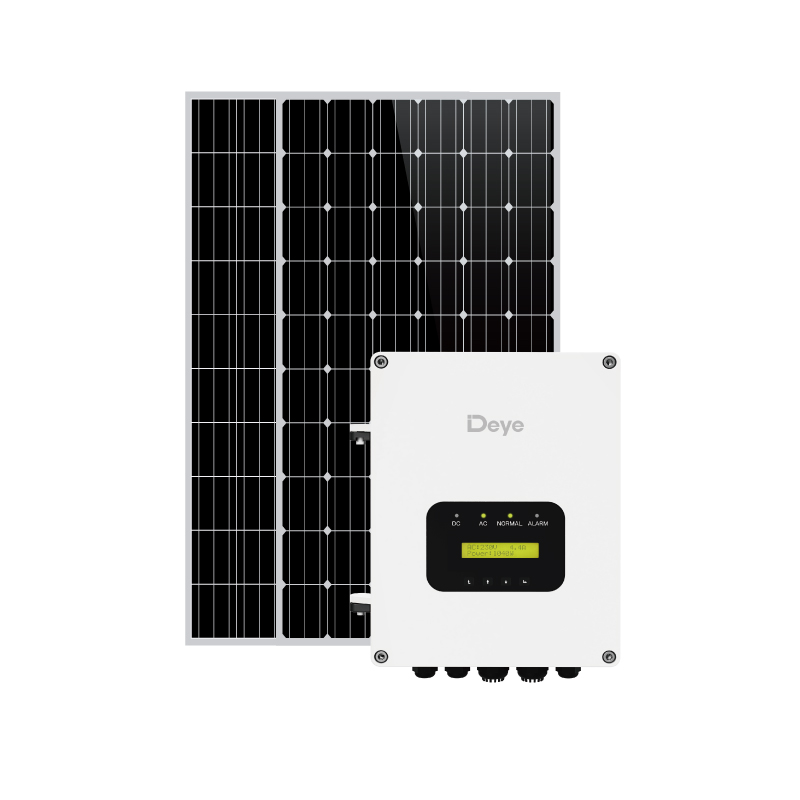
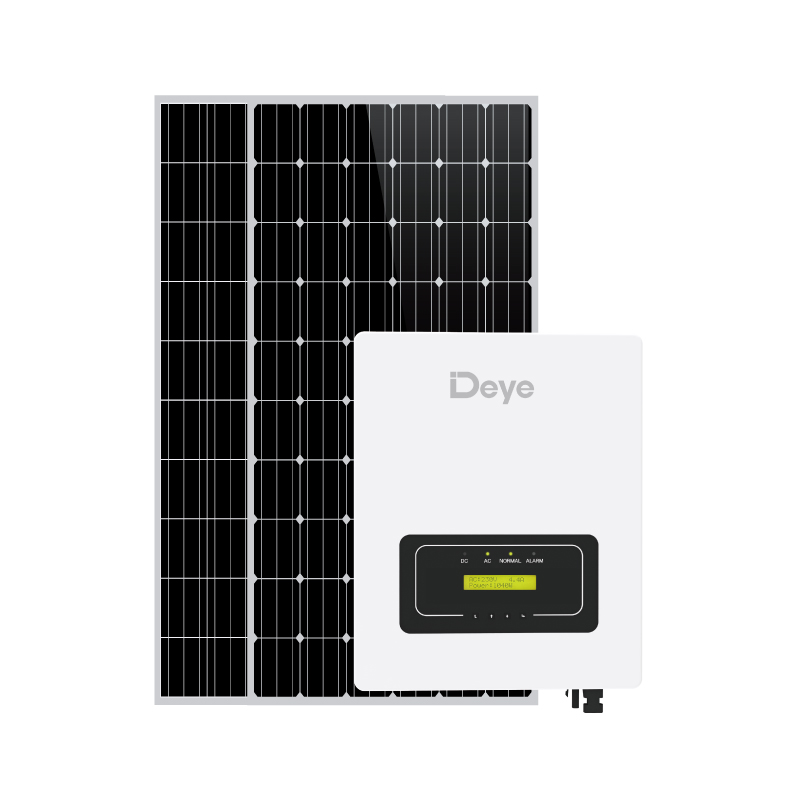
- Hybrid AC/DC auto-switch. Solar DC is the priority source; when irradiance falls below a threshold, the controller transfers to AC mains or a generator and transfers back when the sun returns.
- Generator-only AC. The simplest to specify and the most expensive to run; still common where a diesel set already exists on site.
The Four Architectures Side by Side
| Architecture | Typical power band | Storage | Best fit | Main risk |
|---|---|---|---|---|
| Direct solar DC | 400-3000 W | None | Daytime-only demand, low to medium head | Zero output during cloudy spells |
| Solar plus battery | 400-2200 W | 24-48 V battery bank | Household supply that must run after sunset | Battery replacement cost and charge losses |
| Hybrid AC/DC auto-switch | 1100-13000 W | None, or a small buffer | Farms, villages and sites with an unreliable grid | Needs a usable AC source to fall back on |
| Generator-only AC | 2000-13000 W | Fuel | Construction, emergency and temporary supply | Fuel, noise and scheduled maintenance |
Sizing: Head and Volume First, Watts Second
Size the pump against total dynamic head and daily water volume; the wattage follows from that calculation rather than leading it. Hydraulic power is easy to estimate as P = 1000 x 9.81 x Q x H / 3600, where P is watts, Q is flow in cubic metres per hour and H is total dynamic head in metres.
A pump delivering 5 m3 per day across 45 m of head, with six usable sun hours, needs roughly 0.83 m3/h, which is about 100 W of hydraulic power. Divide by a realistic pump efficiency of 0.35 to 0.5 and you land near a 250 W motor. Oversize the array by 1.3 to 1.5 times the motor rating and a 350-400 W panel set becomes the practical starting point.
Total dynamic head has two parts. Static head is the vertical distance from the water surface to the discharge point. Friction head is everything the water rubs against on the way: pipe length, elbows, check valves, and the drawdown that happens while the pump runs. Sizing on static head alone is the most common reason a system under-delivers in its first week.
A worked example
A 40 m deep well, water level 25 m down, a tank 8 m above ground, and 60 m of 32 mm pipe. Static head is 33 m; friction adds roughly 4-6 m at 1 m3/h, so plan on 38-40 m, not 33 m. Add seasonal drawdown and the number moves again.
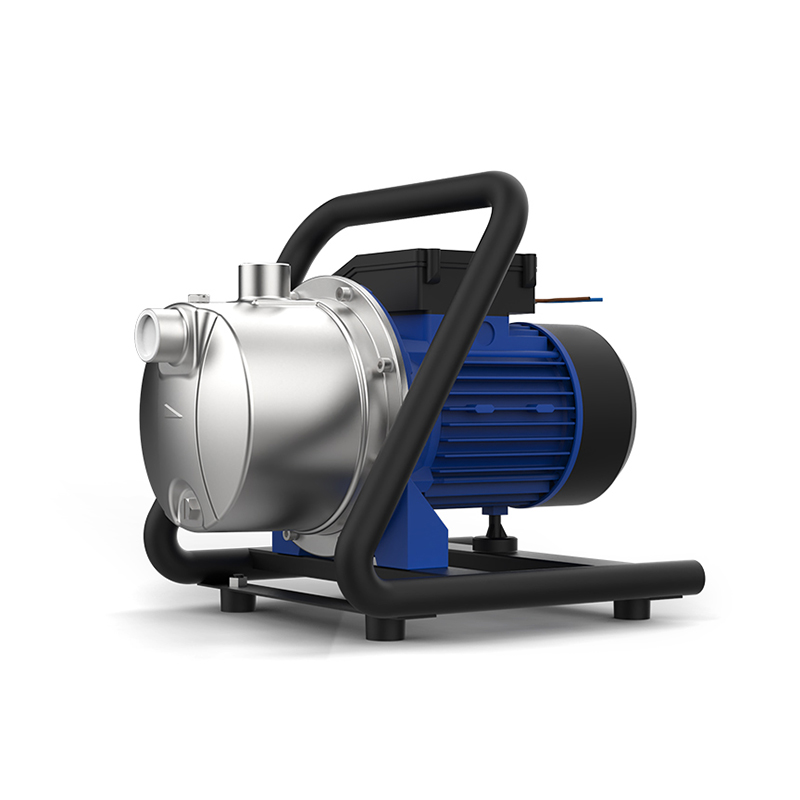
As heads fall below about 8 m, the pump moves above ground: a self-priming surface unit is normally the cheaper and more serviceable answer for ponds, tanks and shallow wells.
Submersible or Surface Pump?
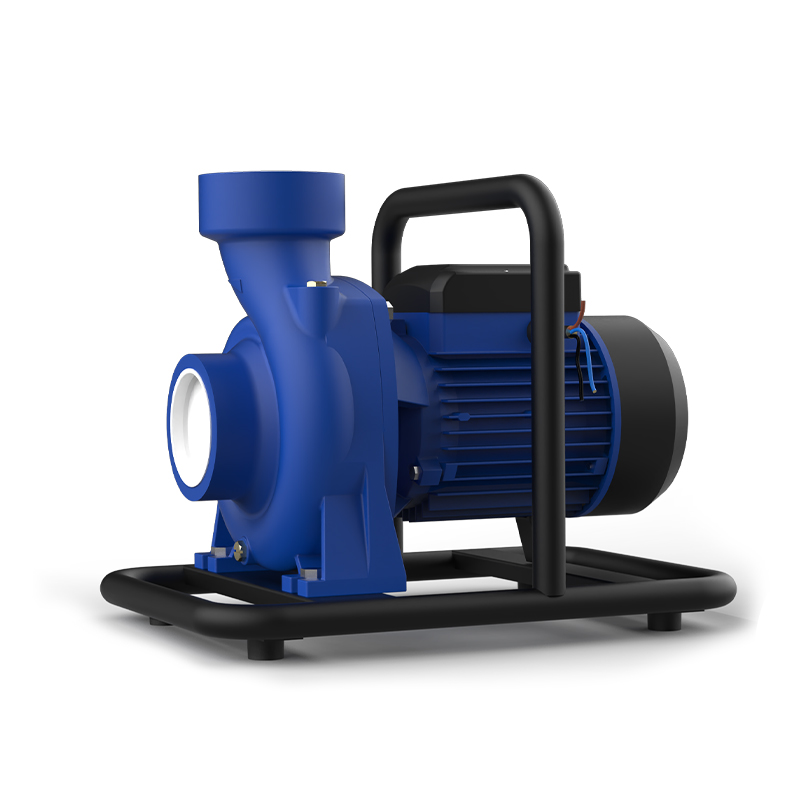
Depth decides. Beyond roughly 7-8 m of suction lift the pump has to go into the water; above that a surface pump is cheaper and easier to live with. Surface pumps lift by suction, and atmospheric pressure sets a hard ceiling near 10.3 m at sea level - in practice 7 to 8 m once friction, altitude and a worn impeller are allowed for. Push the suction side harder and you get cavitation: a rattling noise and an impeller that quietly erodes.
| Criterion | Submersible | Surface (centrifugal or self-priming) |
|---|---|---|
| Practical depth limit | 60-200 m | 7-8 m of suction lift |
| Efficiency at high head | Holds up well | Falls away quickly |
| Exposure | Protected by the water column | Frost, dust and sunlight; needs a pump house |
| Service access | Requires pulling the pump | At ground level, quick |
| Typical duty | Boreholes, deep wells, livestock | Ponds, rivers, tanks, shallow wells |
Impeller material matters as much as the pump type. For clean water and intermittent running, a plastic impeller is a sensible lower-cost choice. For sand-laden water, aggressive chemistry or near-continuous duty, stainless steel resists abrasion and erosion far better, and the extra cost is small next to the price of pulling a pump twice.
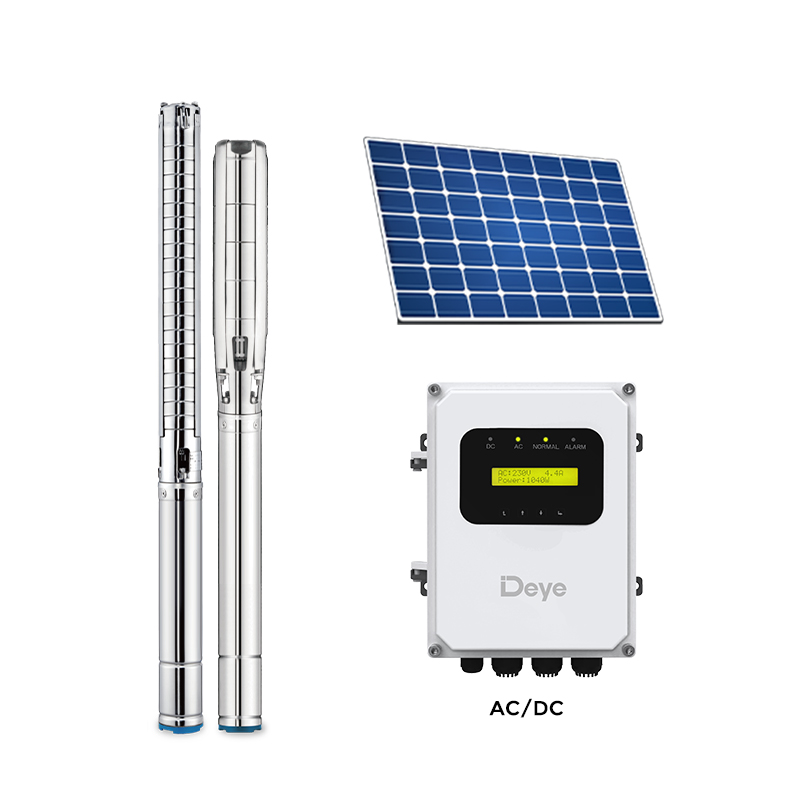 4-Inch Solar Submersible Pump with Stainless Steel ImpellerStainless steel impeller submersible pump for sandy underground water and continuous duty, with 800–3000 W models and multiple flow options for village or industrial projects.View Product →
The Controller Does the Heavy Lifting
In failed off-grid installations the controller is more often the weak link than the pump. A controller has four jobs: track the array's maximum power point as irradiance moves, protect the motor from dry running when the water level drops, soft-start the motor so inrush current does not collapse a marginal array, and - in hybrid systems - transfer between DC and AC without hammering the windings. A 3 kW pump will run happily from a 12 kW-capable controller; it will not run well from a controller that loses its MPPT lock every time a cloud passes.
Power bands matter here. A 400-1500 W DC controller suits small household and livestock duty; 1100-3000 W auto-switch units cover most farm-scale hybrid systems; 5500-13000 W controllers take on village supply and large irrigation blocks. Buying one band above the measured duty point is reasonable insurance against a falling water table.
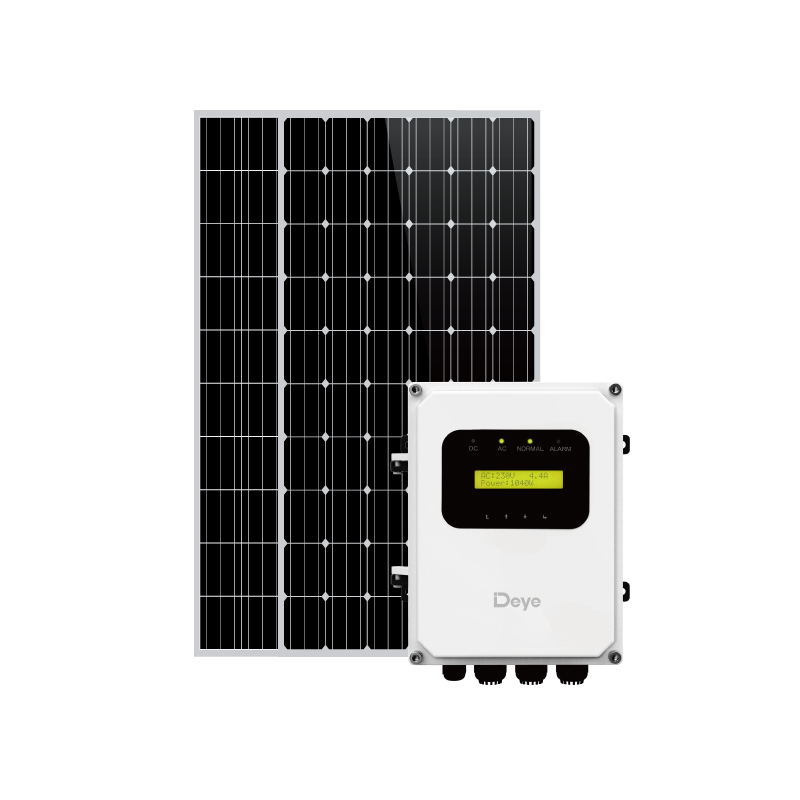 Solar Auto-Switch AC/DC Pump Controller 1100–3000WSolar-first AC/DC controller switches to mains in low light for uninterrupted 24-hour water supply; IP65 housing, MPPT, LCD, motor protections suit farm and village projects.View Product →
Where Off-Grid Pumps Earn Their Keep
Four duty cycles account for nearly all off-grid pumping: domestic supply, irrigation, circulation and transfer.
- Domestic supply. A household with no grid, or an unreliable one, typically needs 1-3 m3 a day at 20-60 m of head. The solar water pumps for off-grid living scenarios describe that pattern in detail.
- Irrigation. Drip and sprinkler blocks pump hardest at midday, which happens to coincide with peak array output, making the solar water pump for irrigation duty cycle the best-matched off-grid load there is.
- Aquaculture and river maintenance. Lower heads, higher volumes, long daily runtimes; aeration and circulation usually matter more than pressure.
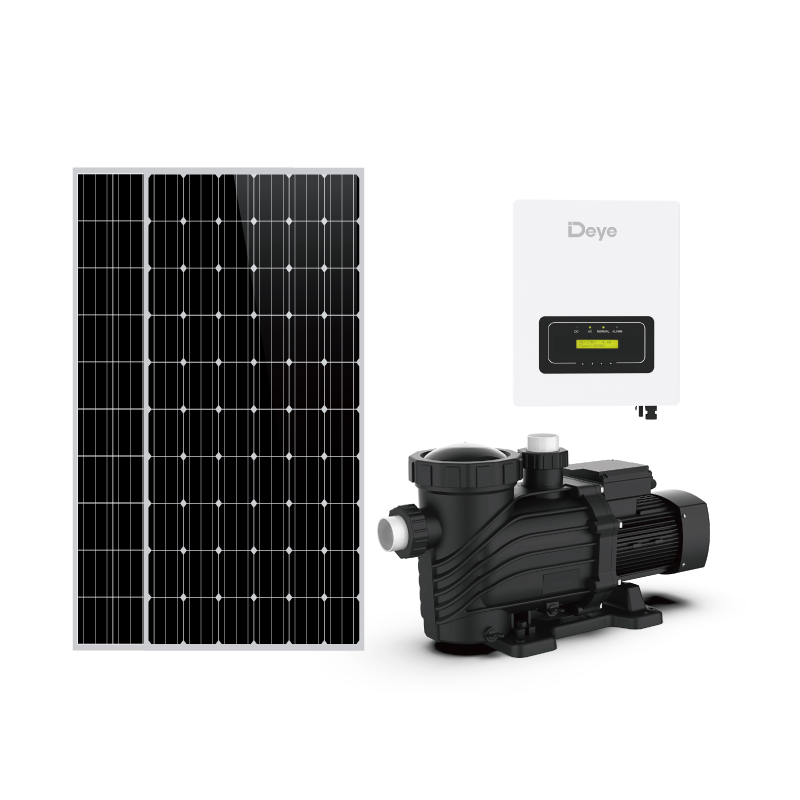
- Pool circulation. Filtration runs 6-10 hours a day in season, an almost perfect match for a solar hybrid pool pump.
What to Check Before You Order
Write the duty point down before you compare prices; the specification follows from seven numbers.
- Total dynamic head, measured, including drawdown and friction - not the depth of the borehole.
- Daily volume in cubic metres, and the sun hours you can realistically count on in the worst month.
- Water quality: sand, silt and iron decide between a plastic and a stainless steel impeller.
- Cable length and cross-section, because voltage drop on a 60 m DC run can cost more output than a bigger array would gain.
- Controller features: MPPT, dry-run protection, over- and under-voltage cut-outs, and AC transfer time.
- Whether an AC source exists on site, which decides between a pure DC and a hybrid design.
- Service plan: how the pump comes out of the ground, and who does it.
Off-Grid Pump FAQ
Can an off-grid pump run without batteries?
Yes, and most do. A direct solar DC system pumps only while the array produces usable voltage, and the water goes into a tank or reservoir, which is far cheaper storage than a battery bank. Batteries make sense when water is consumed as it is pumped rather than stored.
What happens during a week of cloud?
Output falls with irradiance and a direct system may stop entirely. A hybrid controller transfers to AC mains or a generator once the DC bus drops below its threshold, then transfers back automatically, so the tank keeps filling. Systems with no backup simply wait for the weather.
Plastic or stainless steel impeller?
For clean water and intermittent duty, plastic is a reasonable lower-cost option. For sand-laden water, aggressive chemistry or near-continuous running, stainless steel resists abrasion and erosion much better.
How much array do I need per kW of pump?
As a working rule, allow 1.3 to 1.5 kW of panel for every kW of motor, and more if the pump runs at high head or the site has long, hazy mornings. Extra panel is usually cheaper than extra battery.
Can one controller run several different pumps?
Within its power band, yes - an 1100-3000 W auto-switch unit will drive a range of submersible and surface pumps. Outside that band you need a larger controller, and undersizing it is a common and expensive shortcut.
Off-grid pumping rewards a boring approach: measure the head, count the daily litres, pick the architecture that matches the weather you actually get, then buy a controller with headroom and a pump with the right impeller for the water. Everything else - panel tilt, tank size, cable gauge - is optimisation around those fixed points.
If you are still choosing between architectures, start from the duty point and work backwards to watts. The pump is the easy part.