

 русский
 Français
 Español
 عربى
عربى Deutsch
 Português
 italiano
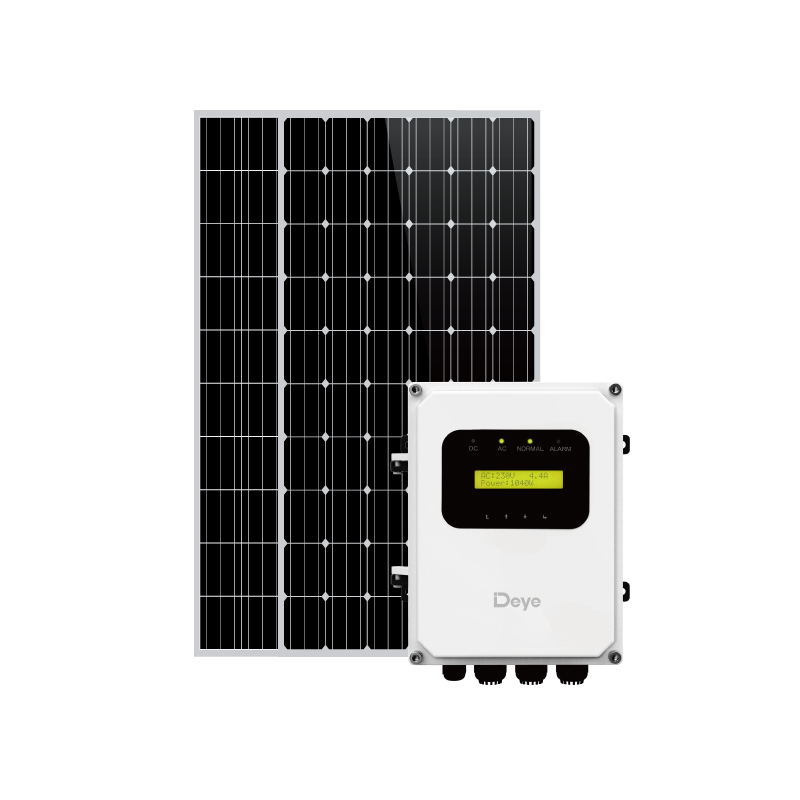
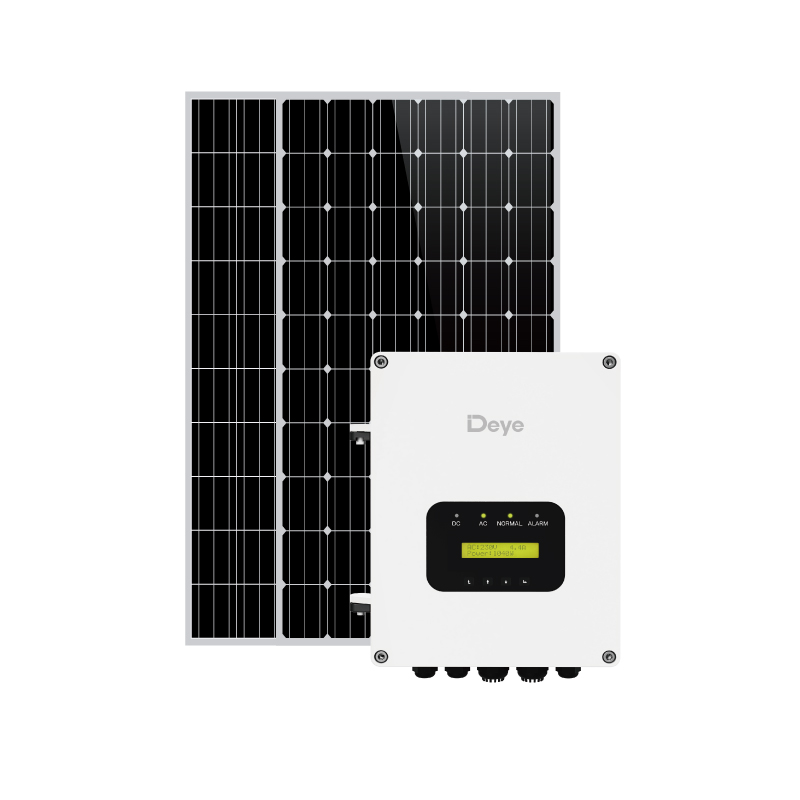
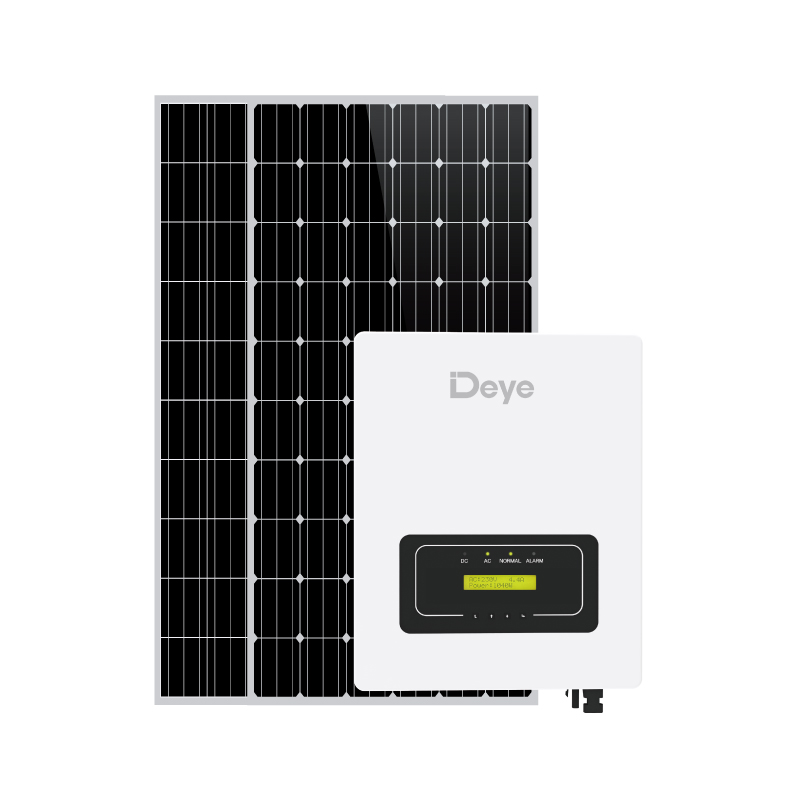
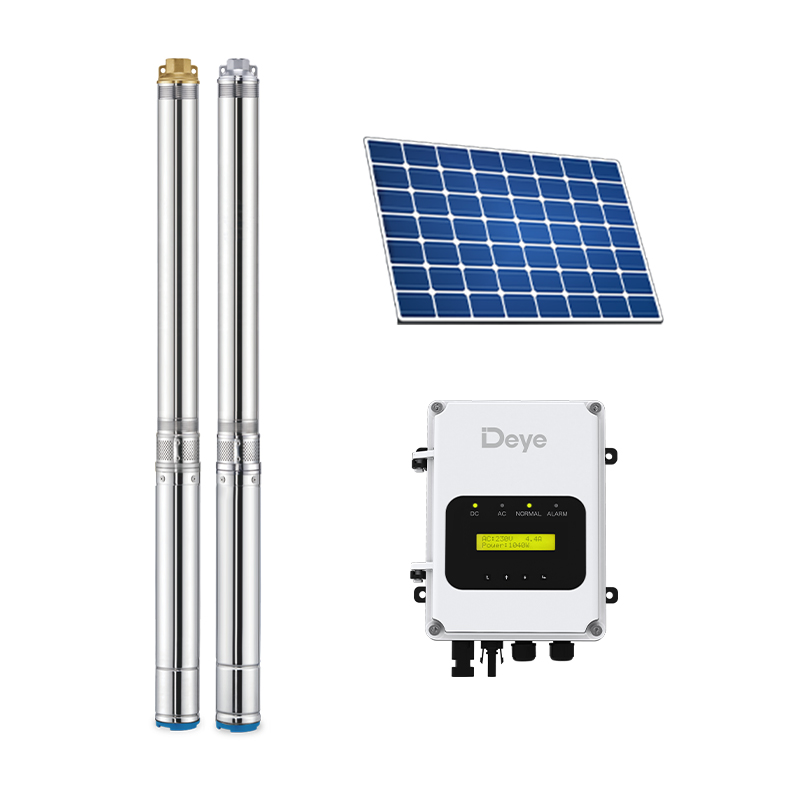
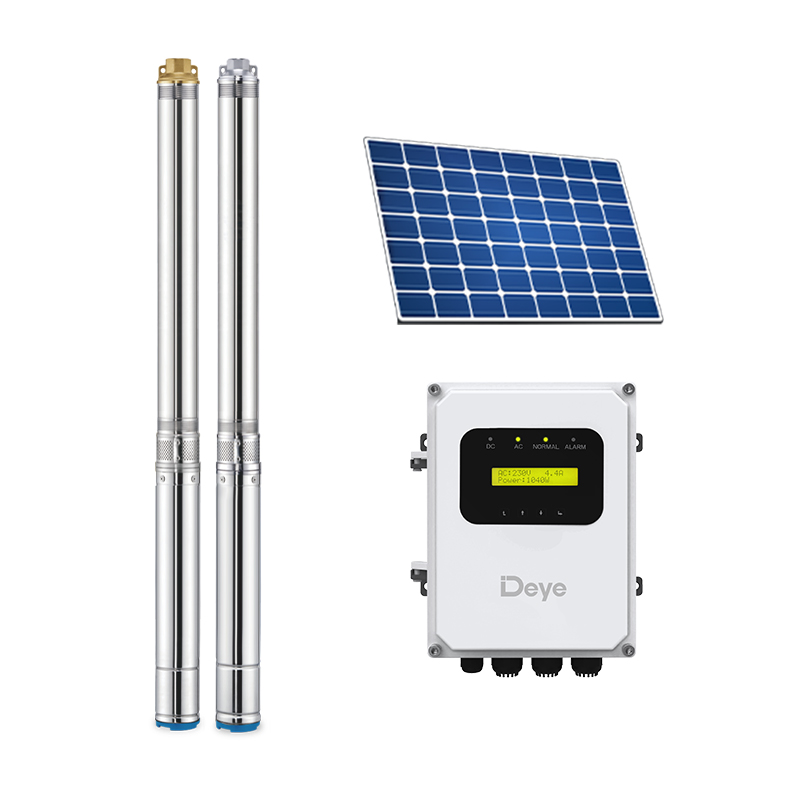
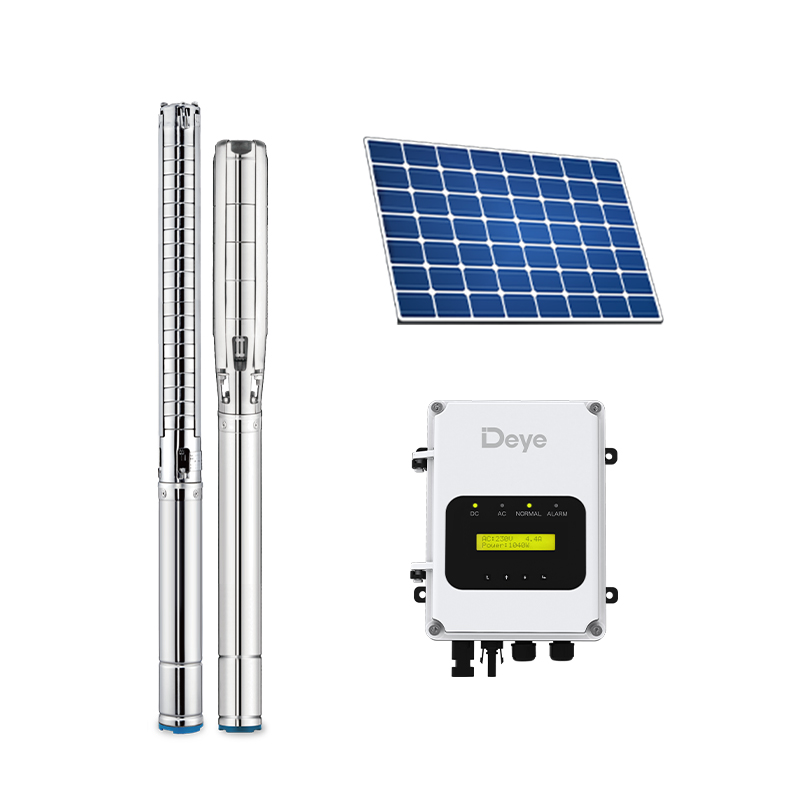
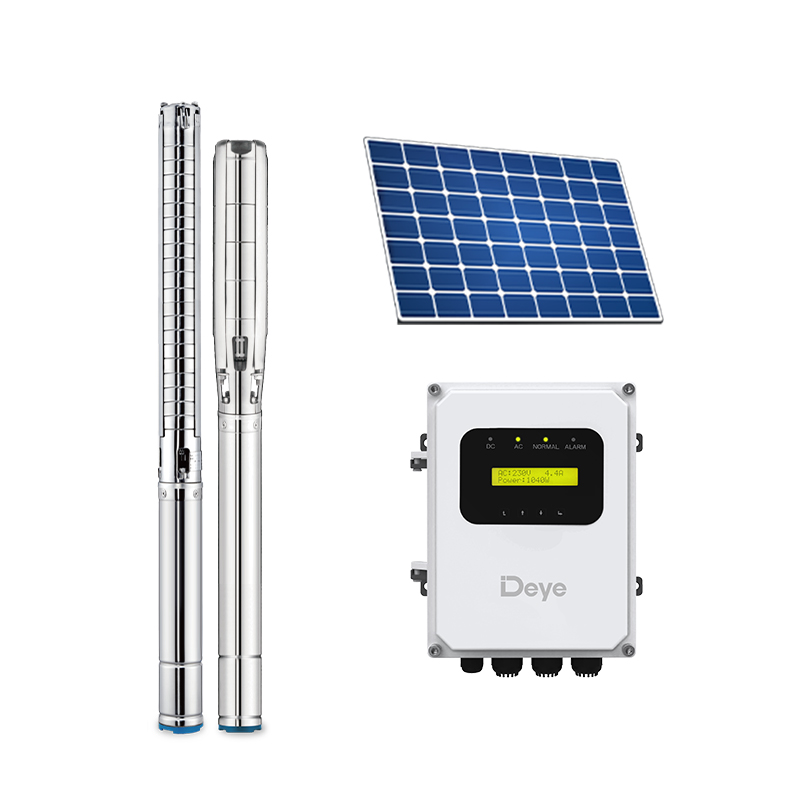
A pond solar pump is a photovoltaic-powered water pump that moves water from a pond for aeration, circulation, irrigation, or transfer. If your pond has no reliable grid connection, a solar pump can keep water moving without trenching power lines or running a generator. The practical benefit is simple: you match the pump to the pond, not the pond to the pump.
Before buying, answer three questions: how high must water be lifted, how many gallons per hour you need, and whether the pump will see dirty water or run dry. Those answers decide whether a submersible, surface, or AC/DC hybrid system is the right choice.
content
- 1 How a Pond Solar Pump Works and When It Makes Sense
- 2 Sizing a Pond Solar Pump: Start With Head and Flow, Not Horsepower
- 3 Types of Pond Solar Pumps: Submersible, Surface, and Hybrid
- 4 Controller Matching: AC/DC Hybrid and Automatic Switching
- 5 Materials and Durability: Plastic vs. Stainless Steel Impellers
- 6 Installation and Maintenance Checklist for Pond Solar Pumps
- 7 Common Buying Risks and Mistakes
- 8 FAQ: Pond Solar Pump Basics
How a Pond Solar Pump Works and When It Makes Sense
A pond solar pump works by converting sunlight into direct current electricity, which drives a motor and impeller to lift or circulate water. It makes the most sense when peak water demand occurs during daylight, because that is when solar output is highest and battery storage can be minimized or avoided.
Most pond owners use solar pumps for one of four jobs: recirculating water to reduce algae, aerating a stocked pond, irrigating nearby plants, or transferring water between ponds. In each case, the pump only needs to run for a portion of the day. That is why solar direct-drive systems, without batteries, are often enough. If you need water at night or during long cloudy periods, an AC/DC hybrid controller lets the pump switch to grid or generator power automatically.
For irrigation-focused ponds, see our guide on solar water pump for irrigation. For aquaculture and river maintenance, the same pump principles apply but with continuous flow needs—our solar pumps for aquaculture and river maintenance page covers those scenarios.
Sizing a Pond Solar Pump: Start With Head and Flow, Not Horsepower
Size a pond solar pump by calculating total dynamic head and required flow rate first; horsepower is a result of those two numbers, not a starting point. A 1 HP pump with the wrong impeller can deliver less water than a 0.5 HP pump matched to the actual lift.
Total dynamic head (TDH) is the sum of vertical lift, friction loss in pipe, and any pressure at the outlet. If you are pumping from a pond to a discharge point 10 feet above the water surface, and your pipe run adds 5 feet of friction loss, your TDH is 15 feet. Many buyers forget friction loss and then wonder why a pump rated at 20 feet of head barely trickles water.
| Sizing Factor | What to Measure | Why It Matters | Typical Pond Example |
|---|---|---|---|
| Total dynamic head | Vertical lift + friction loss + outlet pressure | Determines how high the pump can push water | 12–25 ft for most small ponds |
| Flow rate | Gallons per hour or liters per minute | Sets how fast the pond turns over | 500–3,000 GPH for circulation |
| Daily water volume | Flow rate × run hours | Matches pump to solar day length | 2,000–10,000 gallons per day |
| Peak sun hours | Local average, usually 3–6 hours | Determines panel array size | 4 hours in many temperate zones |
| Water quality | Sand, silt, algae, debris | Affects impeller type and clogging risk | Stainless impeller for gritty water |
Once you have TDH and flow, compare pump curves. A pump curve shows the relationship between head and flow: as head increases, flow decreases. Choose a pump whose curve crosses your required flow at or slightly above your calculated TDH. That gives you a margin for dirty filters, pipe aging, and lower-than-expected solar output.
Types of Pond Solar Pumps: Submersible, Surface, and Hybrid
Choose a submersible pump for ponds when you need quiet operation and can place the pump in the water; choose a surface pump when the water source is shallow or you want easy access for maintenance. Hybrid AC/DC models add flexibility when sunlight is inconsistent.
Submersible solar pumps for ponds
Submersible pumps sit below the water line, push water upward, and avoid suction limitations. They are the most common choice for pond aeration and circulation because they are self-priming by design and stay out of sight. Stainless steel impellers resist abrasion from sand and silt better than plastic, which matters if your pond has a muddy bottom or runoff.
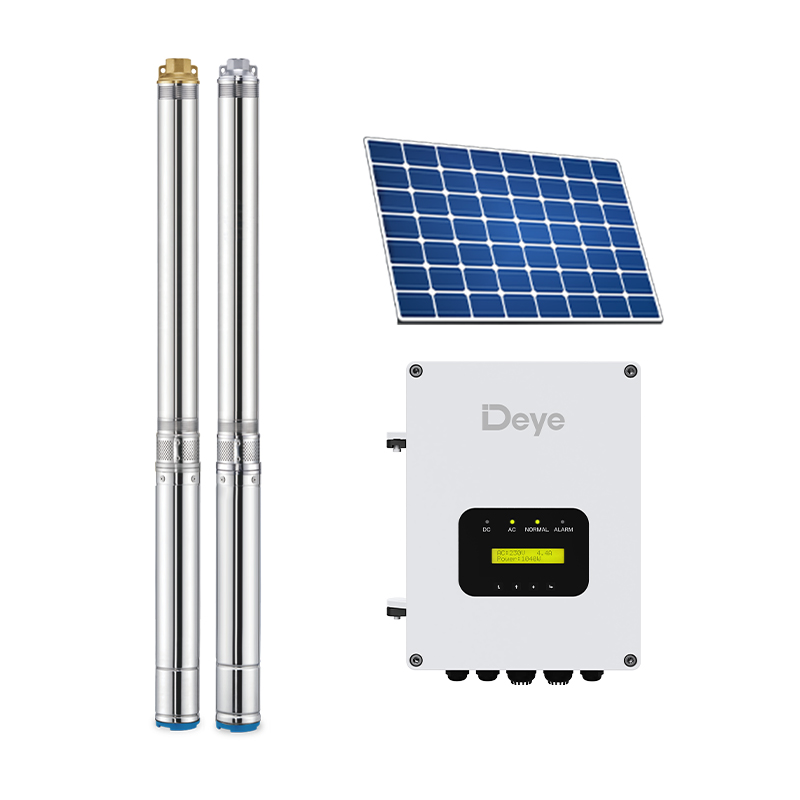
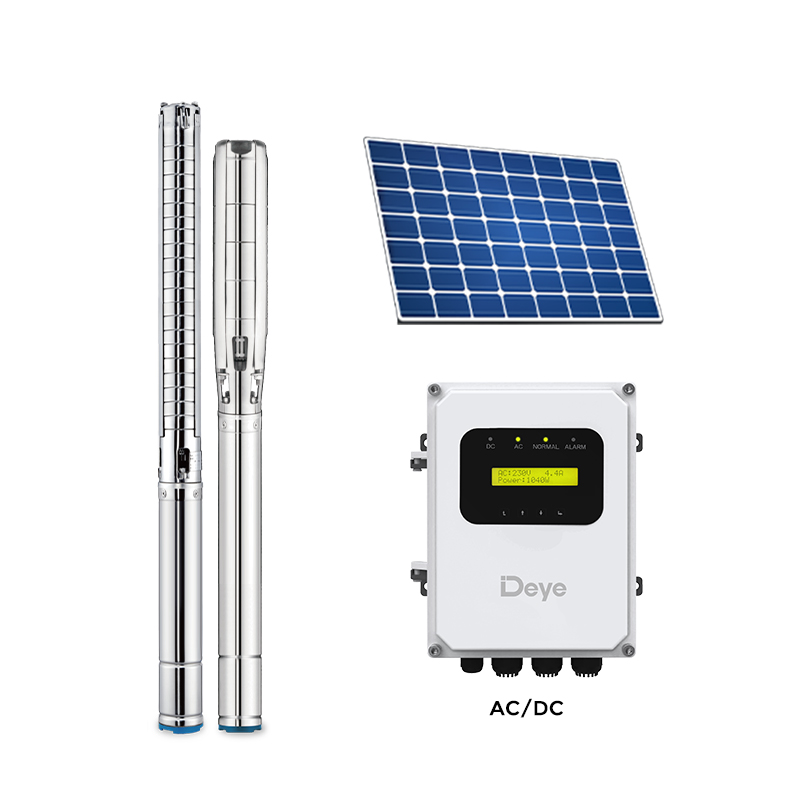 4 Inch Solar AC/DC Pump Controller (800-3000W) Stainless Steel Impeller Submersible PumpsPremium 4-inch stainless steel impeller pump features full anti-rust & anti-silt performance, tolerates slightly sandy underground water unavailable for plastic models...View Product →
A 4-inch stainless steel submersible pump in the 800–3,000 W range can handle many residential and farm ponds. It works with an AC/DC controller that automatically switches between solar and grid power, so the pump keeps running when clouds roll in.
Surface solar pumps for ponds
Surface pumps sit on the bank and pull water through a suction hose. They are easier to service, but they have a practical suction lift limit, usually around 20–25 feet at sea level. If your pond level fluctuates, a surface pump can lose prime. Self-priming models reduce that risk but still need a foot valve and a flooded suction line.
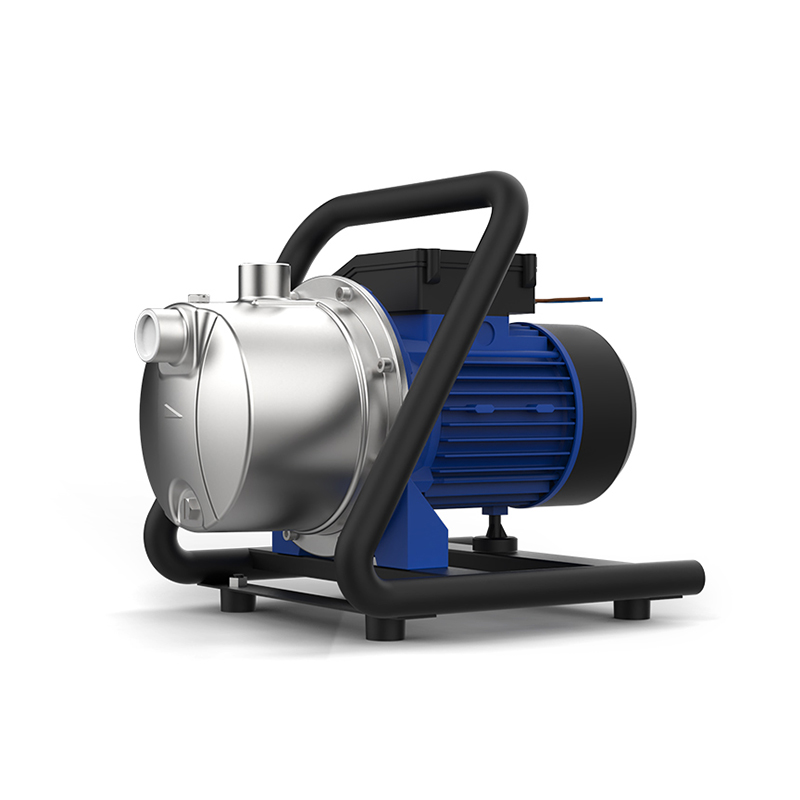
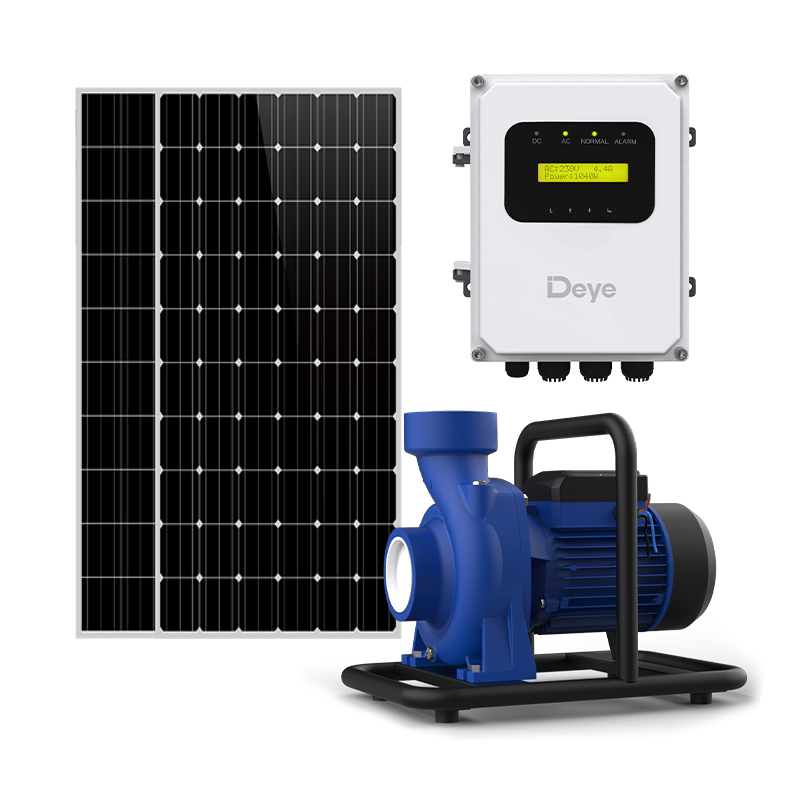 Self-Priming Surface Solar Pump with Automatic Solar Switching AC/DC Pump Controller (2000It adopts exclusive jet hydraulic structure for powerful self-priming capacity; the whole pump can be fixed on the ground to draw water from shallow wells, rivers and ...View Product →
A self-priming surface solar pump with automatic AC/DC switching is a good fit for shallow ponds, dugouts, or water storage tanks. It can also feed drip irrigation lines if you size the pipe and emitters to the pump’s pressure curve.
For larger ponds and higher flow
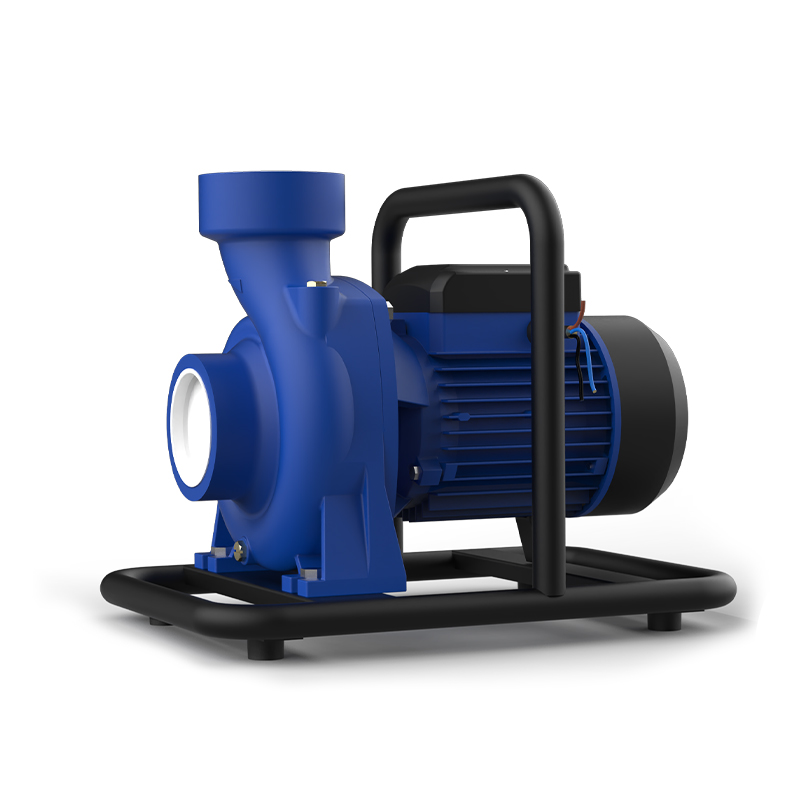
Larger ponds may need a 6-inch submersible pump or a high-flow surface pump. A 6-inch stainless steel model in the 800–3,000 W range moves more water at lower head, which is useful for whole-pond turnover and aquaculture.
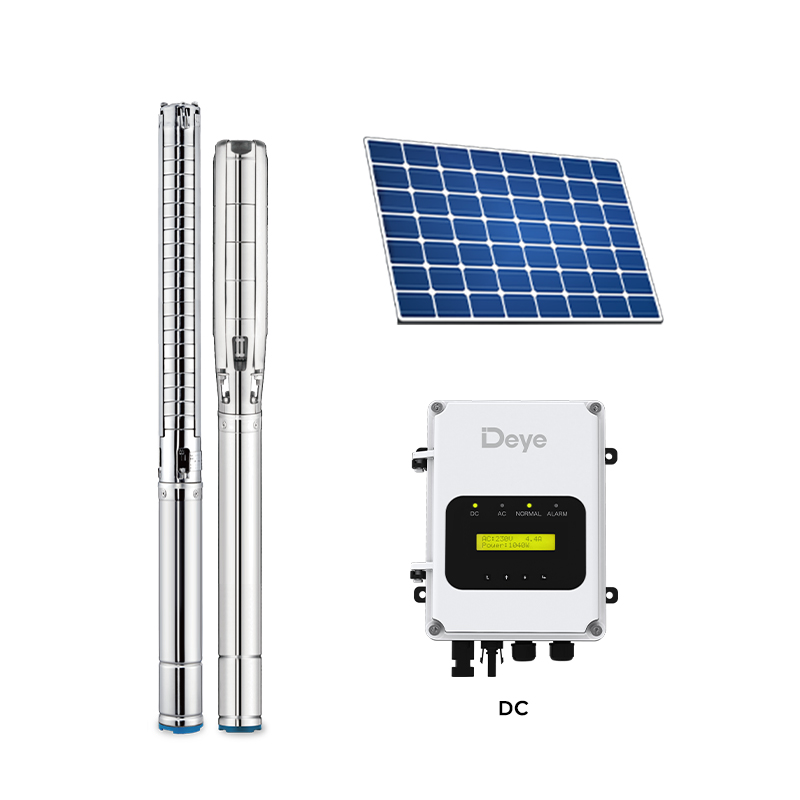 6 Inch Solar AC/DC Pump Controller (800-3000W) Stainless Steel Impeller Submersible PumpsThis 6-inch stainless steel impeller AC/DC solar submersible pump (800~3000W) is developed for large-volume centralized water engineering. Equipped with robust all-sta...View Product →
Controller Matching: AC/DC Hybrid and Automatic Switching
Match the pump controller to both the pump motor and the power source; the controller is what protects the motor from dry running, overvoltage, and low solar output. A pump without a compatible controller may run for minutes and then fail permanently.
Solar pump controllers perform three jobs: maximum power point tracking (MPPT) to get the most from the panels, motor speed control to match available power, and automatic switching between DC solar and AC grid or generator input. MPPT matters because solar panel voltage varies with temperature and sunlight. Without it, you lose a significant portion of your array’s potential output.
For pond applications, look for these controller features:
- Dry-run protection that stops the pump when the pond level drops below the intake.
- Adjustable speed or soft start to reduce water hammer and motor stress.
- AC/DC auto-switching with a programmable priority, such as solar first then grid backup.
- IP65 or better enclosure rating if the controller is mounted outdoors near the pond.
- Compatible voltage and power range—match the controller’s rated watts to the pump’s nameplate.
AC/DC hybrid controllers are especially useful in ponds that require aeration at dawn or dusk, when solar output is low. The controller can run the pump from the grid for a short period and then switch back to solar when the sun rises.
Materials and Durability: Plastic vs. Stainless Steel Impellers
Choose stainless steel impellers for ponds with sand, silt, or abrasive particles; choose plastic impellers for clean water and lower budgets. The impeller is the part that wears first, and replacing it can cost more than the original price difference.
| Material | Best For | Wear Resistance | Relative Cost |
|---|---|---|---|
| Plastic (PPO/PA) | Clean ponds, low abrasion, temporary setups | Moderate; can crack in cold or UV exposure | Lower |
| Stainless steel | Muddy ponds, sand, gravel, long duty cycles | High; resists abrasion and corrosion | Higher upfront |
| Cast iron | Large surface pumps with high flow | Good, but can rust if not coated | Medium |
Beyond the impeller, check the pump housing and shaft. A stainless steel shaft and bearings last longer in pond water than standard carbon steel. Also look at the motor’s insulation class and ingress protection. A motor rated IP68 can be fully submerged; a lower rating is only splash-resistant.
Installation and Maintenance Checklist for Pond Solar Pumps
Install the pump so it never sits in silt and always has at least a foot of water above the intake; most early failures come from clogging or dry running, not electrical faults. Follow this checklist:
- Mount the solar array facing the equator at an angle equal to your latitude minus 5–10 degrees for year-round output.
- Keep cable runs as short as practical and use the correct gauge wire to avoid voltage drop.
- Place the submersible pump in a weighted mesh bag or on a stand to keep it above the sludge layer.
- Install a check valve on the discharge line to prevent backflow and pump restart cycling.
- Set the controller’s dry-run sensitivity according to your pond’s normal level fluctuation.
- Clean the intake screen monthly during algae season and inspect the impeller annually.
In winter, remove the pump or lower it below the ice line if the pond does not freeze solid. Solar panels should be cleaned of snow and dust, because even a thin film of dirt reduces output.
Common Buying Risks and Mistakes
Most pond solar pump failures trace back to three buying mistakes: underestimating total head, ignoring water quality, and choosing a controller that cannot handle the motor’s startup current. Avoid these traps:
- Using vertical lift alone as head and forgetting friction loss from long or narrow pipes.
- Buying a pump without dry-run protection for a pond that drops seasonally.
- Mixing a high-power pump with a low-power controller, which causes overheating or immediate shutdown.
- Assuming a battery is required. Many pond circulation jobs run perfectly on solar direct drive.
- Ignoring the pump’s minimum submergence depth, which can cause air locking.
FAQ: Pond Solar Pump Basics
Can a pond solar pump run without a battery?
Yes. A solar direct-drive pump runs whenever the sun is strong enough, using an MPPT controller to match the motor to the array. You only need a battery if you must pump at night or during extended cloudy weather.
How many solar panels do I need for a pond pump?
Divide the pump’s wattage by the panel’s realistic output, then add 20–30% margin. For example, a 1,000 W pump in a 4 peak-sun-hour location needs roughly 1,200–1,400 W of panels to run near full speed at midday.
What size pump for a 1-acre pond?
For circulation, aim to turn over 10–25% of the pond volume per day. A 1-acre pond averaging 4 feet deep holds about 1.3 million gallons, so a pump moving 3,000–8,000 gallons per day is a reasonable starting point. Increase flow if the pond is heavily stocked or stratified.
Will a solar pump work in winter?
Output drops because of shorter days and lower sun angles. Many pond owners remove the pump or switch to a smaller duty cycle. If the pond freezes, never run a submersible pump in ice.
Choosing a pond solar pump comes down to three numbers—head, flow, and daily run time—plus two quality checks: impeller material and controller compatibility. Get those right, and a solar pump can circulate, aerate, or irrigate your pond for years with almost no fuel cost. Buy the pump that matches your pond’s real conditions, not the one with the biggest wattage claim.