

 русский
 Français
 Español
 عربى
 Deutsch
 Português
 italiano
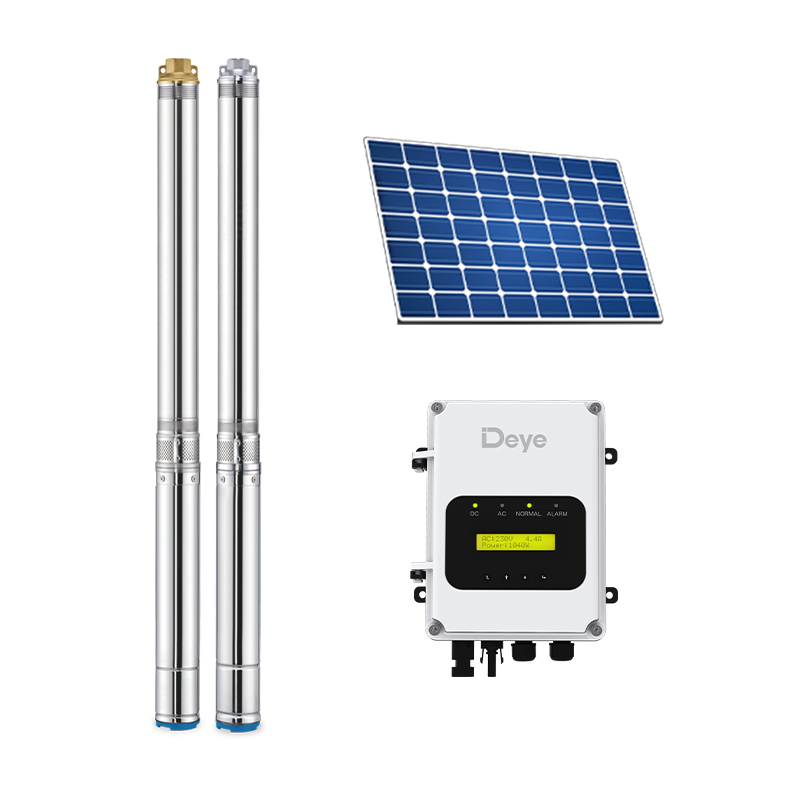
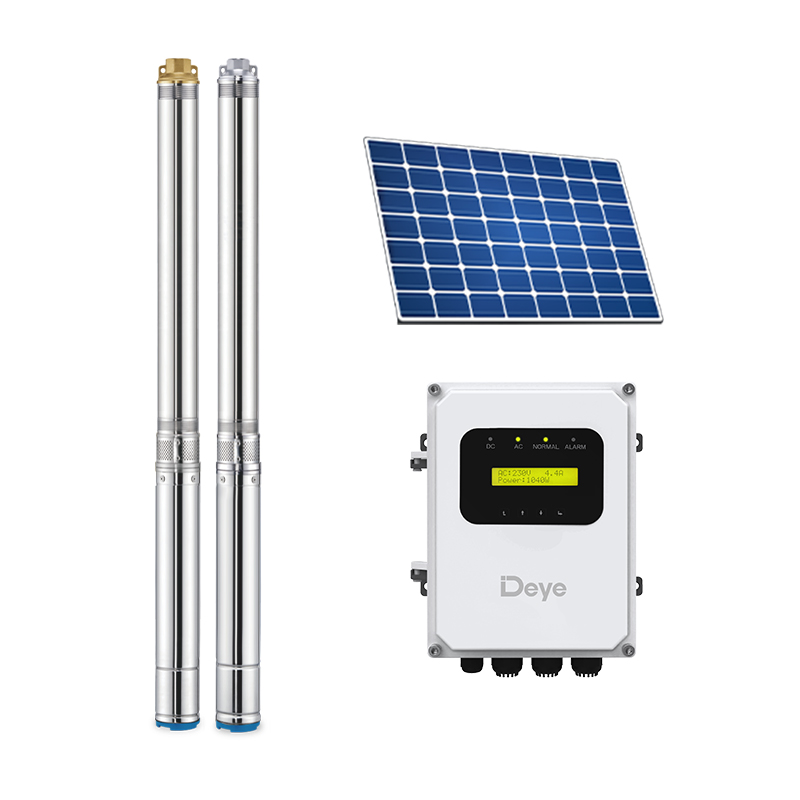
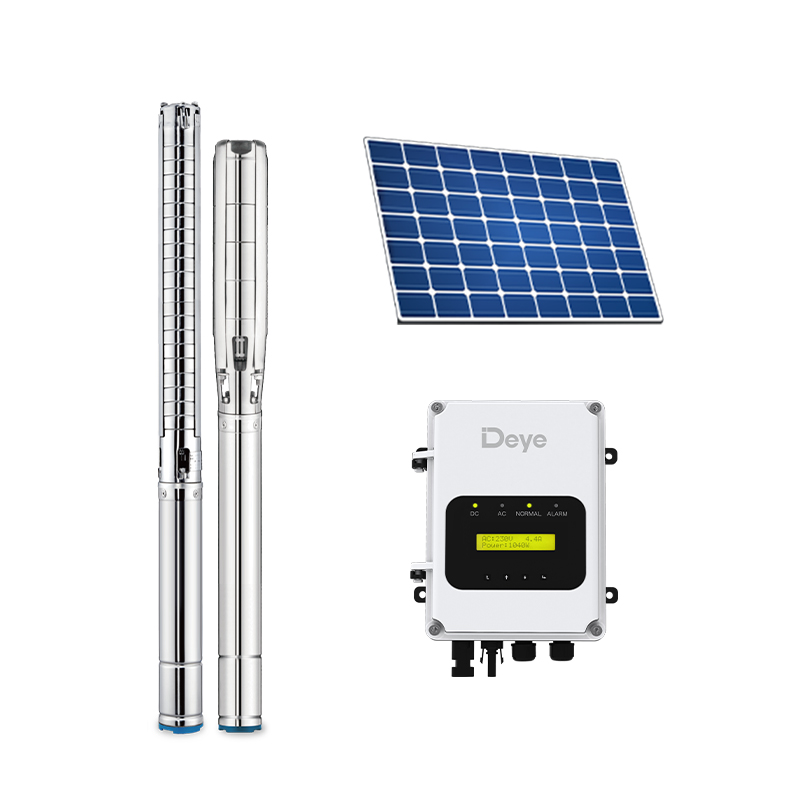
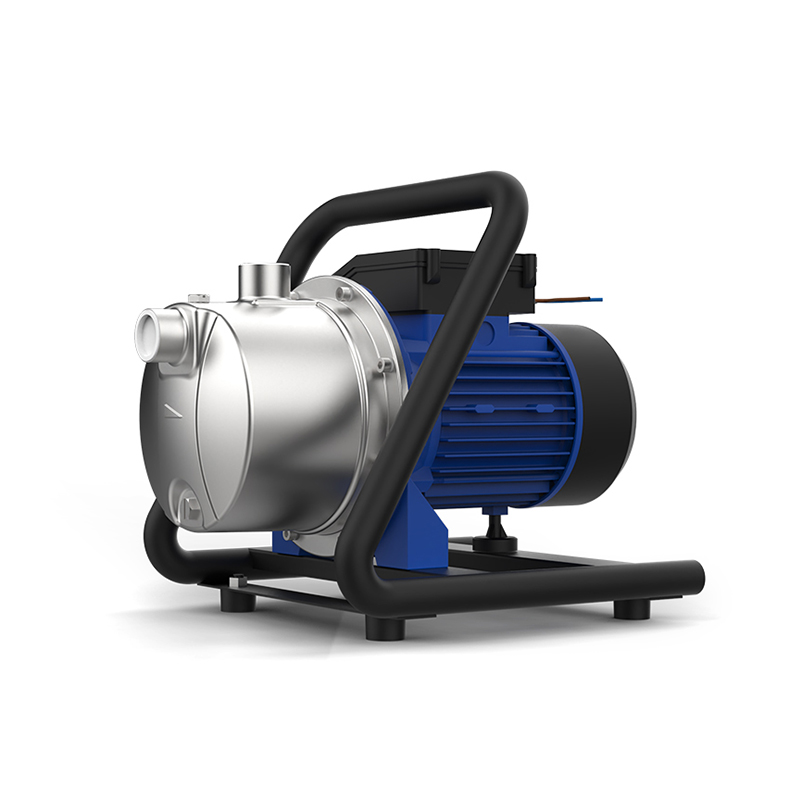
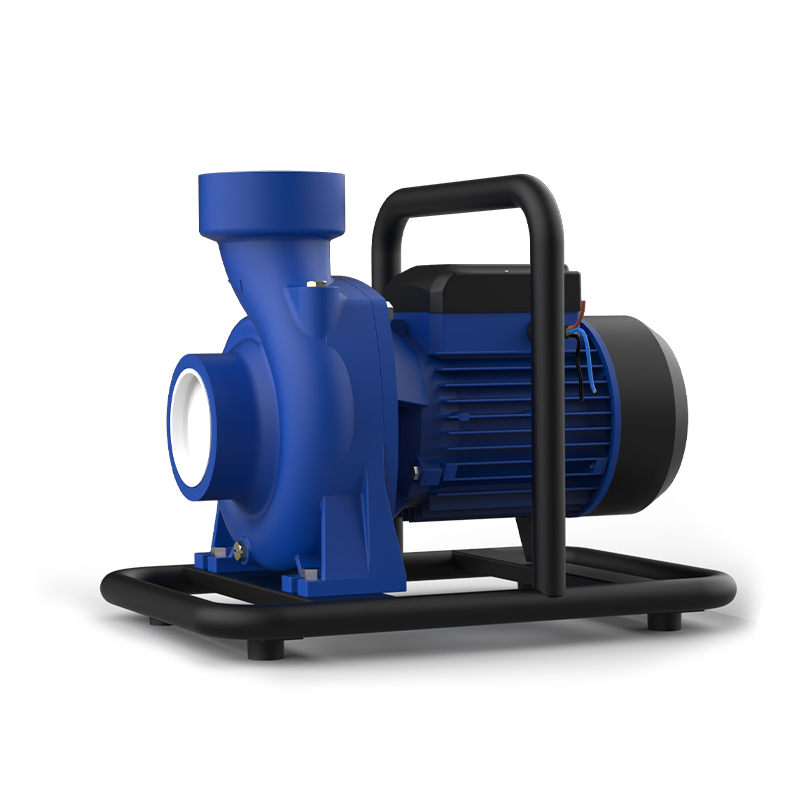
A solar pond fountain pump performs only when the panel, the controller and the pump are sized around one number you can measure: the flow you need at the total head you actually have. Get that right and a 15 W kit bubbles a patio barrel all afternoon; get it wrong and a 400 W array still dribbles at six in the evening.
Start from the pump curve, not the panel. A pump sold with a maximum head of 8 m delivers almost nothing at 8 m; it delivers its rated flow at 1 to 2 m. A nozzle 0.4 m above the water plus hose friction already puts you at 1.2 to 1.6 m before any filter is counted.
Head: static lift + friction + nozzle pressure
Flow: gallons or litres per hour at that head
Array: 1.3 to 1.5 times rated DC power, MPPT
Storage: only if you need evening flow
content
- 1 What a Solar Pond Fountain Pump Is, and What It Is Not
- 2 Sizing: Head First, Then Flow, Then Panel Wattage
- 3 Direct DC, Battery, or AC/DC Hybrid?
- 4 Surface or Submersible Pump?
- 5 Turnover, Aeration and Water Quality
- 6 Controllers, Cables and the 2 Percent Rule
- 7 Installation and Maintenance Checklist
- 8 Frequently Asked Questions
What a Solar Pond Fountain Pump Is, and What It Is Not
A solar pond fountain pump is a low-voltage DC pump driven by photovoltaic panels, either straight from the array through an MPPT controller or from a small battery or mains supply when sunlight is weak. Nozzles, floats and timers are accessories around that core.
Two families cover almost every pond:
- Decorative and aerating pumps, 5 to 40 W: 40 to 300 GPH at 0.3 to 1 m of head, usually with a floating panel or a small bank-mounted one, running five to eight useful hours a day in summer.
- Circulation and waterfall pumps, 60 W to several kW: 500 to 5,000 GPH at 1 to 5 m of head, with a separate array and a controller that often switches automatically between DC and AC input.
What it is not: a 24-hour machine, a substitute for filtration, or maintenance free. In a pond with leaves and string algae, the intake screen decides whether the purchase was worth it.
Sizing: Head First, Then Flow, Then Panel Wattage
Sizing works in one order only: real head, required flow, then array wattage. Following that order takes twenty minutes and prevents the most common mistake, buying a bigger pump than the panel can start.
Total head
Total head equals static lift plus friction plus nozzle pressure:
- Static lift: from the water surface to the highest point the water leaves the pipe. A pond 1.2 m deep with a nozzle 0.4 m above the surface gives 1.6 m.
- Friction: about 0.1 m per 10 m of straight hose at low flow, doubled for every 90 degree elbow, far worse in undersized 13 mm hose. A 10 m run of 25 mm hose with two elbows adds roughly 0.3 m.
- Nozzle pressure: 0.2 to 0.4 m for a fine mist, almost nothing for a plain bubbler.
The example lands near 2.1 m of total head: the figure the pump works against, not the maximum head printed on the box.
Flow and panel
Circulation is enough for a decorative pond. For koi, the full volume should pass through the filter every one to two hours. Electrically, use local peak sun hours, de-rate panels 15 to 25 percent for heat, dust and imperfect tilt, and keep 20 to 50 percent headroom above the pump's rated DC power so a passing cloud does not stall the motor.
| Pond and volume | Job of the pump | Total head | Pump class | Array with MPPT |
|---|---|---|---|---|
| Patio barrel, 30 gal (110 L) | Decorative spray | 0.3 to 0.6 m | 5 to 15 W DC fountain pump | 5 to 15 W panel |
| Garden pond, 500 gal (1,900 L) | Fountain plus surface movement | 0.8 to 1.5 m | 60 to 120 W DC submersible | 100 to 200 W |
| Koi pond, 2,000 gal (7,600 L) | Filter turnover each 1 to 1.5 h | 1.5 to 3 m | 150 to 400 W DC or hybrid | 300 to 600 W plus backup |
| Estate pond, 10,000 gal (38,000 L) | Turnover, waterfall, aeration | 3 to 6 m | 1 to 3 kW hybrid AC/DC | 2 to 5 kW, auto-switching |
Direct DC, Battery, or AC/DC Hybrid?
If you only need moving water while the sun is up, direct DC is the cheapest and most reliable option. The moment you want flow at eight in the evening or through a cloudy week, storage or an AC/DC auto-switching controller becomes the deciding purchase, and it usually costs more than the pump.
| Architecture | Under cloud | After dark | Best suited to |
|---|---|---|---|
| Direct DC, no battery | Flow follows the sun | Stops | Decorative ponds, daytime aeration |
| DC with battery buffer | Steady flow | Runs on stored energy | Remote properties and off-grid living setups |
| AC/DC hybrid auto-switch | Changes over to AC | Runs from mains or generator | Koi ponds, filter-fed waterfalls, unreliable mains |
Surface or Submersible Pump?
Submersible pumps are the default for fountains and small ponds, while self-priming surface pumps win on waterfalls, skimmer-fed ponds and anywhere the pump should be serviced without wading in.
A submersible unit is quiet and needs no suction line, but its intake has to stay 150 to 200 mm off the bottom behind a coarse 3 to 5 mm screen, or silt and blanket weed will cut the flow within weeks. A self-priming surface pump stays dry on the bank with a strainer basket and foot valve, handles dirtier water, winterizes in minutes and recovers far better from a clogged screen. Size the suction line one step larger than the discharge line.
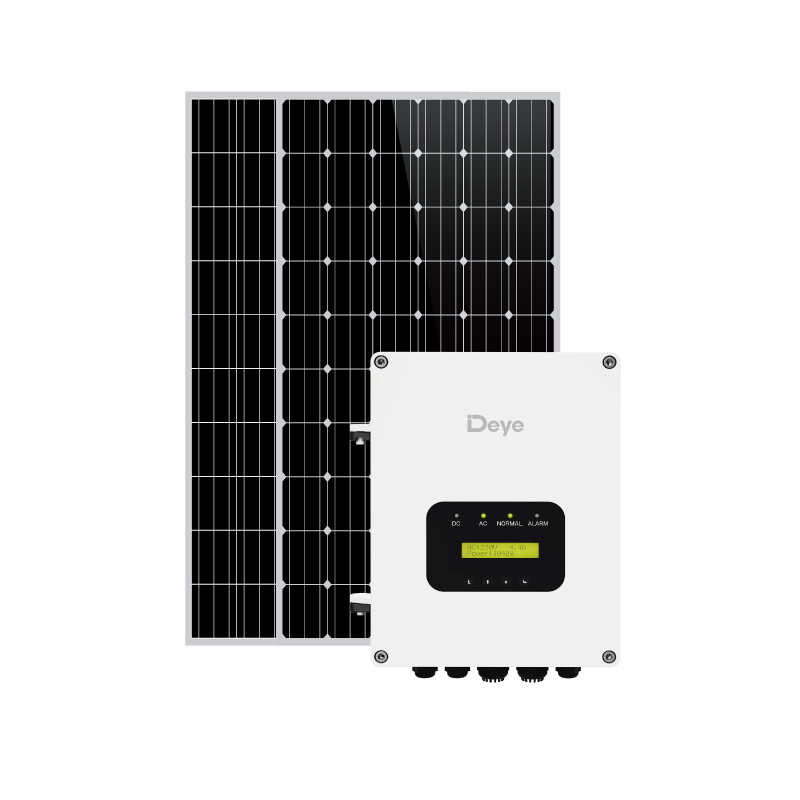
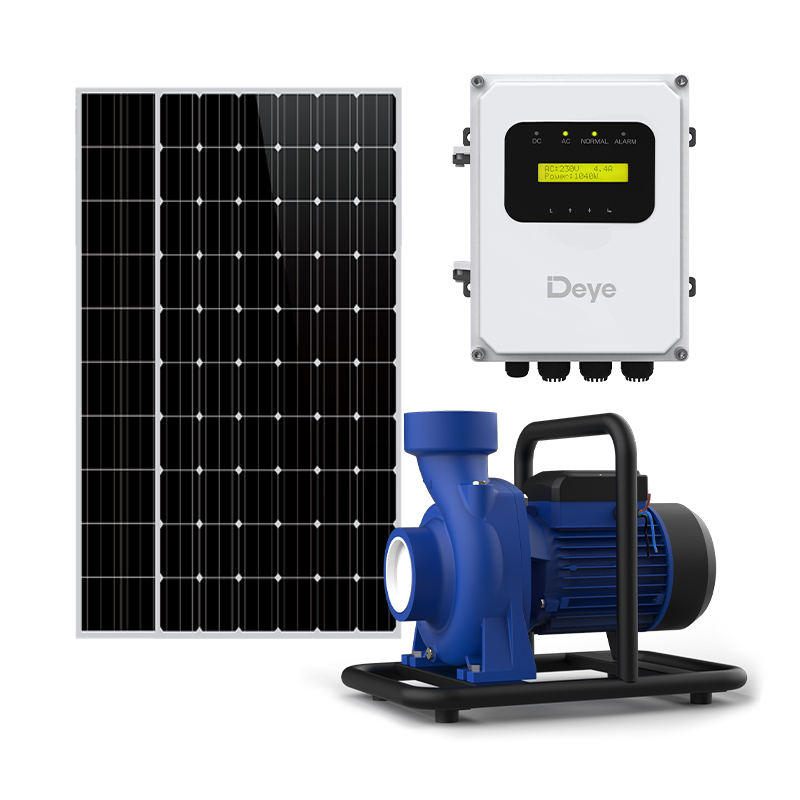 Self-Priming Surface Solar Pump with AC/DC ControllerAbove-ground self-priming centrifugal pump for shallow wells, rivers, and ponds, with solar-first AC/DC switching for household water supply and small-scale irrigation.View Product →
Turnover, Aeration and Water Quality
In a fish pond the pump's real job is filtration turnover and gas exchange, not decoration.
Run the full volume through the filter every one to two hours for koi, and every three to four hours for a lightly stocked goldfish pond. The turnover arithmetic is the same one used for a solar pump for pool and pond circulation, which is why identical hybrid hardware appears in both duties. Keep an aerating nozzle or a separate air pump running at night, because the hours before dawn are when dissolved oxygen is lowest.
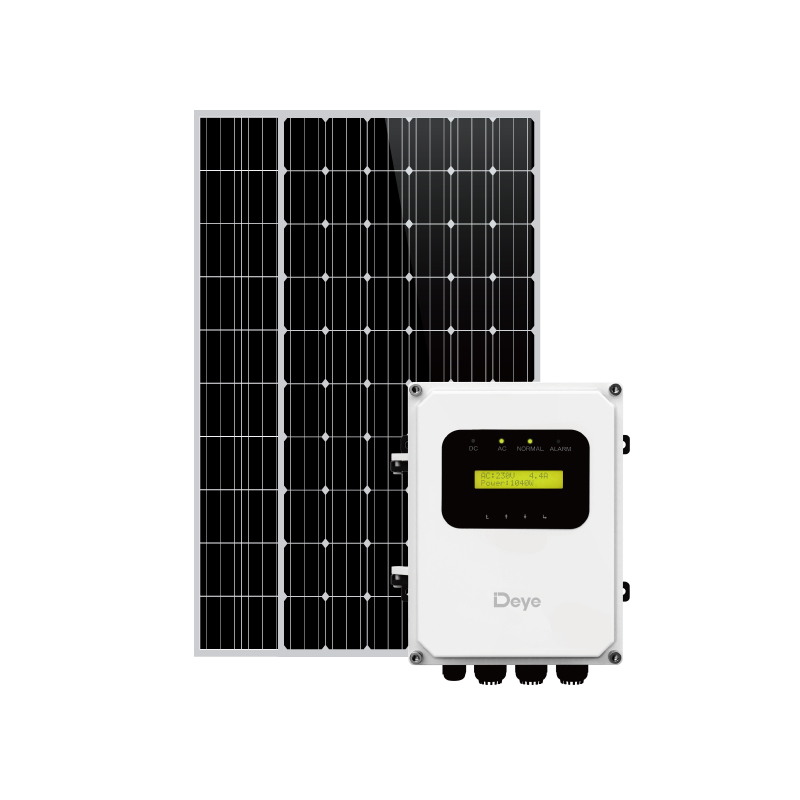
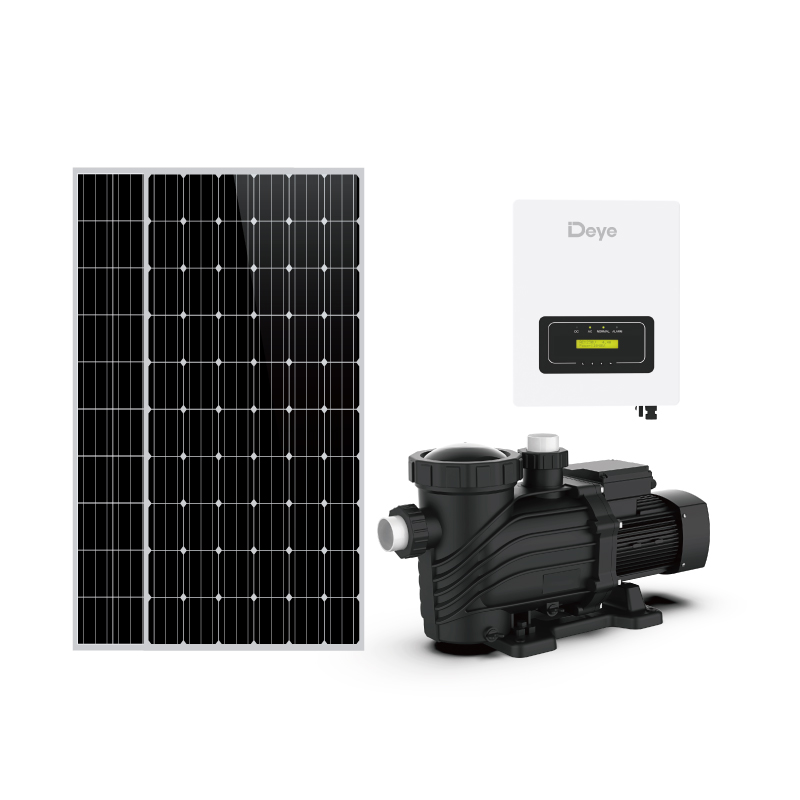 Deye Solar Hybrid AC/DC Pump Controller and Pool PumpHybrid AC/DC solar pump solution for pool and pond filtration, offering MPPT, LCD display, IP65 controller, and matched pool pump options.View Product →
Controllers, Cables and the 2 Percent Rule
Most disappointing solar pond pumps lose their watts in the controller, the cable or a clogged intake, not in the panels.
- Controller: an MPPT unit extracts 10 to 25 percent more from the same array than basic PWM switching, and keeps the motor turning as irradiance falls. Hybrid models add automatic changeover between DC and AC input.
- Cable: hold voltage drop under 2 percent, using 2 x length x current x 0.0175 divided by cross-section in mm². On a 24 V system drawing 3 A over 15 m, 1.5 mm² copper loses about 1.05 V, or 4.4 percent; 2.5 mm² brings it to 2.6 percent and 4 mm² to 1.6 percent. Undersized cable is the quiet reason a pump never reaches its rated flow.
- Panel placement: partial shade can cost more than half the output, and in a series string the weakest panel sets the current for the whole loop.
For a higher-power brushless DC pump, a dedicated controller in the 400 to 1500 W class covers MPPT tracking and dry-run protection in a single box.
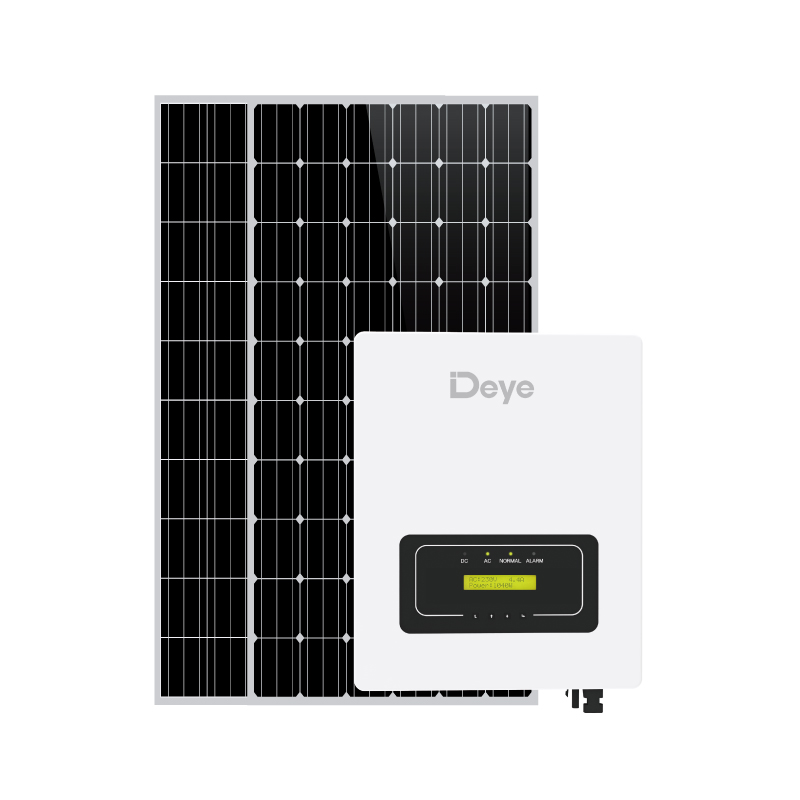
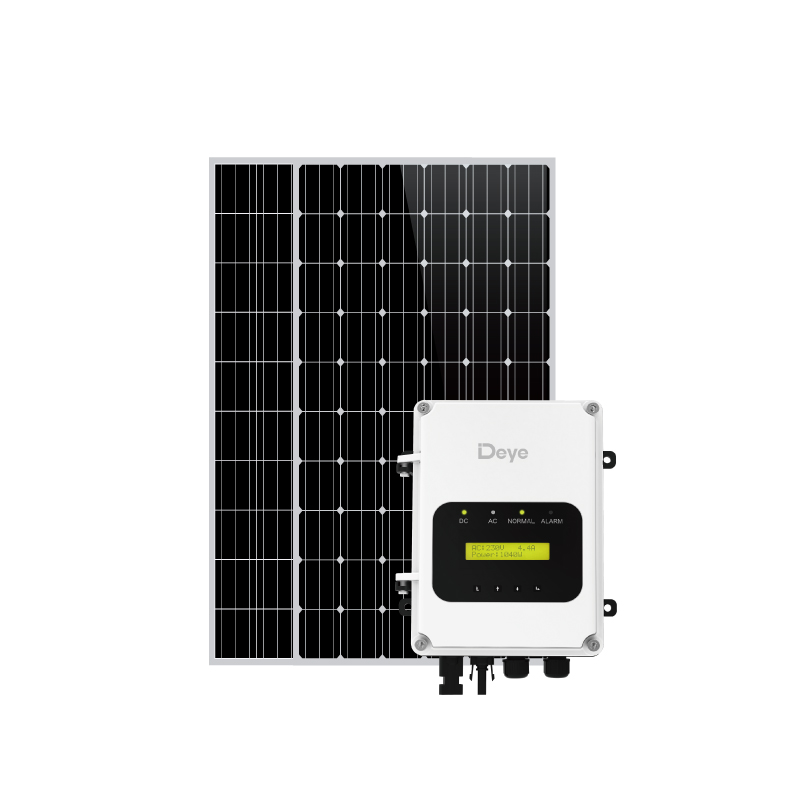 Deye Off-Grid DC Solar Pump Controller 400-1500WOff-grid DC solar pump controller for pure DC water pumping, with MPPT, dry-run protection, IP65 housing, and 400W to 1500W models.View Product →
Installation and Maintenance Checklist
Decisions taken in the first hour decide how many summers the system survives: face the panel toward the equator at a tilt near your latitude, keep connectors above the waterline, and leave a service loop of cable at the pump.
- Give the intake screen at least 200 mm of clearance on all sides.
- Use stainless clamps and a drip loop at every cable entry.
- Record the flow at commissioning with a bucket and a stopwatch; it becomes the baseline for every later diagnosis.
- Weekly in summer: rinse the intake screen and skimmer basket.
- Monthly: wipe the panel, check the cable glands, inspect the impeller for algae.
- Seasonally: test the battery or hybrid changeover and compare the flow with the baseline.
- Before frost: lift the pump out, drain it and store it indoors if the pond can freeze.
Frequently Asked Questions
Do I need a battery for a solar pond fountain pump?
No, if the fountain only has to run while the sun shines. Direct DC systems are simpler and cheaper, and they last longer because there is no battery to replace every three to five years. Add storage only for evening or cloudy-day flow.
Can I run a 120 V AC fountain pump from a solar panel?
Yes, but the inverter and battery usually cost more than a DC pump. An 11 W pump running 24 hours uses 264 Wh a day; with 25 percent system losses that becomes roughly 330 Wh, which needs an 85 to 100 W panel at four peak sun hours plus about 35 Ah of 12 V lithium storage.
How many hours a day will the fountain run?
Five to eight hours in summer, two to four in winter or under persistent overcast. A 20 to 30 percent larger array buys more hours than a larger pump does.
Why did my solar fountain stop in its second summer?
Usually a clogged intake or impeller, a corroded connector or a degraded battery. Check them in that order, against the commissioning flow figure.
Will a solar pump keep a koi pond clear?
No. Clear water comes from mechanical and biological filtration plus controlled nutrients; the pump's job is to push water through that filter and keep the surface moving.
Buy the pump from its flow-at-head curve, size the array with 20 to 50 percent headroom, keep voltage drop under 2 percent and the intake screen clean, and a solar pond fountain pump will earn its place in the garden for years. Skip any one of those four and the pond will tell you before the season ends.