

 русский
 Français
 Español
 عربى
عربى Deutsch
 Português
 italiano
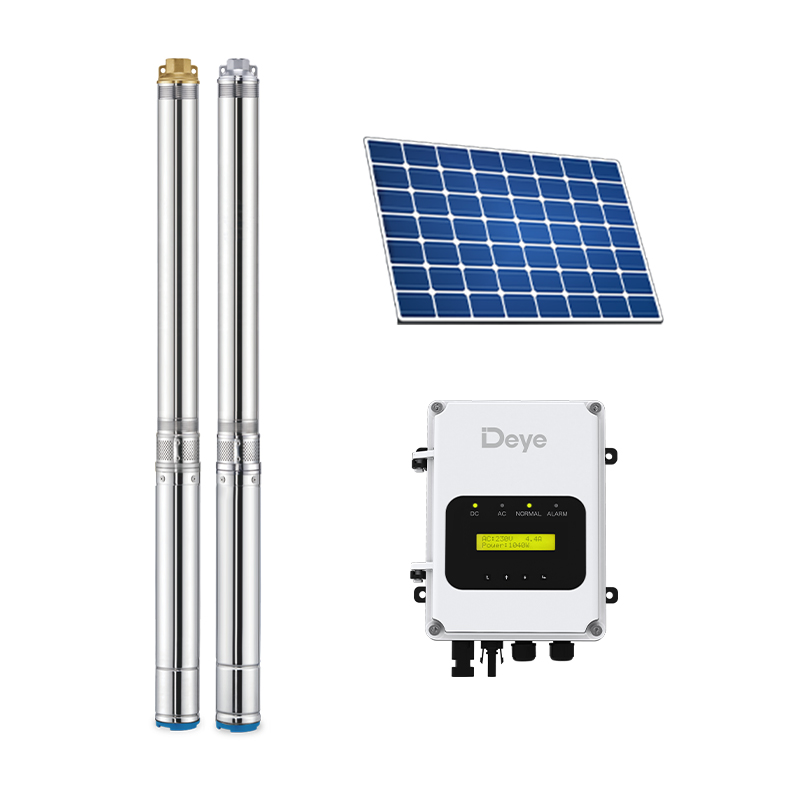
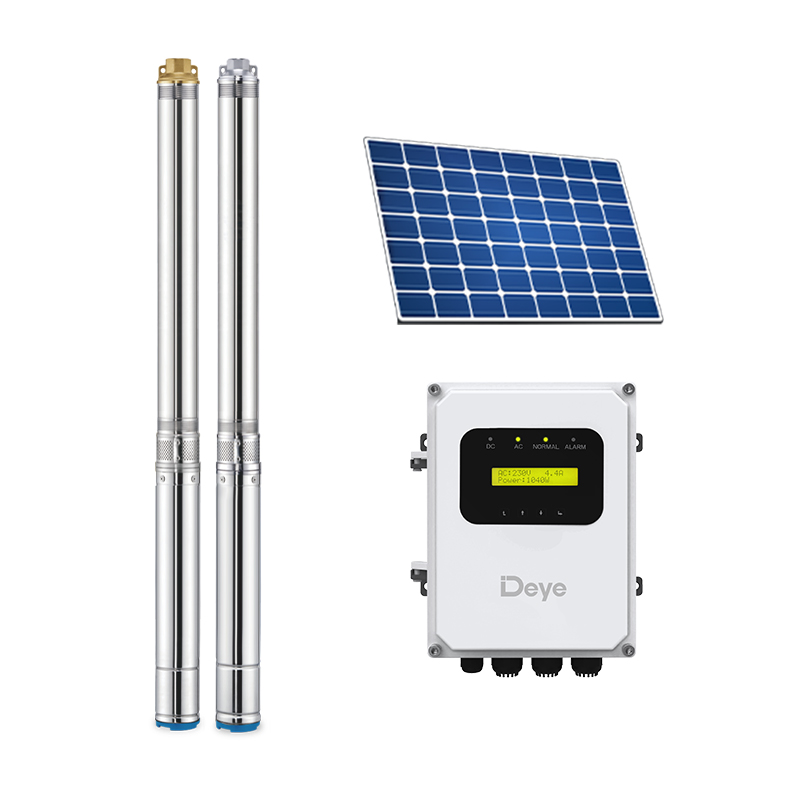
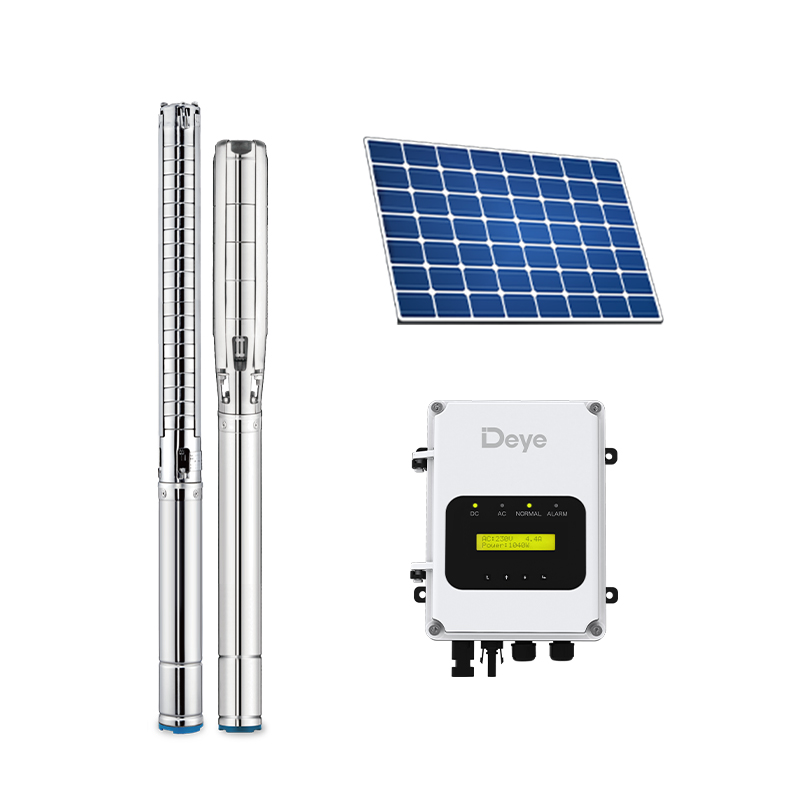
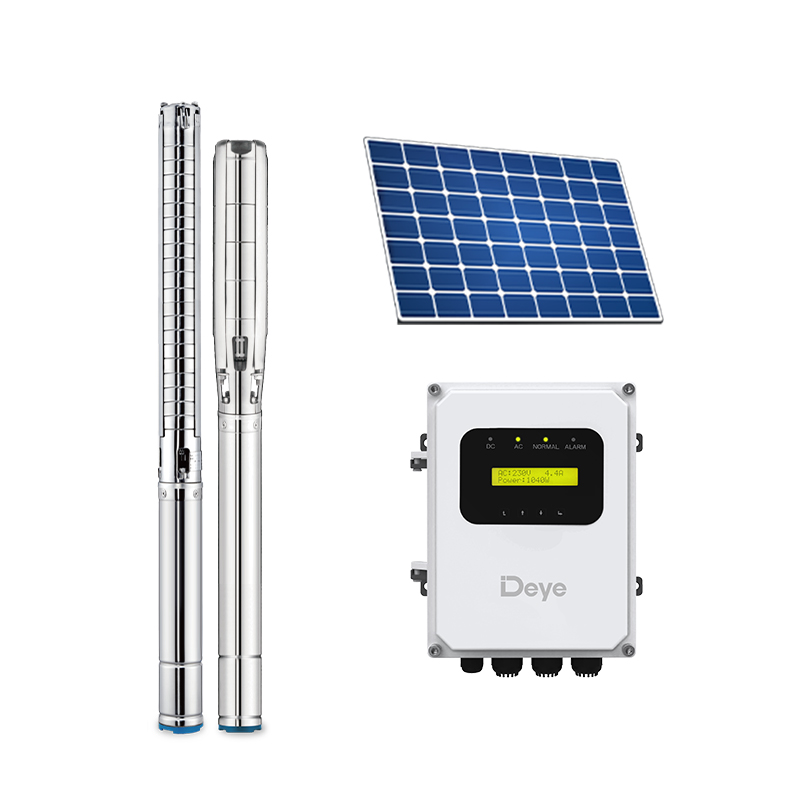
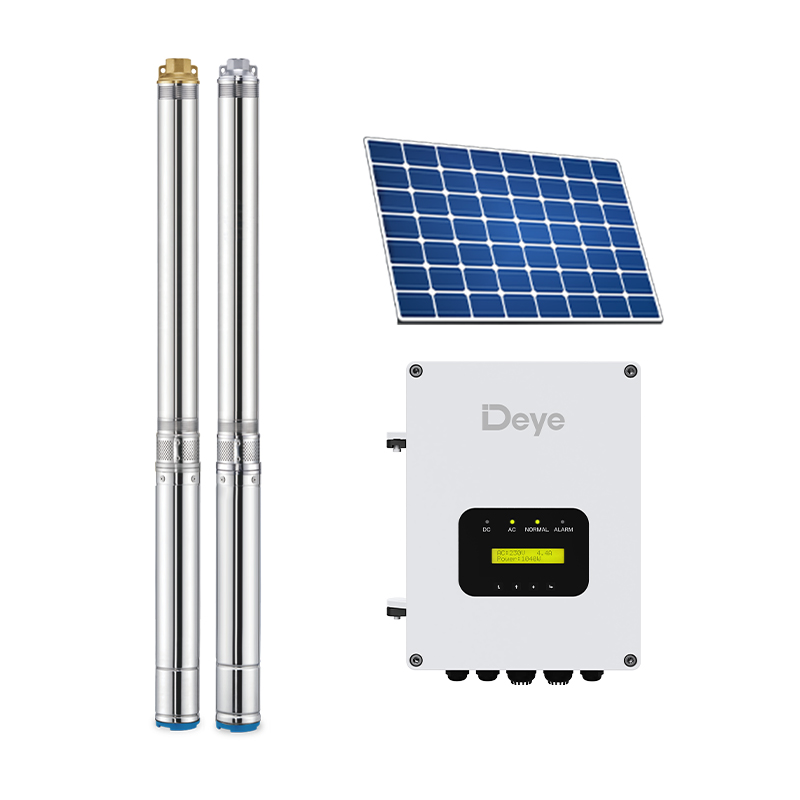
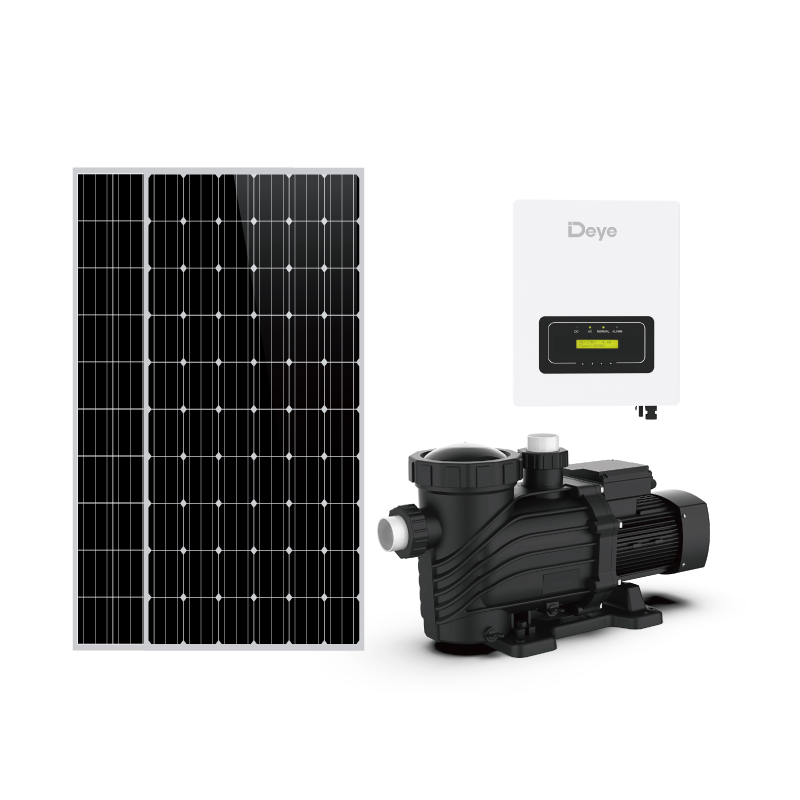
A deep well solar pump is a submersible pump powered by solar panels and sized by well depth, water demand, and available sunshine. For most new installations, a hybrid AC/DC pump is the most practical choice: it pumps from solar during the day and automatically switches to grid or generator power at night or in cloudy weather. This guide explains how to select, size, and install one without the trial-and-error that usually leads to a second purchase.
content
- 1 What Is a Deep Well Solar Pump?
- 2 The Six Numbers That Define the Right Pump
- 3 How to Size the Solar Array and Storage Tank
- 4 DC, AC, or Hybrid AC/DC: Which Configuration Is Best?
- 5 Installation Checks That Prevent Early Failure
- 6 Maintenance and Expected Service Life
- 7 Frequently Asked Questions
- 8 The Bottom Line for Buyers
What Is a Deep Well Solar Pump?
A deep well solar pump is a multistage submersible pump driven by a solar-powered DC, AC, or hybrid AC/DC motor and built to fit inside the narrow casing of a borehole. It uses several impeller stages to lift water from depths where a normal surface pump cannot create enough suction.
The main components are straightforward:
- Solar panels that convert sunlight into DC electricity.
- A pump controller that manages voltage, current, and protection functions.
- A submersible pump that pushes water up through the drop pipe.
- A storage tank, wiring, and piping that deliver water where it is needed.
Deep well pumps are grouped by outside diameter: 3-inch, 4-inch, and 6-inch. The 4-inch size covers most domestic and small farm wells; 6-inch models normally appear in high-volume or deeper collector wells. Because the pump is installed below water, motor cooling, cable entry, and drop-pipe weight must be handled differently from a surface pump.
The Six Numbers That Define the Right Pump
You can narrow every deep well solar pump candidate down to a shortlist by collecting six numbers first: total head, required flow, well diameter, water quality, solar resource, and available AC backup. Wattage alone will not tell you whether the pump can lift water.
| Measurement | Why it matters | Common error |
|---|---|---|
| Total head | Vertical lift plus drawdown, pipe friction, fittings, and discharge pressure. It sets the pump’s pressure rating. | Using only the well depth and ignoring friction. |
| Required flow | Daily water demand in cubic meters, liters, or gallons. It sets the operating time and pump size. | Sizing for peak irrigation instead of average daily demand. |
| Well diameter | Determines whether you need a 3-inch, 4-inch, or 6-inch pump body. | Assuming a 4-inch pump fits a 4-inch well without checking casing clearance. |
| Water quality | Sand, hardness, pH, and sediment affect impeller material and maintenance intervals. | Choosing a plastic impeller for a sandy well. |
| Solar resource | Daily peak sun hours in your location drive panel sizing. | Copying a panel size from a different climate. |
| Power source | DC-only, AC-only, and hybrid AC/DC systems need different controllers and backup strategies. | Buying a DC pump when the site already has reliable AC infrastructure. |
Water quality influences the impeller material more than any other factor. Plastic impellers are efficient and economical for clean water; stainless steel impellers resist abrasion and last longer in sandy or gritty wells. If your well log mentions sand or sediment, choose a stainless model rather than hoping a filter catches everything.
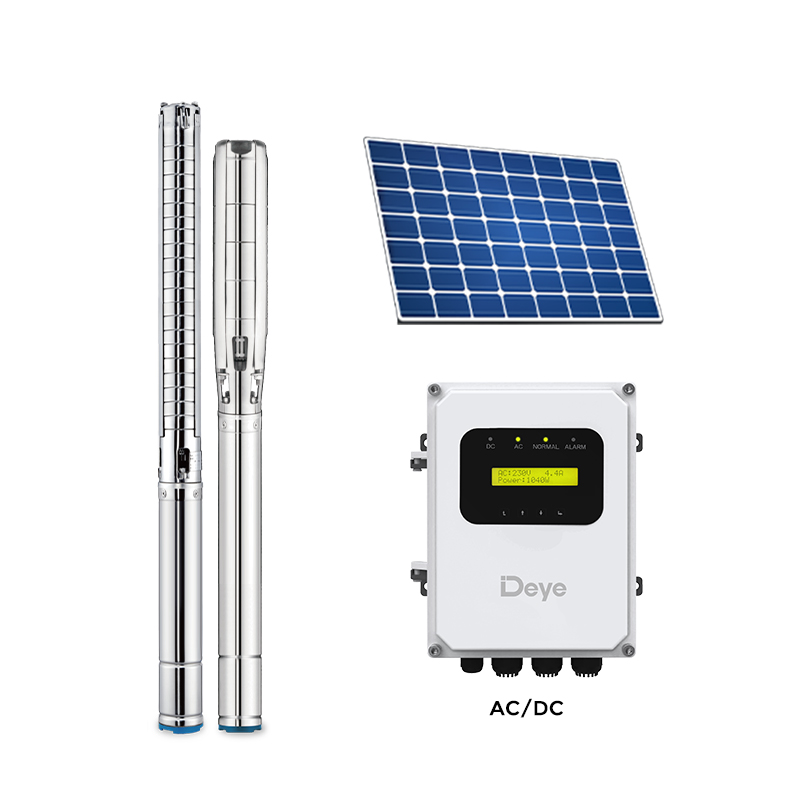 4-Inch Stainless Steel Impeller Solar AC/DC Submersible Pump (800-3000W)This 4-inch stainless steel impeller pump suits deep domestic wells and small irrigation where sandy water is present. Its corrosion-resistant build handles gritty conditions better than plastic impellers, making it a reliable choice for the high-demand applications described nearby.View Product →
A 4-inch stainless AC/DC pump in the 800–3000 W range is a common starting point for deep domestic wells and small irrigation systems. It combines corrosion resistance with enough head capacity for most residential and farm applications.
How to Size the Solar Array and Storage Tank
Plan for roughly 1.5 to 2 kW of solar panel capacity for every 1 kW of pump input power, then use a water tank to cover night and cloud periods instead of buying a large battery bank. The exact number comes from daily energy, not from pump wattage alone.
Example: a 1200 W pump running about 6 hours per day uses 7.2 kWh/day. With 5 peak sun hours and a system efficiency of 75 percent, the array needs 7.2 ÷ (5 × 0.75) = 1.92 kW. Add dust and temperature margins, and a 2–2.2 kW array is sensible.
- Confirm that the array voltage range matches the controller’s MPPT window.
- Oversize the array by 10–20 percent for dust, heat, and panel aging.
- Use a storage tank instead of batteries for most remote water supplies.
- Install a float switch so the pump stops when the tank is full.
For crop water demand and seasonal peaks, use the same calculation and input from your irrigation schedule; our solar pump irrigation guide covers the details.
DC, AC, or Hybrid AC/DC: Which Configuration Is Best?
A hybrid AC/DC system is the best balance of flexibility and cost for most deep well applications because it uses solar whenever it is available and switches to AC automatically when it is not. DC-only systems are cheaper in very remote locations, while AC-only pumps miss the main benefit of solar.
| Configuration | Solar operation | Backup | Complexity | Best for |
|---|---|---|---|---|
| DC direct | Pumps while the sun is strong | Battery optional | Low | Remote daytime-only filling |
| AC pump with solar inverter | Uses solar through an inverter | Grid or generator | High | Existing conventional AC well pumps |
| Hybrid AC/DC | Uses solar directly | Automatic switch to AC | Medium | Farms, homes, and off-grid sites with occasional AC |
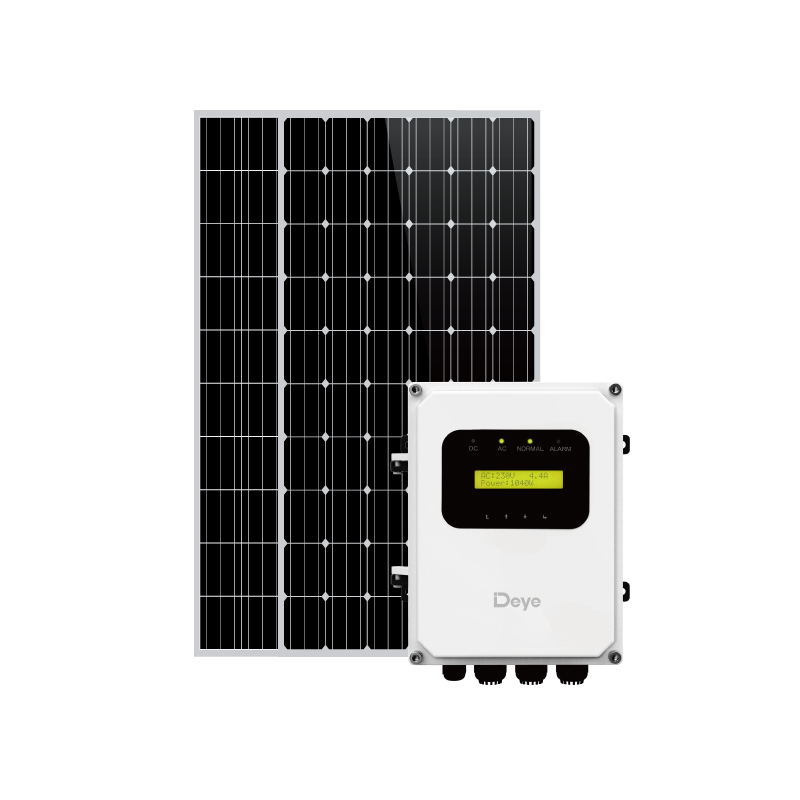
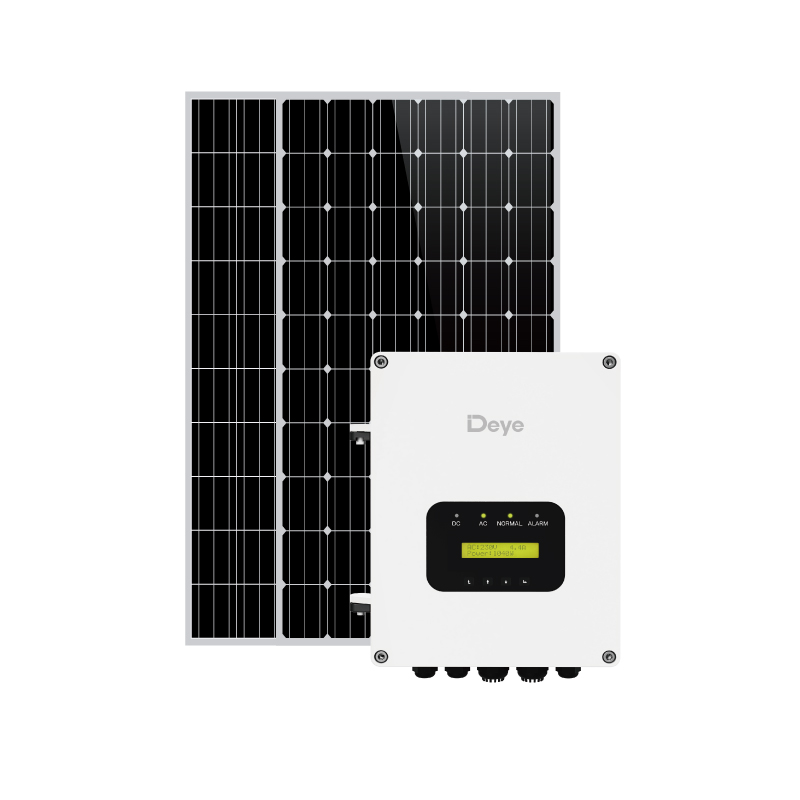
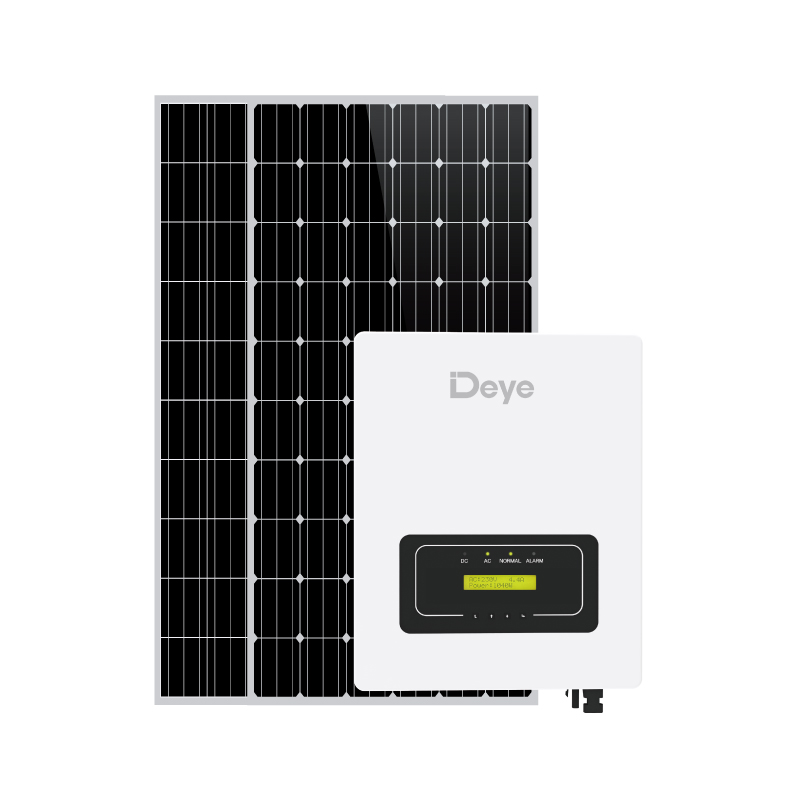
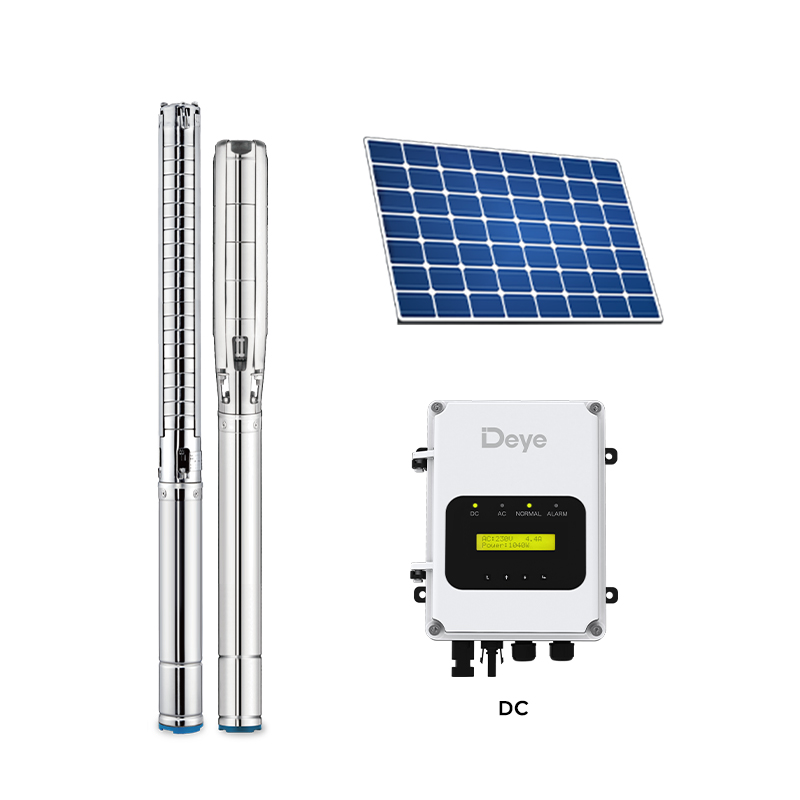
Hybrid controllers combine MPPT, auto-switching, and pump protection in one enclosure. They monitor solar voltage, start the pump when there is enough sun, and transfer to AC without a manual changeover. A controller in the 1100–3000 W class fits common 4-inch pumps; high-head or higher-flow systems move to larger controllers.
 Solar Auto-Switch AC/DC Pump Controller for 1100-3000W PumpsThis controller prioritizes solar power, automatically switching to AC in low light or at night for uninterrupted water supply. With dry-run and overload protection plus MPPT behavior, it matches the 1100-3000W range and fits the hybrid setup discussed in the surrounding text.View Product →
If your well is deep and the duty is heavy, also confirm that the controller’s AC phase and voltage match your local supply. A good controller should have dry-run protection, overload protection, and stable MPPT behavior.
Installation Checks That Prevent Early Failure
Most early failures in solar deep well pumps are installation failures, not pump failures. The four most common causes are undersized cable, lack of dry-run protection, poor motor cooling, and using the power cable to support the pump.
- Use the manufacturer’s cable-size table and keep DC voltage drop below 3 percent. Undersized cable lowers pump speed and can cause overheating.
- Secure the power cable to the drop pipe. The cable should never carry the weight of the pump.
- Set the pump below the dynamic water level but above the well bottom. A partially exposed motor can overheat even when the inlet is still wet.
- Install a low-water cutoff or dry-run probe. Running without water is the fastest way to destroy a submersible pump.
- Add surge protection in lightning-prone areas, and make all splices watertight.
For wells with high daily demand, a larger pump body reduces operating hours and mechanical stress. A 6-inch stainless model is the logical step up when a 4-inch pump would have to run too long to fill the storage tank.
 6-Inch Stainless Steel Impeller Solar AC/DC Submersible Pump (800-3000W)This 6-inch stainless steel pump handles large daily demand and sand-containing well water, reducing operating hours compared to smaller models. It is built for centralized water projects, farm irrigation, and village supplies, as referenced by the discussion on larger pump bodies for high-demand wells.View Product →
Maintenance and Expected Service Life
A correctly selected and installed solar deep well pump can operate for 8 to 12 years, with routine checks focused on the solar array, controller, and water quality rather than the pump itself. Impeller wear and seal failure are the normal failure modes.
- Check flow and current readings at least once a month.
- Clean dust, bird droppings, and organic buildup from panel surfaces.
- Inspect cable connections and controller fault codes.
- Test for sand or sediment in the water; if output drops, inspect the inlet screen and impellers.
Recording pump hours, static water level, and daily output helps you spot performance loss before it becomes a breakdown.
Frequently Asked Questions
Can a deep well solar pump run at night?
With a standard direct-solar system, no. The pump runs only when the array generates enough power. A hybrid AC/DC pump switches to grid or generator power automatically; a battery-backed system can also run overnight, but a water tank is usually a cheaper way to store energy.
How deep can a solar deep well pump lift water?
The correct specification is maximum total head, not well depth. A pump rated for 100 m head can serve a 70 m well with another 30 m of pipe friction and discharge pressure. Many multistage solar pumps are rated between 50 and 200 m or more.
Do I need batteries?
Not for most irrigation, livestock, or off-grid domestic water supply. Store water in a tank and pump during sunny hours. Batteries make sense only when you need pressurized water at any hour and cannot rely on a backup AC connection.
What solar panel size do I need?
Start with 1.5 to 2 times the pump’s rated power, then refine with peak sun hours and system efficiency. For a 1000 W pump, a 1500–2000 W array is a reasonable preliminary figure.
Plastic or stainless steel impeller?
Use plastic impellers for clean, non-abrasive water and lower first cost. Use stainless steel impellers for sandy wells, aggressive water, or when you want longer intervals between overhauls.
The Bottom Line for Buyers
The shortest path to a reliable system is to define total head and daily flow first, then choose the pump and controller as a matched set, then size the array and tank. A hybrid AC/DC pump avoids the manual switching problem that makes many solar projects frustrating. If you are not sure about the calculation, share your well log, daily water demand, and site location with the manufacturer before ordering; see our contact page.